
[box type=”alert” icon=”none”]Hey IdeaMensch! My name is Tom Stewart and I’m a product designer based in San Francisco, CA. Two years ago just after I started my business, Mario interviewed me for IdeaMensch. He was kind enough to let me write a guest post for everyone today, so I’d like share an incredible experience I’m having right now with Kickstarter. [/box]
Kickstarter is the leading website for crowdfunding, an increasingly popular method to raise capital for creative projects and small businesses. In a nutshell, crowdfunding allows creators to raise small amounts of money from a large number of people, usually in return for a good or service provided by the creator to its supporters at the end of the project.
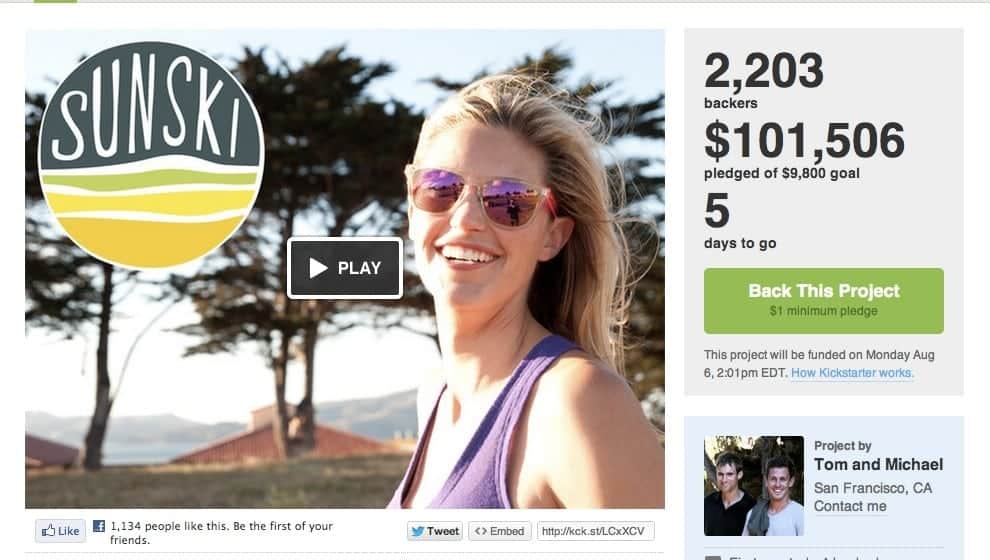
Earlier this month, I launched a project on Kickstarter with the goal of raising $9,800 to update and remake vintage Australian sunglasses called “Sunskis”. I felt Kickstarter was an ideal way to test market interest in the product while also creating an opportunity to raise the money to get it started. In less than three weeks, the project has raised over $100,000 from 2200+ individuals from all over the world. We still have one week left before the campaign ends, and the support keeps coming. If you’d like to check it out, you can find everything at www.sunskis.com.
There’s no exact formula to Kickstarter success—and I’ll be the first to tell you that fortune was definitely on our side. That being said, here’s what we focused on:
The Video
It’s no secret that that a strong video is essential: it is by far the most effective way to connect with your backers on a creative and personal level. Making a video from scratch, however, is a daunting task. Here are the pointers we followed:
- Distill your project into something short and sweet that everyone can understand. Put the heavy details in the written copy for people that want to learn more.
- Make a storyboard that details each part of your video, and shoot the video in segments. If you need images or other graphics to mix in with the footage, block them in early and begin creating that supplementary material simultaneously to ensure you have a consistent aesthetic.
- Check out videos from other successful Kickstarter projects and borrow their techniques. See how other people have set up interviews, transitions, and slideshows of product images.
- Rent a nice camera and microphone (if you are recording voice). We got everything we needed from a local camera shop for $350 over a long weekend. Kickstarter says this isn’t necessary, but quality video and sound will make a huge difference for your finished project. A small price to pay for a big reward.
- Have one drink before going on camera. You’ll be nervous—this will help.
The Rewards
The most successful products on Kickstarter offer clear, easily understandable rewards that usually involve receiving a physical thing in the mail from the creator.
- Make your rewards clear and directly relevant to your project. People like receiving something tangible, so if you’re making a product, consider “pre-selling” your product.
- The most popular pledge amount is $25, so even if your main reward or product costs more to get, make sure you have something of value around $25 so the average person can make a contribution and be part of the project.
Kickstarter does a good job about explaining all of this, but projects still suffer from nebulous rewards and the results are almost always lackluster.
The Outreach
Kickstarter is a popularity contest just like anything else on the internet, and most projects don’t reach funding. The effort you make to share your project is almost more important than the project itself. In order to get more eyes on your project and give it a chance for real success, you need a big start so it climbs the ranks of popularity and gets seen by the Kickstarter community at large.
- Reach out to your family, friends, and existing network to hit the ground running. Before launching, we made a detailed outreach plan that we put into action the minute the campaign went live.
- Build buzz early. We had a group of close friends and relatives chomping at the bit to support the campaign, so when we did launch, we got a big burst of backers in just a few hours. This helped us climb the rankings on Kickstarter’s site, allowing more strangers to see the project sooner.
- Identify local news, press and blogs that might be interested in sharing your story. Kickstarter is a feel-good atmosphere, so it can be easier than you’d think to share a feel-good story with your local trendsetters and news outlets.
Interact with your Backers
Once you do start getting support for your campaign, people will send you messages and post on the comment board for your project. Keep these people engaged!
- Respond to messages about your project vigorously and with great care. Answer people’s questions honestly, and be helpful. Many will be new to the Kickstarter format, so help them out.
- Provide project updates throughout the campaign that include valuable content. Every one of your backers will get an email when you release an update, so make it exciting and relevant. Share news about what you’re working on to make the project happen. If you’re making a product, send more pictures of its development; if you’re recording an album, send a sound clip. Every time we did this, we saw an immediate boost in support.
There’s a ton of wisdom out there on how to run a successful Kickstarter campaign, and there’s definitely plenty I’ve missed. Above all, the writing is on the wall: crowdfunding is becoming a legitimate way to get your business or creative project off the ground, and there’s both an art and science to the process just like with anything else. For me, the most exciting part is that for any great project that reasonably fits inside the Kickstarter model, there is an attainable path out there towards reaching your funding goal. If you’re on the precipice of releasing a new idea to the world, crowdfunding should be on your list of early funding options. It forces you to flesh out a brand ethos and marketing aesthetic long before you’d have to with other traditional funding methods and it does so through a low/zero risk platform. Definitely worth checking out.