
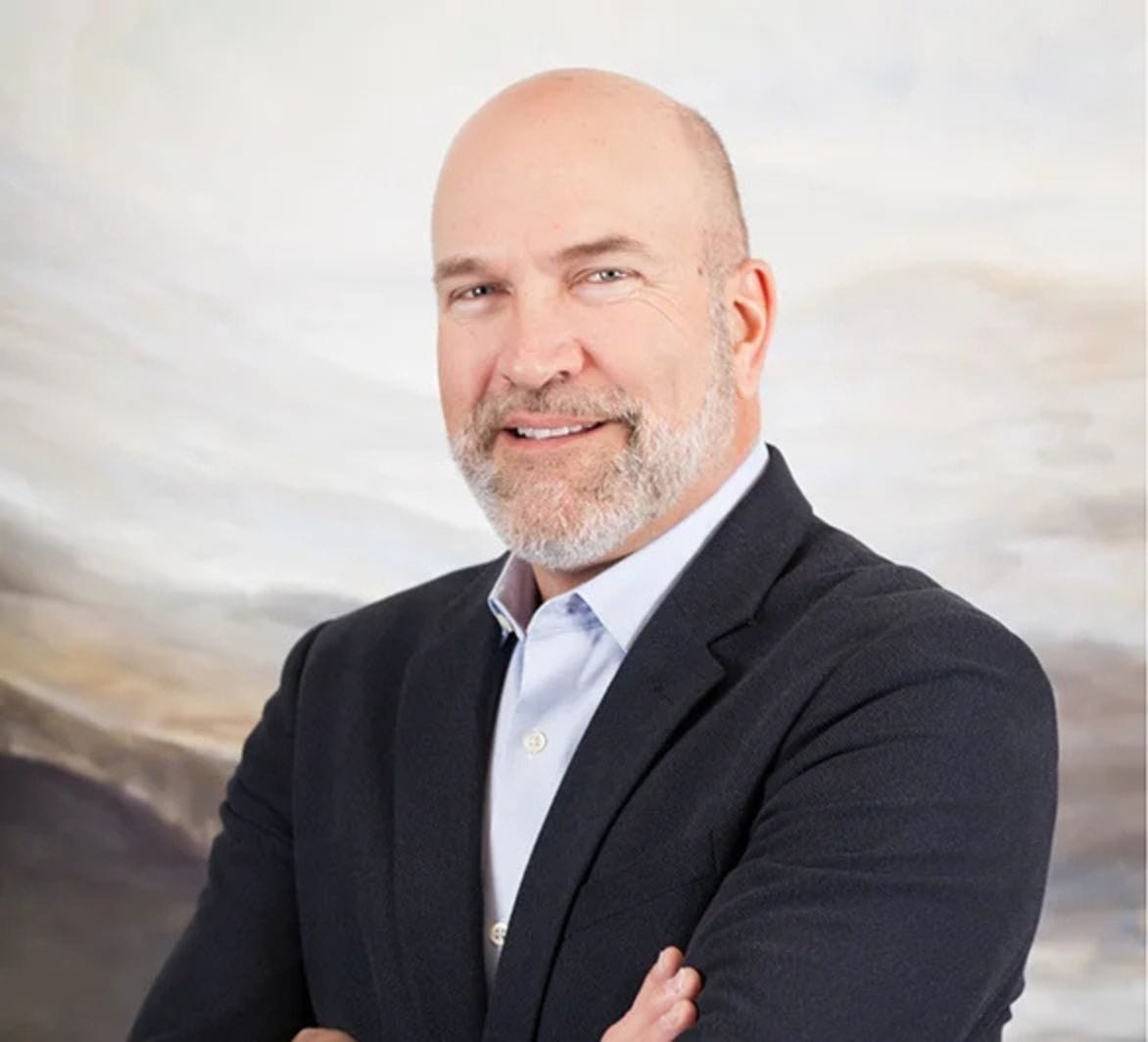
CEO Joseph Gerard Michaletz provides investment advice through his firm, Discipline Advisors, in Mankato, Minnesota. Through due diligence, he designs diversified portfolios and often suggests alternative investment tools, such as Delaware Statutory Trusts (DSTs), that place real estate securities within the reach of many. He also conducts business as DAI Wealth and DAI Securities and holds FINRA Series 7, 63, 66, and 24 licenses.
Mr. Michaletz educates real estate professionals on DSTs, 1031 exchanges, and tax deferral strategies. He has served on the Alternative & Direct Investment Securities Association board and supports Leave a Legacy for the Greater Mankato Area. He earned a bachelor’s degree with honors in finance from Minnesota State University in Mankato.
In addition to financial matters, Mr. Michaletz owns and manages 1,400 acres of timberland in northern Minnesota. An experienced pilot, he is a member of the Wild Sheep Foundation and the Catholic Newman Center.
Discipline Advisors is a DBA of DAI Securities, LLC established in the State of Minnesota. Securities offered through DAI Securities, LLC, member FINRA/SIPC. Advisory services offered through DAI Wealth, LLC, an SEC Registered Investment Adviser. DAI Securities, LLC and DAI Wealth, LLC are separate, but affiliated, entities after Advisory Services.
What is your typical day, and how do you make it productive?
Usually, I wake up, step outside onto my porch to observe nature’s beauty… and then I get to work.
How do you bring ideas to life?
I don’t know if there’s any repeatable process—it feels pretty random.
This might sound silly, but ideas often hit me around two in the morning when I’m in the middle of my sleep. I keep a pen and paper on my nightstand to jot things down. What really drives me is figuring out how to add more value to our clients.
When you have honest, heart-to-heart meetings with clients and truly understand what keeps them up at night, it sparks continuous problem-solving—emotionally and mentally—on their behalf. Sometimes ideas just pop into your mind when you least expect them, often when you’re relaxed or free of distractions, like when you’re decompressing.
I start discussing these ideas with staff, CPAs, and attorneys, working collaboratively to figure out how to solve problems. It’s really an ongoing process—constantly thinking, problem-solving, and looking for ways to add value for our clients.
A lot of clarity comes to me when I’m out on the porch, looking at the mountains. With no distractions and complete peace, my mind can wander and focus. Even when I’m hunting in Minnesota, sitting in a deer stand or box blind, I’m relaxed, appreciating the moment, nature, and God’s creation. I think it’s in these quiet, undistracted moments that the best ideas come.
What’s one trend that excites you?
There are always things that excite me, but they’re always different. One person’s challenge can be another’s opportunity.
When the economy changes, tax laws shift, or political landscapes evolve, it often creates opportunities. COVID, as challenging as it was, created significant opportunities, particularly in the commercial office sector. There have been substantial opportunities for cash-rich investors to acquire distressed assets at massive discounts.
If COVID hadn’t forced people to work from home, combined with the rapid rise in interest rates, we wouldn’t have seen the same stress on commercial office properties. When vacancies increase and owners face higher refinancing rates that prevent them from cash flowing, they’re forced to sell. This kind of distress opens the door to incredible buying opportunities for well-capitalized investors.
Another clear trend is the ongoing shortage of housing in the US. While there has been an increase in new apartment supply over the past few years, it’s being absorbed quickly due to high demand. However, new construction permits for multifamily developments are down 70 percent compared to two years ago.
The demand for housing remains strong, with a need for 400,000 to 500,000 units annually, but the supply is plummeting. For our clients who own multifamily properties, it’s currently a buyer’s market. Prices are significantly lower than they were two years ago, and we’re on the cusp of tremendous rent growth. Starting in 2025, as the supply shortage intensifies, we’ll likely see rent increases surpass the traditional 3 percent annual growth. This trend is expected to gain even more momentum in 2026 and 2027.
What is one habit that helps you be productive?
The name of our company is Discipline Advisors for a reason. My habit is that I like to have fun and enjoy life, but only as a reward for getting all my work done.
A key characteristic we emphasize at Discipline Advisors—and much of this credit goes to my wife, Christine—is identifying people with a true servant’s heart. These are people who have a genuine sense of urgency to prioritize serving others’ best interests before their own.
I’ve always been hard on myself because I set goals—daily goals—and I create lists every day. My goal is to complete everything on my list, and if I don’t, I better have a good excuse. When I’m planning a trip, like a hunting trip where I’ll be out of touch, I make sure all the important, time-sensitive tasks are done before I leave. Anything that needs attention while I’m gone gets delegated to the right people.
As a private pilot, I follow checklists for every phase of flight. Even though I know those checklists inside and out, I still review them every time because the process itself represents discipline.
I believe anyone can create their own discipline road map, customized to their unique strengths and weaknesses. By paying attention to those and creating personal checklists to hold yourself accountable, you can accomplish so much more. If that matters to you, the reward is built into the process.
For me, it’s about being a productive and contributing member of society. That’s what drives me—I don’t want to be unproductive or idle. Accomplishing meaningful goals is what’s important to me, and that’s where I find fulfilment.
What advice would you give your younger self?
Well, I think I would say that if I could go start this career all over knowing what I know now, I would have been a little bit more patient with getting to know people of influence and not just taking their word. I guess I’m not as trusting as I used to be.
And so, you know, when you get… I know a lot more about due diligence now, you know, I know a lot more about what to look for to keep people honest. And, there are truly salespeople that will say anything to make a sale, and they’re really good at it. They’re almost like con artists. And then there are truly good people that will always do the right thing when nobody’s watching. They’re much farther and fewer between.
I would date certain critical relationships longer before I would commit. I’ve always been the Guinea pig, but sometimes I haven’t been the Guinea pig long enough to see people’s true colors. And you never know what people’s true colors are until, you know, the crap hits the fan, so to speak. And then you see what money does to people. And you see how selfish people can be or how desperate they can become because they don’t operate within their own footprint.
They don’t live within their own means. And when people get financially desperate, they make really dumb decisions, and you never want to associate with or have any kind of business relationship with financially desperate people.
If I could have figured that out 20 years earlier, uh, you know, I think I would have been able to, uh, have more success sooner and add more value to our clients. You know, that’s probably one of the most valuable lessons I’ve learned and wisdom I’ve gleaned over all my 40 years in the business.
Tell us something you believe almost nobody agrees with you on?
Honestly, I think Woodford Reserve is the best whiskey out there, but most people disagree with me!
What is the one thing you repeatedly do and recommend everyone else do?
It comes down to communication skills. There’s an old saying: “People don’t care how much you know until they know how much you care.” I firmly believe in that.
When building relationships, I focus on the person—the quality of their character and how much they care—before worrying about how much they know or how good their product is.
You can never assume anything about someone when getting to know them. You need to communicate in a simple and clear way at first, staying on the lower end of the complexity spectrum. Then, observe how they engage and adapt as needed, gradually moving toward more complex discussions if it feels appropriate.
It’s like the analogy: some people just want to know what time it is, while others care about how the watch works. You can’t assume either way. You need to start with the basics, ask questions, and seek permission to explore more intricate details if that’s what matters to them.
One thing I do repeatedly is figure out a person’s communication style and adapt my delivery to fit their way of learning. Getting to know someone deeply often requires vulnerability on your part, especially if they might become a client.
The two most important things I want to understand about someone are their communication style and what keeps them up at night. The only way to uncover those is through patience and by asking personal, direct questions.
When you feel overwhelmed or unfocused, what do you do?
I like to take a step back and go out in nature. Nature rejuvenates my mind. It gives me all the answers that I need if I just listen.
What is one strategy that has helped you grow your business or advance in your career?
I would say it’s less about making money and more about being a good steward. The clients I connect with best are disciplined, hardworking, salt-of-the-earth, self-made people who learned through the school of hard knocks. They built their wealth through patience, persistence, and always maintaining a strong and open perspective along the way.
The most successful people I deal with are also the most unselfish people I know. That’s pretty awesome. These are the kinds of people you want to rub shoulders with and get to know, because their stories are incredible and they’re motivated by a desire to serve others.
The people who are truly driven by money, where that’s their number-one goal, are never content in life. They’re always chasing something. The grass is always greener. They burn bridges. They become lonely because they don’t have any friends – they’re always thinking “what’s in it for me” instead of “what can I do for you.” I try to filter those people out pretty fast when I meet them.
I feel sorry for people who have inherited significant wealth they didn’t create. They usually get overwhelmed by it.
What really bothers me personally is when I see families who inherit substantial wealth and view it as winning the lottery, rather than an opportunity to honor a legacy. I lecture many young people who are inheriting significant wealth. I tell them there are two ways to look at this inheritance. I try to mentor them, and honestly, I do get through to many of them, but some are a hopeless cause and will run out of money. They’re going to be the most miserable, unhappy people in the world because they couldn’t get over themselves.
What really changed everything for me was understanding that it’s not about the money—it’s about touching people’s lives with the gifts God gives you. That’s kind of the strategy that I have used to grow my business, but it’s really more of a mindset.
I learned that from my brother Cass.
He and I were super close. We were best friends. Unfortunately, he was diagnosed with this really rare kind of cancer, a liposarcoma in his spine. They did surgery where they went in through the front, removed three or four vertebrae, built new ones out of the bone bank with all the rods and stuff, put them all back together, put him in a body cast. By the time he got his body cast off, the cancer had already come back and there was really nothing they could do.
They tried radiation, they tried everything, but it just kept spreading up his spine and slowly paralyzing him. It took his life nine months later, from start to finish. He was at home in hospice, and I would go over to his house every day after work just to say hi and see him.
I remember one day I came to visit him. I was feeling pretty happy with myself because I had made some money and closed some deals. I remember how excited and kind of full of myself I was, and I was very eager to tell him how much money I made that day. After I finished telling him, he stayed silent and just looked at me. He lifted up his hand and signaled me to come over close to him. He then grabbed me by the shirt collar—he was paralyzed from the waist down at that point—and pulled me close. He said, “Joe, the good Lord doesn’t give a shit how much money you make. All He cares about are the lives you touch with the gifts He gave you.”
It was profound when I heard it, but it didn’t fully sink in until a couple of days later. I was driving out of town to a meeting, and I remember going down this dip crossing this creek. I’ve had a lot of bizarre wildlife sightings that validate things in my life, and at that moment this wild turkey starts flying across the road and then stops, hovering over my pickup. At the same time, it felt like somebody punched me in the chest and I literally said out loud, “Cass died.” I just felt it—it made me exhale and say it really loud. I pulled over to call my mom, and here’s my mom calling me telling me Cass died. At that moment, all I could do was sit on the shoulder of the road and think about my last conversation with him.
From that point forward, I could care less about money. All I could care about was touching people’s lives with the gifts God gave me. And the year after my brother died, my income tripled when I could care less about how much money I made. It changed my whole focus. It changed my whole life.
When I say I’m a very blessed man, I am a very blessed man. I’ve had blessings bestowed upon me that most people haven’t. I was able to figure out what’s really important in life at a young age, compared to most people. I was just going to turn 31 when he passed away.
What is one failure in your career, how did you overcome it, and what lessons did you take away from it?
I have failed many times in my life, but I always make it a point to try the best I can to learn from my failures.
What is one business idea you’re willing to give away to our readers?
FINRA regulations do not permit us to do so, nor would I want to lead anyone astray on something that I haven’t done a great degree of due diligence on.
What is one piece of software that helps you be productive? How do you use it?
My phone is really the most productive piece of software I have I hate to say.
Do you have a favorite book or podcast you’ve gotten a ton of value from and why?
I get a lot of knowledge from the Land Investor podcast and the RLI Voices of Land podcast.
What’s a movie or series you recently enjoyed and why?
Yellowstone and 1883. I love anything that has to do with the Old West and history.
Key learnings
- Trust is the foundation of any good business relationship – Without trust, there is no respect, and without respect, there is no lasting partnership.
- The best ideas come in moments of quiet and reflection – Creativity and problem-solving flourish when the mind is free from distractions, whether it’s in the middle of the night or while enjoying nature.
- Financial desperation leads to poor decision-making – It’s important to avoid business relationships with people who are financially desperate, as their choices can be driven by short-term survival, rather than long-term success.
- Discipline and accountability drive productivity – Using structured lists, checklists, and goal setting creates efficiency and ensures that tasks are completed before enjoying personal time.
- Adding value should always come before making money – True success comes from serving others and solving their problems rather than focusing solely on financial gain.