
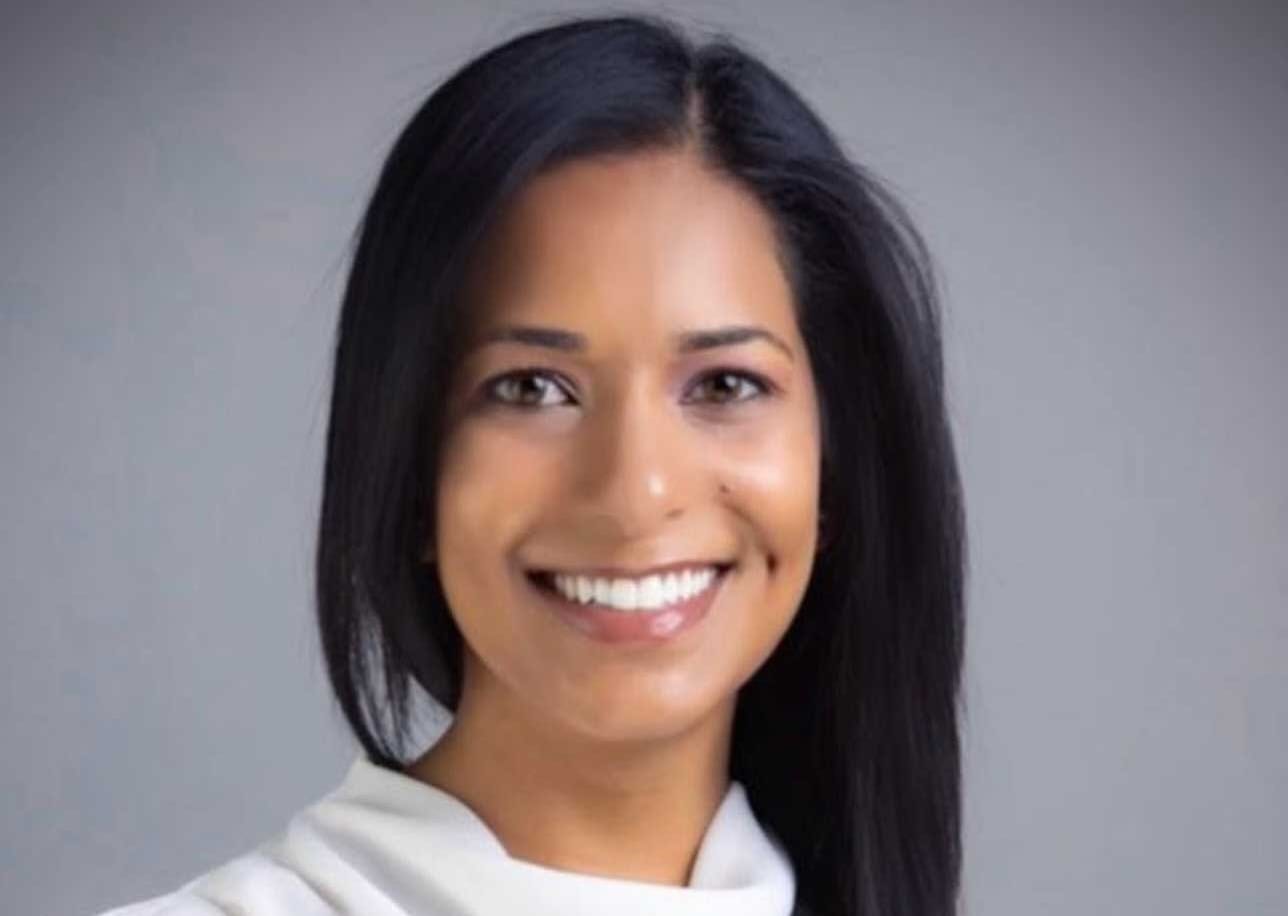
Sneha Iyer is a powerhouse of intellect, leadership, and innovation, seamlessly blending business acumen with her passion for healthcare. As a candidate at George Washington University and an MBA graduate from Georgetown University’s McDonough School of Business, she exemplifies the modern professional—one who thrives at the intersection of medicine, entrepreneurship, and community service.
Sneha’s academic journey is nothing short of impressive. She earned her Bachelor of Science in Psychology from the University of Pittsburgh, graduating with Phi Beta Kappa, Magna Cum Laude honors, and consistent Dean’s List recognition. Her commitment to excellence continued with a year-long dermatology research fellowship at George Washington University under Dr. Jonathan Silverberg, where she explored atopic dermatitis, hyperhidrosis, and racial disparities in dermatological care. Her contributions to multiple peer-reviewed publications and presentations highlight her dedication to advancing dermatological research.
Beyond research, Sneha’s impact extends to medical education and mentorship. As a self-employed tutor, she has guided seven students to a 100% pass rate on the USMLE Step 1, solidifying her reputation as a mentor who fosters academic success. Her ability to distill complex medical concepts into accessible knowledge showcases her deep understanding and commitment to shaping the next generation of healthcare professionals.
Sneha’s entrepreneurial spirit shines through her role as co-founder of Learn2Derm, a nonprofit dedicated to increasing access to dermatological care in underserved communities. By organizing skin fairs and community outreach programs in Washington, DC, she has demonstrated how business strategy and healthcare can merge to create meaningful social impact.
Her leadership extends beyond the medical field. As Vice President of Georgetown MBA Admissions and an Admissions Ambassador for the GW M.D. program, she has played a pivotal role in guiding aspiring professionals toward academic and career success. Additionally, her fluency in English and Hindi, along with proficiency in Spanish, further enhances her ability to connect with diverse populations in an increasingly globalized world.
In all her endeavors, Sneha Iyer embodies a rare blend of academic excellence, business acumen, and social responsibility. As she continues to break barriers in healthcare and entrepreneurship, her journey serves as an inspiration to aspiring professionals looking to make a meaningful impact in multiple domains.
What is your typical day, and how do you make it productive?
My typical day starts from the night before. I check my calendars and prepare my outfit for the next day so that I wake up with a stress-free mindset. Mornings are when I’m most focused, so I use that time for deep work or complex problem-solving. I make it a point to incorporate daily exercise — whether it’s a run around DC, a long walk, or pilates — as I’ve found it helps clear my mind and keeps me energized. In the evenings, I do silent meditation; I began this practice after taking a course on Meditation and Leadership at Georgetown. It’s become an important ritual that helps me reset, reflect, and stay centered. My day usually ends with reading and studying, usually in the law library, until 10pm and then light reading a non-textbook. I’m currently reading “Talking to Strangers.”
How do you bring ideas to life?
I bring ideas to life with curiosity and determination. Once something sparks my interest, I approach it like a puzzle — I can’t put it down until I’ve worked through the challenge and found a solution. I break ideas into steps, stay focused, and keep pushing forward until it clicks. On the other hand, I am honest with myself if I have an idea but am unable to push it forward. At that point, I ask for help. A key principle of mine is asking for help.
What’s one trend that excites you?
One trend that excites me is the intersection of healthcare and AI, especially predictive analytics. The ability to anticipate patient needs, identify risks early, and guide proactive care has the potential to transform healthcare and improve outcomes on a massive scale. I’m especially drawn to this because I’ve always been passionate about problem-solving and finding ways to make care more efficient and patient-centered.
What is one habit that helps you be productive?
Running. It’s one of the few times I get to listen to music and that makes me more excited to do it!
What advice would you give your younger self?
I’m so sorry for what you’re about to go through — and none of it is your fault. You will feel alone, hurt, and betrayed by people you trusted, but please don’t let that make you question your worth. You will want to give up, but you won’t — and that strength will carry you into a future far beyond what you can see right now. You will rebuild, not because it was easy, but because you refused to stay broken. Keep going. You are more powerful than the people who tried to tear you down, and one day, you’ll look back and be proud you never let them win.
Tell us something you believe almost nobody agrees with you.
I believe that boredom is one of the most valuable emotions. Most people try to avoid it, but I think boredom creates space for creativity, problem-solving, and self-reflection. Some of my best ideas have come from moments when I allowed myself to slow down and just think.
What is the one thing you repeatedly do and recommend everyone else do?
Bend with your knees, not with your back.
When you feel overwhelmed or unfocused, what do you do?
When overwhelmed, I do a silent meditation on YouTube and it helps me regulate my breathing and slow down. When unfocused, I usually recognize it’s time for a break and I will go on a run to clear my mind.
What is one strategy that has helped you grow your business or advance in your career?
One strategy that has helped me advance in my career is embracing discomfort and never giving up. I’ve learned that growth often comes from pushing through challenges and being willing to pivot when something isn’t working. For example, when I pivoted from medicine to business, it was one of the most uncomfortable decisions I’ve ever made — but instead of resisting it, I leaned in, committed to learning quickly, and found new ways to apply my skills. That mindset has helped me stay resilient, adaptable, and constantly evolving.
What is one failure in your career, how did you overcome it, and what lessons did you take away from it?
One of the hardest moments in my career was losing the chance to begin my residency just two weeks before medical school graduation, after standing up against mistreatment and reporting sexual harassment under Title IX. It was a painful, isolating experience that I will never forget. But I refused to let that define me. Within weeks, I was accepted to the Georgetown MBA program, where I channeled that experience into something greater — taking law classes, learning my rights, and strengthening my voice. That experience taught me that resilience is not just about moving forward, but also about holding onto your principles and staying patient, knowing that the truth has a way of rising in time.
What is one business idea you’re willing to give away to our readers?
One business idea I’d give away is an AI-powered platform that helps detect early signs of burnout in high-achieving professionals. By combining wearable data, calendar patterns, and even language analysis from emails or messages, it could flag when someone is trending toward burnout and offer tailored interventions — whether that’s suggesting time off, mindfulness exercises, or connecting with support resources. Preventing burnout before it hits could transform both productivity and well-being.
What is one piece of software that helps you be productive? How do you use it?
Apple Calendar is one piece of software that really helps me stay productive. I rely on it to organize my schedule, block time for focused work, and set reminders for key deadlines. Having everything mapped out visually keeps me accountable and helps me manage my time effectively. In the mornings, I ask my HomePod to tell me what I have scheduled for the day based on my digital calendar.
What is the best $100 you recently spent?
The best $100 I recently spent was on a last-minute Amtrak ticket from DC to New York to visit a close friend. We’ve had an up-and-down friendship over the years, but I realized some connections are worth fighting for. I value friendship and personal relationships deeply, and this reminded me that sometimes the most important thing you can do is show up — even if it’s on a whim.
Do you have a favorite book or podcast from which you’ve received much value?
One of my favorite books I’ve read is The Body Keeps the Score by Bessel van der Kolk. It helped me understand how trauma can show up in ways I never realized — both mentally and physically. Reading it gave me clarity on my own experiences and helped me approach challenges with more self-compassion and patience, which has made me stronger both personally and professionally.
What’s a movie or series you recently enjoyed and why?
I enjoy watching the Academy Award nominees each year and try my best to especially catch the international nominees. The movie that left the biggest impact on me was one of resilience in the most extreme conditions— Society of the Snow.
Key learnings:
- Structure and preparation drive productivity. Planning the night before, using structured calendars, and prioritizing deep work in the mornings can significantly enhance efficiency.
- Resilience and adaptability lead to growth. Facing challenges head-on, embracing discomfort, and pivoting when necessary are crucial strategies for career advancement.
- Innovation in healthcare is fueled by technology. AI-powered predictive analytics has the potential to transform patient care and improve health outcomes. I am skilled in using and deciphering “Large Language Models (LLM)”
- Mental and physical well-being are essential for success. Practices like meditation, running, and taking breaks to reset the mind contribute to sustained productivity and focus.
- Integrity and standing up for one’s values matter. Facing adversity with courage and using setbacks as opportunities for learning can lead to unexpected and meaningful career paths.