
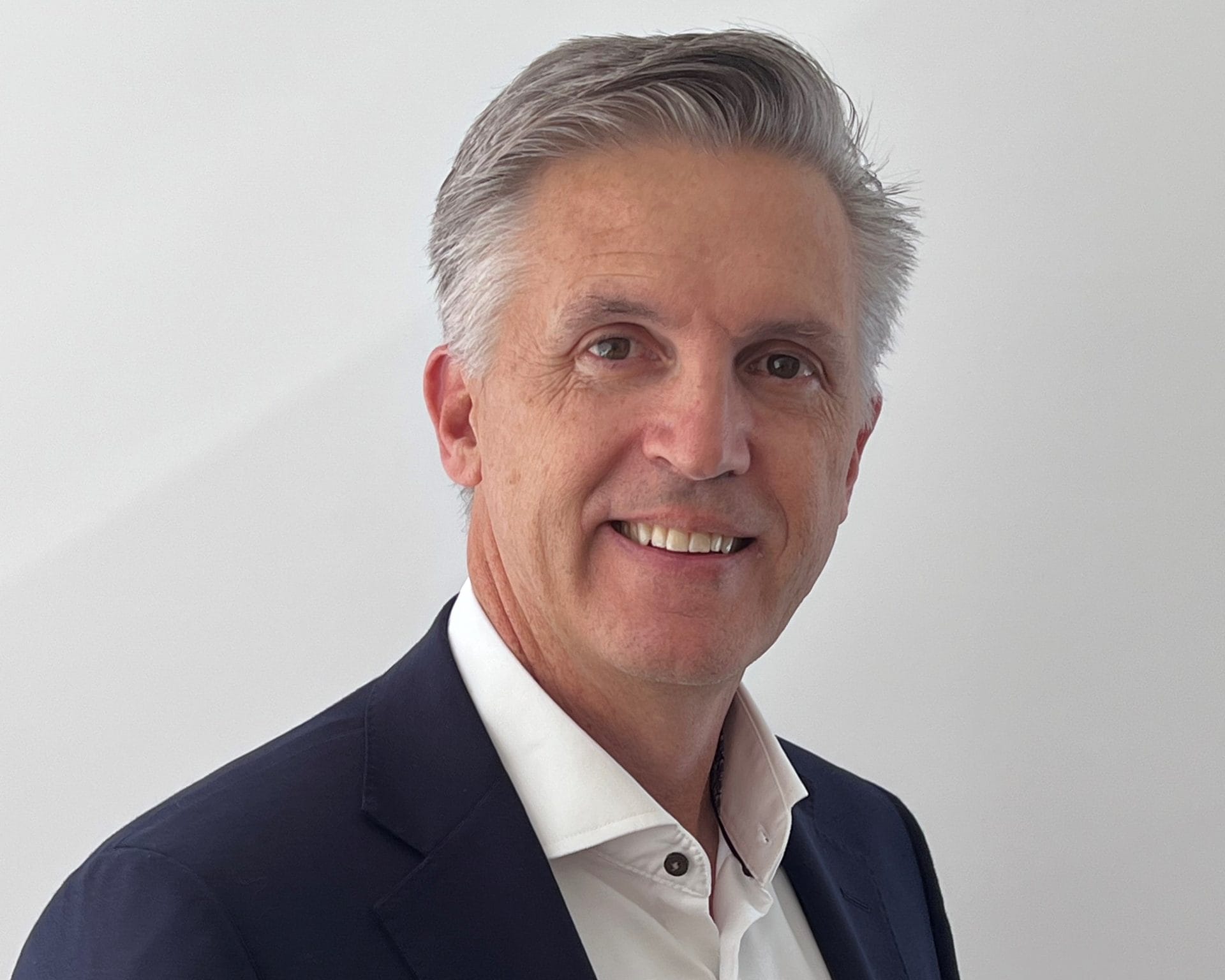
A businessman from Sydney, Australia, Sean Unwin has served in management roles across various industries since the early 1990s. In his more recent roles, Sean Unwin was LDM Global/Exo Edge’s managing director, CFO at Geocon, and managing director at FWTI, where he currently works.
In 2018, Mr. Unwin was hired by Geocon to oversee the firm’s integrated property development and hotel management group, the fifth largest builder and developer in Australia at the time. This role involved ensuring the group received timely and accurate financial information to make informed decisions. In 2022, LDM Global/Exo Edge hired him as its managing director, overseeing the executive accountability and professional services consulting team. His role at the company was to represent it to clients, investors, and global business partners in the UK, USA, and Australia/New Zealand. He participated in contract negotiations with clients and suppliers. He also oversaw and executed mergers and acquisitions opportunities.
Today, Mr. Unwin’s work as a managing director for FWTI sees him finding capital funding sources from the United Arab Emirates for the country’s property development industry. This position also involves explore creating a fund for the ADGM special economic zone and debt funding. Additionally, he appraises and executes ERP solutions for the firm and supports property development site acquisition and feasibility assessments.
What is your typical day, and how do you make it productive?
My typical day begins early; I am always up with the birds before my alarm. I use this quiet time of the day to take a walk along the beach, stopping occasionally for a chat with the regulars and jotting ideas onto a list on my phone. I am a practical problem-solver, so it only makes the list if it is executable, no pie in the sky for me. I like to keep grounded in the real world. On my drive into work, I will touch base with people in the US, and I also like to listen to a podcast or business audiobook to ensure I fit some learning into my day. My recent podcast has been learning about the formation and current state of affairs in the UAE and its journey to becoming the Capital of Capital in the Middle East. Throughout my workday, I maintain a structured schedule, prioritizing my tasks based on their importance and urgency. I use my drive home in the evening to connect with colleagues in India, the UAE, and the UK.
How do you bring ideas to life?
My focus is not so much on new ideas; it’s more about taking existing isolated concepts and bringing them together to create something that adds value. I liken this to the analogy of the wheel and the travel bag. Both were invented thousands of years ago, yet the two ideas weren’t combined into a wheeled suitcase until the 70s, beknow there are tens of millions of them in airports at any given moment. Often the idea is about solving a business problem, so I like to take in the whole process and work out where and how to find a solution or a more efficient way of operating without compromising quality.
What’s one trend that excites you?
The shift of capital towards BTR (build-to-rent/multifamily) in the Australian property market. There is a concerning lack of home supply in Australia, and the BTR asset class is relatively new to our country. I believe the drive for accessible and affordable housing, supported by government initiatives and the resurgence of “real retail” centered around fresh produce, food, and hospitality is going to prove BTR to be an important megatrend.
What is one habit that helps you be productive?
A habit that significantly enhances my productivity is setting and pursuing three to four goals every quarter. I am a big believer in Verne Harnish and the Rockefeller habits where the focus is on achieving three to four set “Rocks” each quarter. It’s about removing the distraction of the little things (sand granules) and instead staying focused on the big stuff, Rocks. If you are in an organization of, say, 200 people, all focused on their Rocks, that means you are getting around 3,000 meaningful outcomes achieved every year, which is a significant and positive momentum shift forward. As you create momentum, you also create time, which provides the opportunity to spend more time with my family and pursuing my other interests. It’s the discipline that sets me free.
What advice would you give your younger self?
Three strategies that have been instrumental in my career growth are networking, being prepared to ask for an opportunity, and having an opinion. Building and maintaining a broad and diverse network has opened doors to new opportunities, provided invaluable insights, and helped me stay ahead in my field. It’s not just about meeting people but about fostering genuine relationships and offering value to others, which in turn leads to meaningful opportunities. Everyone’s opinion counts; you just have to be strong enough to have one. By way of example, I was fortunate enough to meet the ex-CEO of Sprint Mobile, who explained to me how much he values the sales forecast for an organization coming from the CFO. The lightbulb came on for me that day! It made me realize how important my opinion was, and so I developed a methodology for accurately predicting the future performance of the business using fact-based quantitative analysis. I now use this methodology in every organization I work in.
Tell us something you believe almost nobody agrees with you on?
I believe that true success is not just about achieving personal goals but also about making a positive impact on others. Many people equate success with wealth, status, or personal achievements, but I see it differently. I think that our greatest accomplishments come from helping others achieve their potential and making meaningful contributions to our communities. This belief drives me to focus on mentorship, philanthropy, and initiatives that create a lasting positive impact.
What is the one thing you repeatedly do and recommend everyone else do?
I highly recommend incorporating an early morning walk into your routine, and, where possible, a swim in the ocean. The health benefits of daily exercise are well-documented; it improves cardiovascular health – reducing the risk of heart disease – increases muscle strength, and improves joint health. Walking and swimming also gives time for your mind to wander and re-energize your mental well-being. Starting your day with a walk and a swim can set a powerful tone for clearing your mind and getting you set for the day ahead.
When you feel overwhelmed or unfocused, what do you do?
I have a fairly high mental pain threshold compared to most people, enabling a high level of resilience. I stay optimistic by practicing daily gratitude and positive thinking. Focusing on the present and small successes allows me to maintain a positive mindset. I like to surround myself with positive influences, whether it’s people, books, or activities. These practices help me to stay resilient and focused during the tough times. One of my favorite phrases is “keep moving forward,” as you shouldn’t dwell too much on the past.
What is one strategy that has helped you grow your business or advance in your career?
One key strategy for my career growth has been meaningful networking, inspired by Jeffrey Pfeffer’s 7 Rules of Power. Building a diverse network has opened new opportunities, provided insights, and kept me ahead in my field. Effective networking involves fostering genuine relationships and offering value, enabling me to leverage collective knowledge and resources for business growth and personal development. It’s about creating a deep engagement, building trust, and contributing meaningful substance to the business relationship, which leads to positive, memorable outcomes for all involved.
What is one failure in your career, how did you overcome it, and what lessons did you take away from it?
Early in my career, I found myself in a role as the finance subject-matter expert for an IT company that sold business intelligence software and services focused on budgeting and business performance management. Initially, it didn’t go so well for me, as I was focused on espousing what the product could do based on my own experiences. It took a couple of failures with potential clients and the guiding hand of my team leader to realize it wasn’t about telling the client what the product could do and more about listening first to what the client’s problems and issues were. Analyzing the failure taught me the importance of understanding customer needs and market demand. This experience emphasized the necessity of thorough research, planning, and being open to change. It also reinforced that failures are valuable learning opportunities for future success.
What is one business idea you’re willing to give away to our readers?
A practical business idea is to offer services around connecting capital with builders and property developers. If you have a finance background or even just some solid/ genuine connections in the property industry, you might be surprised at the opportunities out there. As I said earlier in the interview, it’s all about networking and being prepared to ask for the business opportunity; you never know what answer you might get and where that might take you next.
What is one piece of software that helps you be productive? How do you use it?
One piece of software that significantly enhances my productivity is Calumo. I use Calumo to keep my finger on the pulse of an organization’s key business drivers. It’s effectively a multidimensional digital balanced scorecard cube with an easy-to-use interface containing information about sales, production, people, and profitability sourced from different systems. The visual interface allows me to understand the value chain of the business in real time, run forward simulations, and thereby accelerate positive decision making.
Do you have a favorite book or podcast you’ve gotten a ton of value from and why?
My current favorite book is Traction by Gino Wickman, which outlines the Entrepreneurial Operating System. It’s a very practical guide to helping an organization realize its full potential with a focus on vision, people, process, fact-based decision making, and Quarterly Rocks. Gino derived a lot of the ideas in the book from Jim Collins’ book Good to Great and Verne Harnish’s book Scaling Up, also known as “the Rockefeller Habits.” Of all the business books I have read, these are the three I recommend to everyone as must-reads.
What’s a movie or series you recently enjoyed and why?
I recently enjoyed watching the entire series of Ted Lasso with my teenage son. The series’ themes of resilience, leadership, and pushing beyond limits resonated with me deeply. It showcases the importance of determination, strategic thinking, and teamwork in overcoming challenges and achieving success. The character development and storyline provide both entertainment and inspiration, making it a compelling watch for anyone looking to draw motivation from cinematic storytelling.
Key learnings
- Establishing a productive daily routine, including exercise, is important for maintaining focus and energy throughout the day.
- Incorporating an early-morning walk with some on-the-go note-taking can significantly enhance mental and physical well-being.
- Bringing ideas to life requires well-thought-out research, feedback, and execution.
- Build strong networking relationships and be prepared to ask for the business opportunity.