
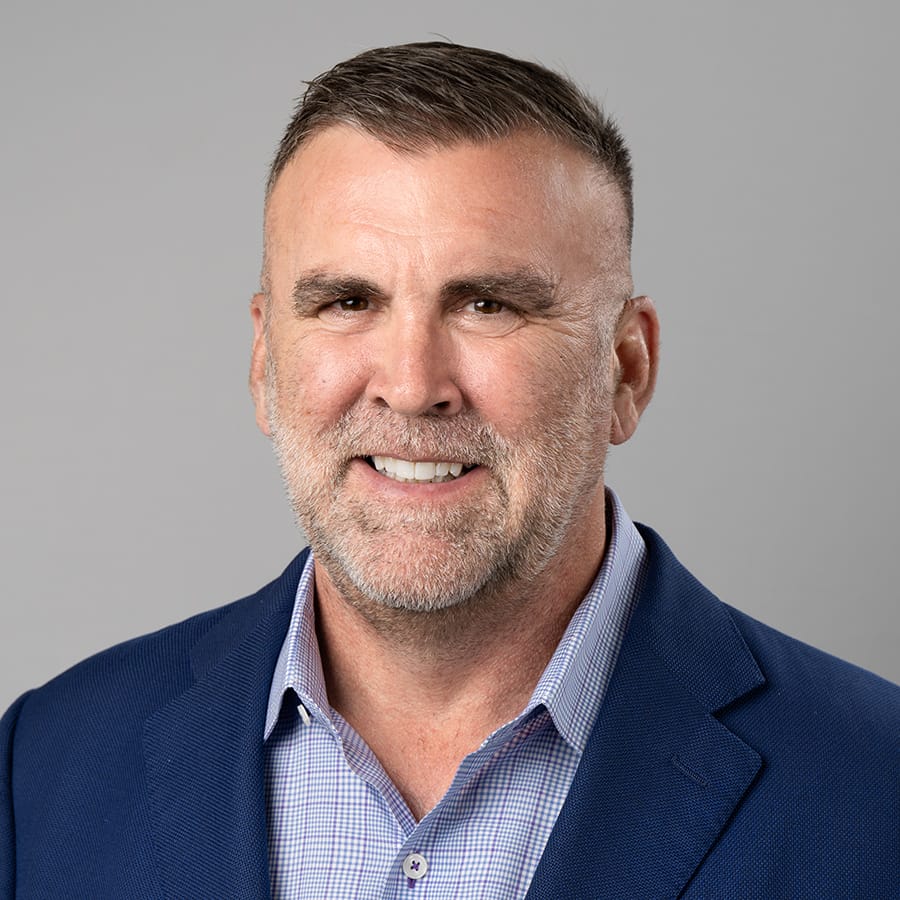
Michael Dodd serves as principal at the Defense Innovation Unit, where he leads national investment strategy for dual-use technologies aligned with defense modernization. Michael Dodd has overseen over $3.2 billion in initiatives advancing microelectronics, autonomy, space technologies, and advanced computing.
Through leadership of the National Security Innovation Capital initiative, Mr. Dodd established technology roadmaps and cultivated relationships across government, academia, and venture capital. His work bridges operational needs with long-term innovation strategy, aligning public and private sector contributions to national security.
Mr. Dodd previously served as a university program director at Indiana University, where he helped expand the National Security Innovation Network and increase non-traditional defense partners in academic institutions. His earlier roles in private equity and the U.S. Marine Corps provided valuable insights that informed his approach to innovation and leadership.
Michael Dodd holds a bachelor’s degree in political science from the Catholic University of America. Outside of work, he enjoys military history, hiking, and exploring national parks.
What is your typical day, and how do you make it productive?
As CEO of a national security advisory firm, my days start early—usually around 5:30 a.m.—with a workout and a review of key intelligence briefings. I spend mornings aligning with my team on emerging threats and client priorities, then shift into strategic meetings with government or corporate partners. Productivity comes down to focus and delegation: I prioritize high-impact decisions, block time for deep thinking, and rely on real-time data from the field. No two days are the same, but staying disciplined, informed, and mission-driven keeps the work both productive and meaningful.
How do you bring ideas to life?
Bringing ideas to life in the national security space starts with identifying real-world threats or gaps through intel analysis, mission partner capabilities and client feedback. I test ideas by pressure-checking them with my senior advisors—many of whom come from military, intelligence, and government contracting backgrounds—then refine them based on operational realities. Once the concept is sound, I assemble cross-functional teams to develop solutions quickly, whether it’s a new risk assessment model, a tech-enabled monitoring tool, or a strategic framework for a client. Execution is everything—so I drive momentum through clear objectives, accountability, and constant feedback from the field.
What’s one trend that excites you?
One trend that excites me is the integration of AI with threat intelligence and risk mitigation. We’re seeing powerful advances in how machine learning can analyze vast datasets—social media chatter, satellite imagery, cyber traffic—in real time to identify patterns and predict emerging security threats before they fully materialize. It’s a game changer for proactive decision-making, allowing both public and private-sector clients to move from reactive to anticipatory security postures and countermeasures.
What is one habit that helps you be productive?
One habit that helps me stay productive is starting each day with a clear, prioritized list of mission-critical objectives. In a field where the landscape shifts quickly and demands come from all directions, this habit keeps me focused on what truly moves the needle. It helps me cut through noise, delegate effectively, and ensure that my time is spent driving impact, not just activity.
What advice would you give your younger self?
I’d tell my younger self to embrace uncertainty and lean into calculated risk sooner. In the national security world, and in leadership, waiting for perfect clarity often means missed opportunities. Trust your instincts, surround yourself with people who are smarter than you in key areas, and don’t be afraid to make bold moves. The path won’t always be linear, but resilience and adaptability are far more valuable than having all the answers upfront.
Tell us something you believe almost nobody agrees with you on?
I believe that over-reliance on technology can actually weaken national security if it comes at the expense of human intelligence and intuition. While most are racing to automate everything, I firmly believe that no algorithm can fully replace the situational awareness, cultural context, and on-the-ground instincts of a well-trained operative. Tech should enhance decision-making—not make it for us. In high-stakes environments, human judgment is still the ultimate force multiplier.
What is the one thing you repeatedly do and recommend everyone else do?
One thing I consistently do—and recommend to everyone—is conduct a personal debrief at the end of each day. I take 10–15 minutes to review what went right, what didn’t, and what I learned. It’s a habit rooted in military and national security culture, and it sharpens both strategic thinking and self-awareness. Over time, this simple practice compounds into better decisions, faster course corrections, stronger leadership, and better outcomes.
When you feel overwhelmed or unfocused, what do you do?
When I feel overwhelmed or unfocused, I step away and reset through silence and stillness—no screens, no meetings, just a few minutes to breathe and clear my head. In high-pressure environments like national security, clarity is everything. I’ve learned that stepping back, even briefly, often leads to better decisions than pushing through mental clutter. It’s about regaining perspective so I can return to the problem with focus, precision, and intent.
What is one strategy that has helped you grow your business or advance in your career?
One strategy that’s been key to growing the business and advancing my career is building trust before pitching value. In the national security space, credibility and reputation is everything—clients won’t engage unless they trust your judgment and discretion. I focused early on building deep, long-term relationships by showing up consistently, delivering results, and listening more than I talked. That trust turned into referrals, strategic partnerships, and access to higher-stakes work. It’s a slower path, but in this field, reputation is your strongest asset.
What is one failure in your career, how did you overcome it, and what lessons did you take away from it?
One failure early in my career was not valuing personal relationships as much as I should have. I was laser-focused on performance, delivery, and technical precision—but I underestimated how much trust and connection matter in this field. Clients and colleagues want to work with people they trust, not just those who are competent. Since then, I’ve made relationship-building a core part of my leadership approach. The lesson was clear: in national security and business alike, people come before process.
What is one business idea you’re willing to give away to our readers?
One business idea I’d give away is a platform that provides real-time geopolitical risk briefings tailored specifically for nontraditional, small and mid-sized businesses operating globally. Most of these companies don’t have the resources for a full security advisory team, but they still face serious exposure—from supply chain disruptions to regional instability. A subscription-based service offering curated, actionable intelligence could bridge that gap and help them make faster, safer decisions without the overhead of a full-scale national security department.
What is one piece of software that helps you be productive? How do you use it?
One piece of software that helps me stay productive is Fireflies.ai, which we use to automatically record, transcribe, and summarize key meetings—especially those involving clients, intelligence partners, or internal strategic planning. In a fast-paced environment where every detail matters, Fireflies ensures nothing gets lost in translation. It frees me up to stay fully present in conversations while creating a searchable record that my team can refer to for follow-up actions, briefings, or cross-functional alignment.
Do you have a favorite book or podcast you’ve gotten a ton of value from and why?
One podcast I’ve gotten a lot of value from is The Shawn Ryan Show. It’s rare to find a platform that dives so deeply—and honestly—into the experiences of military, intelligence, and special operations professionals. The conversations are raw, insightful, and often bring to light lessons in leadership, resilience, and decision-making under pressure. It’s not just storytelling—it’s a masterclass in human performance and real-world strategy.
What’s a movie or series you recently enjoyed and why?
A series I recently enjoyed is “Yellowstone.” It’s not just the drama that draws me in—it’s the leadership dynamics, the strategic maneuvering, and the constant tension between legacy, loyalty, and survival. Watching how power is protected, challenged, and negotiated resonates with the kind of decision-making we face in the national security world. Plus, the rugged individualism and code of honor hit close to home.
Key learnings
- Prioritization, trust-building, and daily debriefs are essential tools for staying productive and effective in high-pressure leadership roles.
- Human intelligence and emotional awareness remain critical in the security field, even as AI and automation gain traction.
- Long-term growth is driven by reputation, credibility, and deep relationships—not quick wins or flashy solutions.
- Failure often stems from underestimating internal dynamics—success depends as much on buy-in as it does on strategy.
- Emerging entrepreneurs can create real impact by building accessible tools that fill national security gaps for underserved markets, like mid-sized global businesses.