
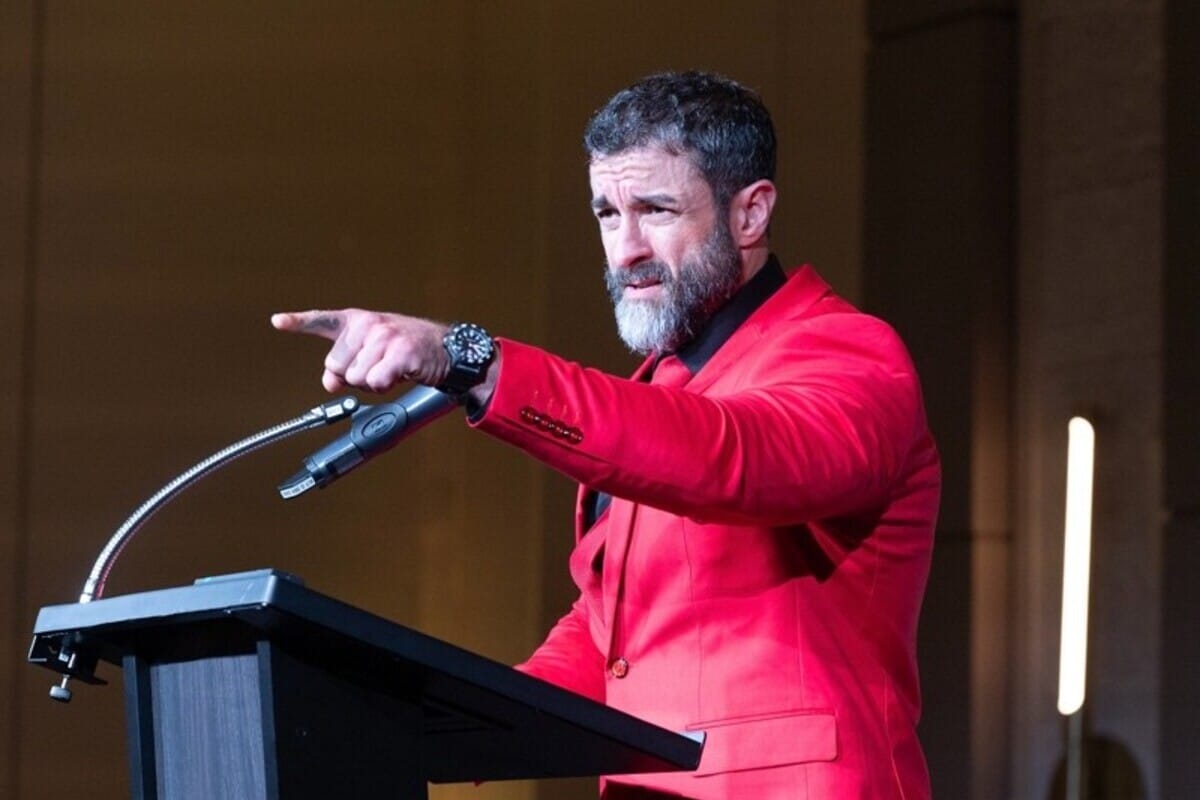
Jair Matis is the Owner and Operator of Optimize U Louisville LLC, co-owner of Optimize U Cincinnati LLC, and Optimize U Owensboro LLC, under which he opened five clinics in two and a half years, specializing in hormone optimization, hot/cold/compression, and red light therapies. He serves as the lead financial manager and oversees the design, maintenance, and technological aspects of the companies. Jair is a passionate participant in the veteran community, devoting his spare time helping teammates as the Treasurer for the First There Foundation. First There Foundation provides personal support addressing the visible and invisible wounds of service providing air and resources for fellow Combat Controllers, Veterans, and First Responders.
Matis served 22 years in the United States Air Force & Air National Guard as a Combat Controller. His final assignment was at the 123rd Special Tactics Squadron in Louisville, KY where he attained the rank of Chief Master Sergeant (E-9) serving as the unit’s Senior Enlisted Leader (SEL). As the SEL/Squadron Superintendent, he managed operations for elite Special Tactics Operators and Combat Mission Support personnel for worldwide deployments and Domestic Operations. Under this role, he closed out a 3-year Site Activation Task Force conversion-growth directive leading to a 60% growth in manpower, $10 million in combat mission equipment, and facility requirements for a 125-man squadron. He also doubled the precision strike, global access, and personnel recovery combat mission capability throughout the Air National Guard. He strategically organized and deployed teams to domestic and international operations, including disaster relief efforts.
Before this, he was the Special Tactics Functional Area Manager (FAM) & Combat Control Career Field Functional Manager (CFFM) at the National Guard Bureau. Here, he led the Air National Guard (ANG) Combat Control career field of over 250 personnel across the United States and provided functional and subject matter expertise for training, qualifications, and certification programs. He was also the Senior Enlisted Advisor to the ANG Emergency Operations (EOC) Director for Personnel Recovery and Special Operations (PR/SOF). He holds an active Top-Secret/ SCI clearance. Prior to being selected as the ST FAM and CCT CFFM, he served as a team level Combat Controller and Joint Terminal Attack Control Instructor (JTAC-I) at the 123rd Special Tactics Squadron (Louisville, KY) and 21st Special Tactics Squadron (Pope Army Airfield, NC).
Matis holds a Master of Science in Operations Management with a Graduate Certificate in Project Management from the University of Arkansas and a Bachelor of Science in Professional Aeronautics with a Management Minor from Embry-Riddle Aeronautical University. He also has associate degrees in Air Traffic Control and Logistics Management from the Community College of the Air Force.
Matis has been honored with the Meritorious Service Medal x3, Air Force Commendation Medal w/ Valor, Air Force Combat Action Medal, Humanitarian Ribbon, Air Force Achievement Medal, and Air Force Good Conduct Medal.
What is your typical day, and how do you make it productive?
My typical day starts early. I believe in setting the right tone for the day with a solid morning routine. I usually start with a workout to get the blood flowing and help me clear my mind. That starts my days right for me, personally. Then I’d dedicate some quiet time for self-reflection before I dive into my work. At work, I try to make my day productive by prioritizing what truly matters to me, which is what will drive the most impact for my team and clients. I couldn’t emphasize enough how important it is to eliminate distractions in my day-to-day so I can keep my calendar tight and effective.
How do you bring ideas to life?
I bring ideas to life with vision and refinement. This involves writing it down, researching, identifying challenges and opportunities that the idea could face, then finally developing an implementation plan to action the idea.
However, I found the most effective way to bring an organizational idea to life is through refinement and buy-in from a trusted team (i.e., brainstorming). Taking my idea to a trusted group of like minds affords more brain power to assist in development, identifying threats/challenges/opportunities, and even techniques to implement the idea. I’ve also had ideas in the form of improvement requests or problem sets. For this kind of idea, I’ve found that brainstorming with a team is most beneficial.
Sometimes, one good idea can spark an even better one by having each participant come up with an idea/solution for the problem. Have somebody record each person’s idea, allow time for each idea to get presented and elaborated on, and then have the team select the most advantageous idea or a combination of ideas to address the problem set—it’s a great way to bring it to life.
What’s one trend that excites you?
Technology trends, especially AI: artificial intelligence. This is just an amazing new innovative piece of technology that has the potential to create endless possibilities throughout all business types and sectors.
What is one habit that helps you be productive?
The habit of daily gratitude. I keep a daily gratitude board on my refrigerator. Each morning, I wake up, I think of what I’m most grateful for, and write it on the board. Starting my day with an attitude of gratitude sets me in a positive and productive mindset for the rest of the day.
What advice would you give your younger self?
Stay focused and always keep moving forward! Don’t spend your life trying to prevent each and every failure. At some point, failure is going to happen, but the getting stuck part is optional! You’re going to stumble, you might get passed over at that first opportunity for promotion, or your trusted business partner might betray you for their own personal gain.
When life punches you in the face, don’t fight it—feel it, allow it to flow through you, but don’t get emotional and react. Pause, reflect, understand, and respond by capitalizing on the lesson to be learned. Failure is there to teach you something. Will it be painful? You bet it will be, but pain is one of the most powerful forces for change and improvement.
Tell us something you believe almost nobody agrees with you.
The biggest room for growth in any organization is not new tech or fancy processes. It’s in how we take care of our people. I’ve seen it time and time again. When you invest in people, care for their well-being, and build trust with them? You could unlock much more potential than any program could. A lot of people think the answer is always an external solution. But for me, it always starts from within.
What is the one thing you repeatedly do and recommend everyone else do?
Be intentional and establish a morning routine that is sustainable to take care of yourself before starting your day. It doesn’t have to take all morning; it can just be one hour every morning that you wake up earlier and carve out a little wellness time for yourself before starting your day.
My first step is daily gratitude, next is the gym or walking/moving your body, and third is fueling the machine. This requires you to be intentional about your days. Prepping breakfast the night before, going to bed at a decent time, and setting your alarm to follow through with your goal. It’s paramount to take care of the mind, body, and spirit. You’ll feel sharper, stronger, more grounded, and proactive with the rest of your actions throughout the day.
When you feel overwhelmed or unfocused, what do you do?
If I get overwhelmed or unfocused, my go-to is grounding. I use a breathing technique called the 4-7-8. Inhale, through your nose, for a count of four. Hold your breath for seven. Exhale through your mouth for eight. I repeat this three times; it takes less than a minute and greatly reduces my sensitivity to what’s going on in that moment. After that simple mind-body recalibration, I feel more level-headed to adequately respond to what’s overwhelming me and/or refocus and prioritize the tasks at hand.
What is one strategy that has helped you grow your business or advance in your career?
Clearly define, set, and physically write out your goals, but also follow up with your goal attainment. The set it and forget it method doesn’t work here. To set an effective goal, you need to ensure it meets all criteria of the SMART acronym: specific, measurable, attainable, relevant, and time-based.
Intentionality, consistency, and discipline bring goals to life. If you see that you have veered off the path of accomplishing your organizational (or personal) goal, reflect on giving yourself a little grace, but also provide a course correction to get back on track. Once you’ve accomplished your goal, congratulate and celebrate your team and/or yourself. But remember that the single goal wasn’t the finish line; you need to make goal setting and attainment a habit. So set another one following the same process. Those who regularly and clearly set attainable goals, follow up, and finish what they started are constantly seeking improvement and become the most successful in life.
What is one failure in your career, how did you overcome it, and what lessons did you take away from it?
Leadership failure: the suicide of a friend and teammate, TSgt Travis Brown (PJ) in 2022. Over my military career, I’ve been to many funerals and memorials. Each one was terrible, unfortunate, but we all knew it was the cost of doing business as a combatant. Up to that point, I had never known a teammate to take their own life; everyone I had known to die was either in combat or a training mishap. In Special Tactics, suicides were almost non-existent at that time until the withdrawal from Afghanistan in 2021, with no mission/purpose suicides started occurring.
Travis was struggling, we all saw it; many talked with him and took his word that he was “okay.” Unfortunately, a few weeks after personally talking with Travis in my office during a mentoring wellness check session, he took his own life. Travis’ suicide had a profound negative effect on the operators and the unit. We all questioned what we could have done differently or how we could have prevented it, especially me, as the SEL. At the time of his passing, the commander was on a work trip. That left me in charge, so the next morning (holding back tears), I called the entire squadron into the conference room and had to brief them that their teammate was gone, and I had to brief them on the manner in which it happened.
Calling that meeting to address my men proved the most difficult brief I’ve given to date. But it had to be done, right then and there. I had to be there for my men. I called off all training for the rest of the week; some men were upset with me about that. They wanted to focus on the shooting and jump training that was scheduled. But I had to run the Air Force suicide postvention checklist, and we needed to plan a military memorial. Plus, most of these operators tuck emotions down and just continue the mission. When they needed to communicate and connect with each other in what I hoped would deconstruct the anger, sadness, and guilt from this ordeal.
That week, they came in, worked out, met in groups, and had a couple of team-building talks, going over signs and how to learn and grow from this mishap. It didn’t make it any easier to accept, but we all overcame that failure as a team. In my opinion, we all overcame that failure by creating a tighter team connection, deconstructing the trauma and guilt we shared regarding it, and learning how to identify and potentially prevent it in the future. As the weeks passed, each fire team implemented a buddy check system to check on their battle buddy. Everyone reacquainted themselves with identifying the symptoms, and oddly enough, a bunch of type-A special operators were actually kind to each other. It was beautiful to see a bunch of hardened snake eaters be nice to each other for a change. From a leader standpoint, I used the momentum of the suicide to advocate for resources for a psychologist from the Special Operations Command-SOCOM. My repeated attempts finally proved fruitful, and we obtained an in-house psychologist for our unit.
In short, what I took away from that failure is that you can overcome horrific ones by simply moving forward. Accept and address it, help others, help them move forward, and the best way to get everyone moving forward is to move forward yourself by leading by example.
What is one business idea you’re willing to give away to our readers?
I have one, which is to create a mobile wellness unit that brings therapies like red light, cryotherapy, and compression treatments directly to clients’ doors. People are busier than ever, and making recovery and optimization more accessible can fill a real need. It’s also an opportunity to pair it with education on wellness and longevity, so you’re not just offering a service, you’re empowering people to take ownership of their health.
What is one piece of software that helps you be productive? How do you use it?
Intuit QuickBooks. It’s seriously the most organized financial tracking software out there, saving countless hours throughout the week. I use it for my businesses and the veteran non-profit that I work for. It provides real-time reports that you can run at the click of a button to assess your organization’s performance.
What helps me be more productive is its time savings and organization. The new automated categorization rules allow you to set up an automatic categorization based on specific criteria. When you have multiple businesses with over 100 transactions a day for each, this adds up to an enormous amount of time saved. You simply log in, verify the rule, and quickly move on.
Before utilizing this software, I would use basic Excel imports from Stripe (our financial infrastructure application to take revenue). This was extremely time-consuming and tedious. You also had the possibility of errors in Excel if a formula function happened to get fat-fingered. QuickBooks is simplistic, time-effective, easy to use, and almost error-free. The time it saves allows a business owner/non-profit treasurer to focus on what really matters in an organization: managing operations, empowering personnel, providing resources, and personal support for veterans/first responders.
What is the best $100 you recently spent?
I recently spent around $100 on a really solid journal and a new workout gear. The journal is a staple in my daily routine; it helps me stay focused, set intentions, and track both business goals and personal reflections.
My new workout gear has been a game-changer for quick, efficient workouts. I’ve been looking to buy it for quite some time. It’s nothing special, but it is high-impact, and for someone who’s constantly moving between commitments, it’s an easy way to stay dialed in physically.
Do you have a favorite book or podcast from which you’ve received much value?
My favorite book is The Four Agreements by Don Ruiz. It provides a simple yet effective code of personal conduct that one should strive to live by. The agreements are: be impeccable with your word, don’t take anything personally, don’t make assumptions, and always do your best.
In practicing these simple but positive agreements, you discover that your greatest enemy that limits your full potential is yourself. Due to ego, or internal assumptions, judgment of others, and actions. The preconceived personal agreements we had with ourselves more times than not, resulted in us looking at our situations and circumstances faced from a lens of fear/judgment. Leading us to take actions or words personally, assuming everything is about us, drinking this emotional poison causes us unnecessary pain and suffering.
Since reading this book and removing fear/judgment from my outlook, and replacing it with happiness/acceptance from a lens of love, has proved life/work much more freeing and enjoyable.
What’s a movie or series you recently enjoyed and why?
I recently watched The Terminal List. I was drawn to the intensity of the story, and it resonated with me because of the themes of loyalty, sacrifice, and overcoming challenges. It also reminded me of the strength and dedication of so many veterans I’ve served with. The production was just really well done, great cinematography and storytelling.
Key learnings:
- Jair tends to put a strong emphasis on a morning routine, seeing it as a cornerstone of productivity and wellness. This helps set a grounded day for gratitude and intentionality.
- Jair believes strongly that collaboration can refine ideas. Brainstorming with a trusted team is essential to transform concepts into strategies.
- Jair emphasizes the importance of being structured and intentional. He views clarity, consistency, and course correction as the key to sustained growth.