
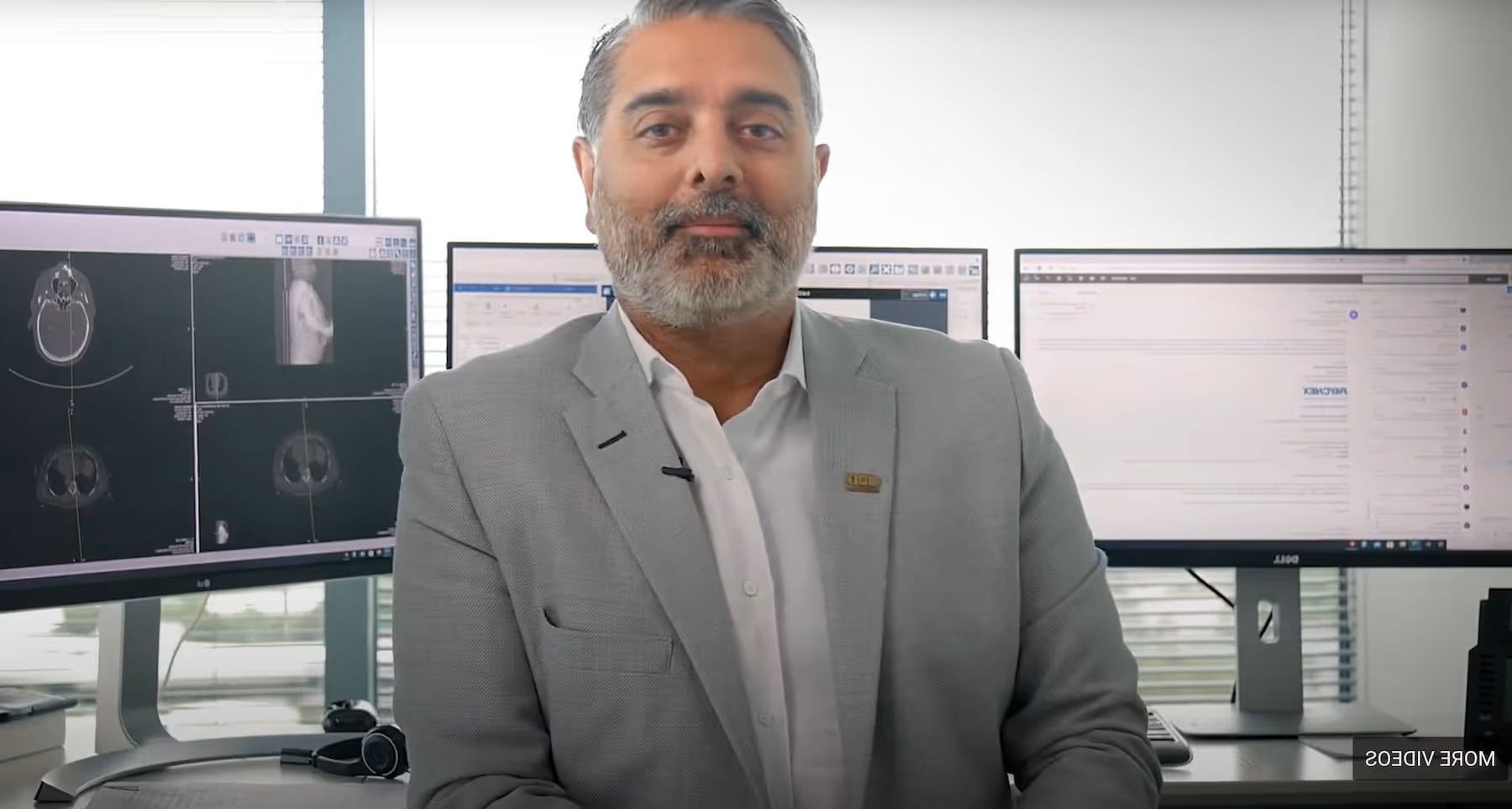
In 2005, Drs. Anand and Tejal Lalaji started The Radiology Group with a bold idea and a deep purpose. They were finishing their training at Wake Forest University—he in musculoskeletal radiology, she in neuro and breast imaging—when they saw a shift happening. Technology was changing fast. High-speed internet and digital imaging made it possible to read scans from anywhere. So, instead of following the crowd, they built something new.
They launched their practice in a small rural hospital in northeast Georgia, alongside Dr. Mahendra Patel, their father. The goal was simple: bring top-level radiology to small-town hospitals that big systems often overlooked. From the start, they focused on quality, communication, and care. No fancy name, just The Radiology Group—doing the basics better than anyone else.
As the world rushed toward big hospital systems and private equity deals, they stayed independent. Today, they’re one of the last radiologist-run groups of their kind. They serve only rural communities. That’s on purpose. Dr. Tejal grew up in a small town, and she knows what those places need: fast answers, real relationships, and people who don’t treat them like the “redheaded stepchild.”
They offer a free, secure messaging app for instant communication with doctors. They visit hospitals in person. They build trust. In a time when rural hospitals are struggling, The Radiology Group is showing up, staying loyal, and proving that great care doesn’t have to come from a big city. Sometimes, it starts with a small team and a big heart.
What is your typical day, and how do you make it productive?
A typical day at The Radiology Group starts before sunrise. Many rural hospitals need reads completed by early morning, especially for ER cases, so radiologists begin reviewing cases as early as 5 a.m. Productivity isn’t about speed alone—it’s about clarity and communication. Each read must be precise and actionable. TRG uses a proprietary HIPAA-compliant messaging app to communicate instantly with rural clinicians. This eliminates the delays often seen in larger hospital systems and helps keep the workflow moving.
Daily team huddles are brief but focused. They’re virtual, given the remote nature of teleradiology, but they include technical staff, operations, and physicians. These touchpoints ensure everyone is aligned and supported, especially because burnout in this field is real and can go unnoticed.
How do you bring ideas to life?
Trial and error played a major role in the early days. When Anand and Tejal Lalaji first started TRG, they worked out of a single rural hospital and experimented with different PACS systems and VPNs until they found one that could handle large file sizes with minimal latency. Ideas aren’t born in brainstorming sessions—they evolve in service. For example, the decision to offer a free, secure messaging app came from repeated feedback from rural doctors who felt isolated from their radiology teams. Instead of just adding another software layer, TRG built something that served their exact need: immediacy.
What’s one trend that excites you?
The decentralization of healthcare, especially in radiology. While many see the rise of AI and teleradiology as threatening or overly commodified, TRG sees an opportunity: local expertise delivered remotely with precision. They’re particularly interested in AI that flags missed findings—not as a replacement, but as a second set of eyes to reduce human error, especially in high-volume rural ERs.
What is one habit that helps you be productive?
Consistent check-ins with clients. Every hospital partner receives personal attention—not just through virtual reads but via regular on-site visits. This habit has built relationships that outlast any service contract. It’s easy to automate care; it’s harder, but more valuable, to humanize it.
What advice would you give your younger self?
“Trust your instincts, but be ready to adjust.” When TRG first launched, they thought access to technology alone would be enough. It wasn’t. Only when they combined digital speed with human connection—visiting hospitals, knowing clinicians by name—did the model truly click.
Tell us something you believe almost nobody agrees with you on?
That rural healthcare providers aren’t underserved due to lack of funds or training, but because of the assumptions made about them. Too many in the healthcare space prioritize urban markets because they seem more advanced. TRG believes rural providers are just as sophisticated—they just want collaborators who speak their language and respect their pace.
What is the one thing you repeatedly do and recommend everyone else do?
Listen before solving. Radiologists often want to jump into the read and deliver a fast report. But often, a quick phone call to the rural provider yields insight that can alter interpretation or improve clarity for patient management.
When you feel overwhelmed or unfocused, what do you do?
TRG has built-in downtime protocols. If a radiologist is fatigued, others are trained to step in. It’s not about ego or hours logged—it’s about protecting the quality of the read. Taking a walk, resetting with a non-clinical task, or even attending a hospital’s local event on-site helps reconnect to the mission.
What is one strategy that has helped you grow your business or advance in your career?
Specializing exclusively in rural hospitals. Instead of casting a wide net, TRG focused tightly on a single segment. This allowed them to tailor every process, from tech setup to report turnaround, to rural needs. That kind of specificity built deep trust—and a loyal client base.
What is one failure in your career, how did you overcome it, and what lessons did you take away from it?
In the early years, TRG tried to partner with a large suburban hospital. It strained resources and required adapting to a very different pace and expectation. The fit wasn’t right. They eventually pulled out, which was difficult financially, but it sharpened their sense of purpose. The lesson: stick to the communities you’re built to serve.
What is one business idea you’re willing to give away to our readers?
Build a mobile imaging unit specifically for rural hospitals that don’t have 24/7 MRI or CT. Equip it with 5G-enabled upload so reads can be done in real time by subspecialists.
What is one piece of software that helps you be productive? How do you use it?
Their custom HIPAA-compliant messaging app is a game-changer. It allows instant back-and-forth between rural doctors and TRG’s radiologists, reducing ambiguity in reads and enabling real-time consultations—even for life-or-death cases.
Do you have a favorite book or podcast you’ve gotten a ton of value from and why?
The Checklist Manifesto by Atul Gawande. Radiology is about precision. This book reminded TRG how small steps and systems—not genius—create reliability.
What’s a movie or series you recently enjoyed and why?
Somebody Somewhere on HBO. It captures the emotional depth and complexity of small-town life with tenderness and realism—something TRG deeply connects with.
Key learnings
- Niche focus on rural hospitals allows deeper customization and trust.
- Real-time communication, not just fast tech, improves patient outcomes.
- Consistency and small gestures—like onsite visits—build long-term loyalty.
- Mistakes are best course-corrected by realigning with core values, not scaling faster.