
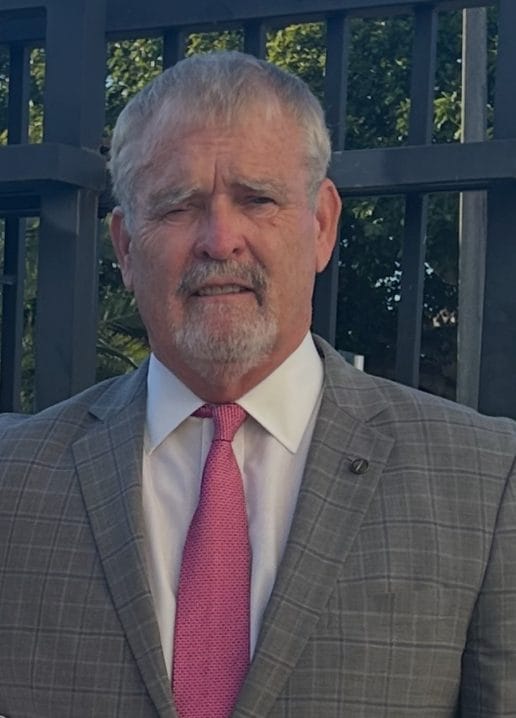
Dale Bendler grew up in a middle-class family in New Jersey. His home was always full—his parents, a sister, and two brothers filled the house with energy and lessons that stuck with him.
He stayed close to home for college, earning his bachelor’s degree at Rutgers. Later, his curiosity for world affairs led him to complete a master’s degree at the Naval War College.
For many years, Dale worked in a career that most people only see in movies. He served as a CIA officer, where he rose to the role of Chief of Station—not once, but three times. His work focused on topics like terrorism, espionage, and counterterrorism. Though the details are secret, his service earned him one of the CIA’s top honors: the Distinguished Career Intelligence Medal.
Even with such a demanding career, Dale always stayed grounded. He built healthy routines and stuck to them. He enjoys lifting weights, biking, swimming, and taking long walks. His love of fitness continues to this day.
Now retired, Dale keeps life simple and steady. He’s known for his quiet discipline and sharp focus. Whether he’s reading about global events or out for a bike ride, he moves through life with calm purpose.
Dale’s story reminds us that a strong foundation, steady effort, and clear values can take a person far—often in ways the world may never see.
What is your typical day, and how do you make it productive?
I start early. Old habits from the Marine Corps and the CIA don’t fade. By 0630 I’m awake, reading through international headlines and a few military and intelligence analysis blogs I still follow. What is happening in the world is still of keen interest to me. I usually work out right after—lifting weights three times a week, and mountain biking or power walking or swimming laps the other days. The physical routine gives shape to my mornings, and mental fitness too.
How do you bring ideas to life?
In intelligence work, ideas don’t come fully formed. You gather fragments—conversations, movements, behaviours—and slowly piece them together. Remember, you do this in another country, culture, religion, and language, too. I used to keep physical notes (on 3X5s) filled with what looked like nothing to most people: single words, odd timings, half-heard phrases, and or a rough drawing. Over time, I’d see patterns emerge. The key is not rushing the process.
What’s one trend that excites you?
Well, of course AI, cyber and mini drones come to mind. But be careful. If the grid goes down, so does the technology. And, we’re seeing more civilian, independent analysts doing geopolitical risk assessments on open platforms, and some of them are incredibly sharp. It’s a democratisation of intelligence in a way—unofficial, of course—but valuable. When institutions miss the mark, you sometimes find better insight from a PhD candidate in Buenos Aires tracking international military flights for fun.
What is one habit that helps you be productive?
To be honest, at this stage of my life I have an excellent balance between the physical and intellectual. I am retired so I guess I have the luxury of time for both. Almost 70 now, if I don’t know a word I look it up. Especially so with foreign languages. All that keeps the mind sharp. And of course I spend hours in the weight room.
What advice would you give your younger self?
Listen more. Don’t confuse silence with weakness—or noise with confidence. And when you’re making decisions that affect other people’s careers or even lives, ask yourself twice if it’s the right one.
Tell us something you believe almost nobody agrees with you on?
There should be accountability for wars lost, and failures of intelligence. The saying goes a general or admiral can lose a war, and that’s fine. If a private loses his rifle, he (or she) goes to jail. 11 September was an intelligence failure: that failure led to the Afghanistan and Iraq forever wars. Abbey Gate, too.
What is the one thing you repeatedly do and recommend everyone else do?
Take a walk without headphones. No podcast, no music. Just pay attention. How people move. What the environment is telling you. You’ll notice more about human behaviour in 15 minutes of quiet walking than in an hour-long lecture.
When you feel overwhelmed or unfocused, what do you do?
I revert to simplicity. Pushups. A walk around the block. Making a cup of coffee and not doing anything else while I drink it. Maybe watch an old film noir–even if a rerun. You can’t multitask your way out of overload. You have to re-centre. It’s something I learned in the field when adrenaline tricks you into thinking more action is always the answer.
What is one strategy that has helped you grow your business or advance in your career?
Observation. I learned early to keep quiet during briefings, especially when more junior people were speaking. Not to be passive, but to really listen. Ask them a follow up question, to show you really were trying to understand their point. Listening is an underrated leadership quality. That quiet presence earned trust. In one instance in a tough part of the world, my silence in a volatile negotiation led a key local leader to pull me aside later and offer information no one else got—simply because I didn’t interrupt.
What is one failure in your career, how did you overcome it, and what lessons did you take away from it?
11 September 2001 terrorist attacks. An intelligence failure. On my watch. I still have not overcome it. I cope. Lessons? Let your imagination run. Think like the bad guys
What is one business idea you’re willing to give away to our readers?
I spent decades operating in environments where publicity was a liability and outcomes were measured in silence. My work was never about exposure or brand building—it was about making smart, calculated moves with long-term impact. That background gives me a unique lens when it comes to offering up business ideas.
I’ve always believed the best systems are the ones people don’t notice. That thinking translates well into a business idea I’m willing to give away: an advisory service for small- to mid-sized international nonprofits focused on field safety and situational awareness training—especially for new staff heading into volatile regions.
I got the idea after seeing first-hand how many international aid workers often operate in areas with little to no preparation for the types of dangers they may face. Most people think of physical safety—bulletproof vests, evacuation plans. But it’s more often about reading a room, understanding subtle shifts in behaviour, and knowing when not to speak. And of course, all things cyber.
The service could include virtual simulations, localised threat assessment briefings, and scenario-based training with a focus on decision-making under pressure. The model would be small-scale, nimble, and client-focused—think embedded consultants who understand that situational awareness is more than just checking a security app.
You don’t need to train someone like they’re entering a war zone. But you do need to give them the mental tools to think clearly when things go sideways. A lot of NGOs just hope people figure it out as they go. That’s not enough anymore.
The business could be structured as a subscription-based service for international nonprofits, embassies, or even corporations with overseas staff. Unlike generic online courses, the offering would be scenario-rich, hands-on, and informed by real operational experience—without ever sharing classified methods or protocols.
What is one piece of software that helps you be productive? How do you use it?
My post-retirement life is a far cry from the highly encrypted systems of CIA headquarters, but that doesn’t mean I’ve left discipline or structure behind. These days, one of the tools I rely on is Obsidian, a knowledge management app built for users who think in layers, networks, and nuance.
I use it the way I used field notebooks. It’s how I map connections.
Obsidian is built on local markdown files, which appeals to my preference for systems that don’t rely on cloud storage or third-party servers. It allows me to build linked notes, timelines, and thematic threads across topics—from historical conflict data to emerging geopolitical shifts.
One of my folders is dedicated to tracking current developments in Latin America, where I once operated. Another holds layered research on influence operations in Sub-Saharan Africa. It’s not for publication. It’s for staying sharp.
I also use it to maintain a private journal of lessons learned—some from my professional years, others from civilian life. I tag each entry with themes like “trust,” “quiet leadership,” or “timing,” so that patterns emerge over time.
I’m not a tech guy in the modern sense. But I understand structure, and Obsidian gives me a way to see how small fragments add up to something larger. That’s the same logic I used in operations—just without the radio.
In short, Obsidian isn’t just a tool for me. It’s a quiet companion to a lifelong method of thinking: observe, organise, act—and above all, remain steady.
Do you have a favorite book or podcast you’ve gotten a ton of value from and why?
The Dogs of War by Forsyth. Wow: written in 1974 but speaks to 2025: rare earths, Private Military Companies, and superpower competition in Africa. And, I guess, my generation can relate to the tradecraft as described by Forsyth, since there is no iphones or internet. But younger readers might find it worth a read as well, because when the grid goes down, all that 1970’s stuff will come back.
What’s a movie or series you recently enjoyed and why?
I rewatched The Night Manager—a British made for TV series. Based on John le Carre’s novel of the same name. It’s a sobering reminder that normal people can get wrapped up in intrigue: shady backroom deals, deadly arms trafficking, spies, and mercenaries.
Key learnings
- Writing by hand enhances clarity, memory, and situational awareness.
- Listening and observation are often more powerful than immediate action or speech.
- Physical movement and simplicity help restore focus when overwhelmed.
- Failures rooted in hesitation can be prevented by trusting one’s seasoned intuition.
- Building brotherhood is a long game best played through presence, consistency, and discretion.