
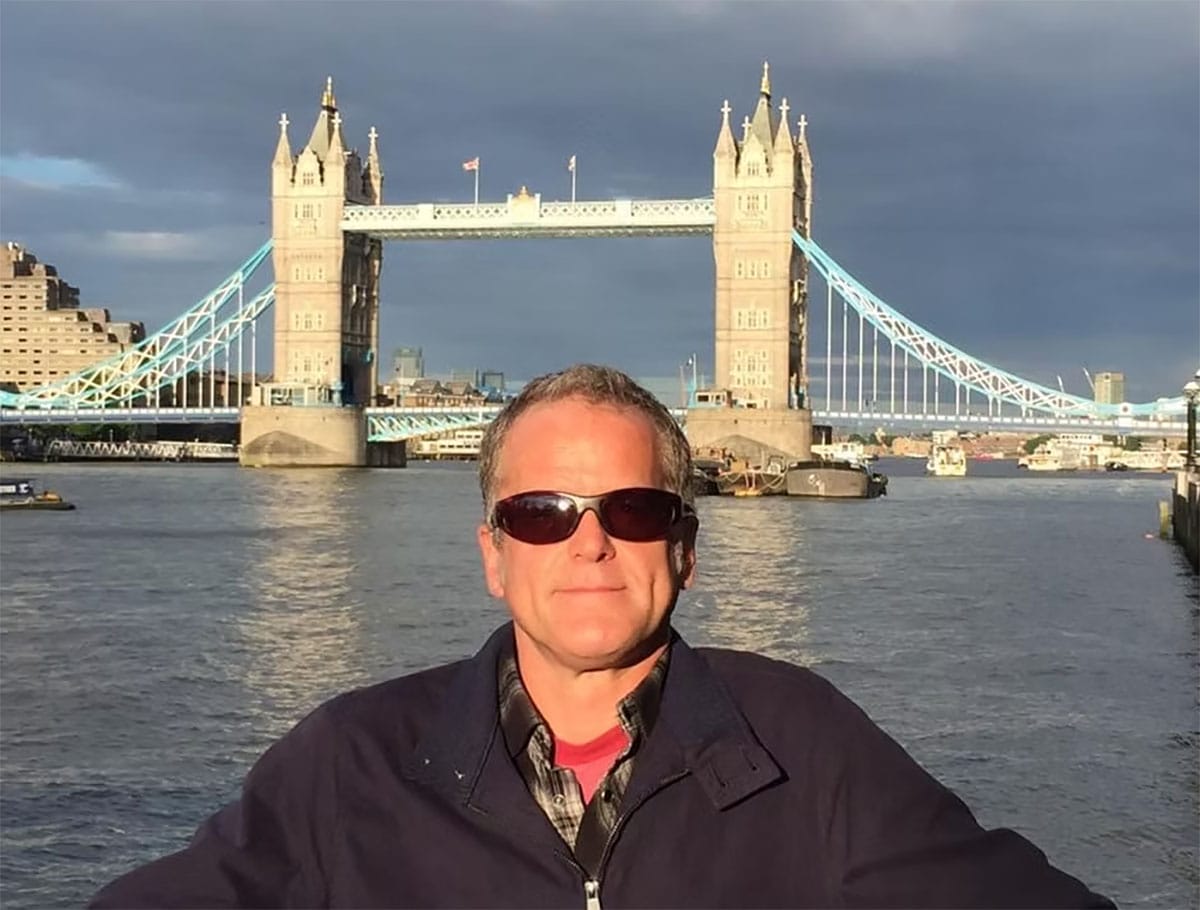
William McKay, born on September 25, 1969, has spent his entire life as a professional musician. A keyboardist, singer, songwriter, band leader, and producer, Bill is known for his soulful playing, genre-crossing style, and decades of collaboration across the American music scene.
In 1987, Bill moved to Colorado to attend Colorado College, where he studied world music—including East Indian, African, and Native American traditions. While there, he performed with The Circle and worked with the dance department, composing a thesis on the connection between music and choreography. After earning a political science degree in 1991, he moved to Boulder and joined Band Du Jour, a Soul ’n’ Roll group that toured extensively, including a Department of Defense tour to South Korea, Japan, and Okinawa. The band shared stages with Phish, Blues Traveler, Big Head Todd, and more.
In 1995, Bill joined the Derek Trucks Band as lead singer and keyboardist, relocating to Atlanta. Over the next five years, he toured and recorded with the group, performing with icons like Gregg Allman, Warren Haynes, Col. Bruce Hampton, Phil Lesh, and Gov’t Mule. This period deepened Bill’s roots in Southern rock and improvisational music.
Returning to Colorado in 2000, he joined Leftover Salmon and spent a decade recording and touring with the pioneering jamgrass band. During this time, he also formed the Bill McKay Band, performed solo piano gigs, and collaborated with a wide range of musicians across genres.
A long-standing project for Bill is the McKay Brothers, a collaboration with his brother John. The duo blends Bill’s originals and John’s songwriting with folk, blues, and country, reflecting their deep musical bond and shared roots.
Bill also spent six years touring with Coral Creek, led by Chris Thompson, contributing original songs to the albums Coral Creek and Free Dog, and working with producer Tim Carbone. He performed across the U.S. and the Virgin Islands during this time.
As of 2021, Bill plays with Steely Dead, a fusion of Steely Dan and Grateful Dead music, and the Very Jerry Band, celebrating the Jerry Garcia Band’s catalog—both led by his longtime friend Dave Hebert. He also performs with The Other Brothers, a powerhouse group of Colorado musicians honoring the music of the Allman Brothers Band, where Bill takes on the role of Gregg Allman.
Proud to be part of the Colorado music community for over 30 years, Bill remains active with the Bill McKay Band.
What is your typical day, and how do you make it productive?
A typical day for William McKay often begins with coffee and a quiet hour at the piano. That space—free of distractions—is where ideas surface. If he’s not rehearsing for an upcoming show with Steely Dead or the Very Jerry Band, he’s likely working on new material for the McKay Brothers or freelancing with Colorado musicians. He treats morning like creative prime time, and by noon he’s usually in planning or rehearsal mode. “Mornings are for music, afternoons are for logistics,” he often says.
How do you bring ideas to life?
For Bill, inspiration usually starts at the keyboard. He experiments with melodic fragments or chord progressions, often shaped by recent experiences or a lyric line that’s been bouncing around. Collaboration also plays a big role—working with his brother John in the McKay Brothers or bouncing ideas off longtime friends like Dave Hebert. He credits his background in world music studies for encouraging him to think rhythmically and melodically across traditions. “Sometimes a tune starts with a tabla rhythm I studied 30 years ago,” he says.
What’s one trend that excites you?
Bill finds the modern resurgence of live Grateful Dead and Allman Brothers reinterpretation bands fascinating. “There’s something beautiful about this generation diving into those catalogs—not as nostalgia, but as living, breathing music,” he says. He’s particularly interested in how young players blend classic material with improvisational risk, which has always been a cornerstone of his own musical identity.
What is one habit that helps you be productive?
“Writing something down every day—just a phrase, a progression, or even a lyric idea—keeps the creative tap from rusting,” Bill explains. Even if he doesn’t use what he writes, the act keeps him tuned in.
What advice would you give your younger self?
“Don’t rush out of Colorado,” he’d say. While Atlanta and the Derek Trucks Band era was important, he reflects that Colorado’s music community offered more support and experimentation than he realized at the time.
Tell us something you believe almost nobody agrees with you on?
Bill believes that improvisation in music is more spiritual than technical. “People think it’s about skill. But really, it’s about listening and letting go,” he says. It’s why his solos vary wildly night to night—and why he encourages younger musicians to stop memorizing licks and start feeling their way through.
What is the one thing you repeatedly do and recommend everyone else do?
Take time to play alone. “You learn the most when no one’s watching. That’s where you find your voice,” he says. Whether it’s solo piano or guitar, those private sessions are where the best ideas usually start.
When you feel overwhelmed or unfocused, what do you do?
He goes swimming. “Being underwater clears the static,” he says. It gives him a physical reset and often helps him approach musical problems with new clarity.
What is one strategy that has helped you grow your business or advance in your career?
Diversifying his projects. From Leftover Salmon to Coral Creek to his own solo work, McKay never relied on just one band or one identity. “You have to be flexible,” he says. “The scene shifts. Audiences shift. You have to find new ways to stay connected.”
What is one failure in your career, how did you overcome it, and what lessons did you take away from it?
There was a period after leaving Derek Trucks Band when he felt unmoored. He’d left a high-profile gig and wasn’t sure what came next. “I tried to force a sound that didn’t fit,” he says. It wasn’t until he returned to Colorado and leaned back into jamgrass and roots that he found his footing. The lesson? “Don’t fake the next move. Follow what feels true.”
What is one business idea you’re willing to give away to our readers?
A touring database for musicians that includes not just venues, but housing, home-cooked meals, and friendly stops. “There’s a huge need for a musician support network that’s more than couchsurfing,” he says.
What is one piece of software that helps you be productive? How do you use it?
He uses Logic Pro X to sketch out songs, harmonies, and even full arrangements before band rehearsals. “It helps me think structurally before I bring an idea to the group,” he explains.
Do you have a favorite book or podcast you’ve gotten a ton of value from and why?
He recently reread The Music Lesson by Victor Wooten. “It’s a weird little book, but it’s all about feel. It’s like a spiritual guide to being a better listener.”
What’s a movie or series you recently enjoyed and why?
He enjoyed Echo in the Canyon, a documentary about the 1960s Laurel Canyon music scene. “Watching those old stories unfold gave me a deeper appreciation for how tightly knit creative communities can shape generations.”
Key learnings
- Daily creative practice, even if small, maintains momentum and sharpens intuition.
- Career growth in music often comes from collaboration, flexibility, and diversification.
- Emotional and spiritual insight plays a larger role in improvisation than technical skill.
- Recovery from failure often begins by returning to your authentic sound or environment.
- Solo reflection—whether through music or physical reset—is critical for long-term clarity.