
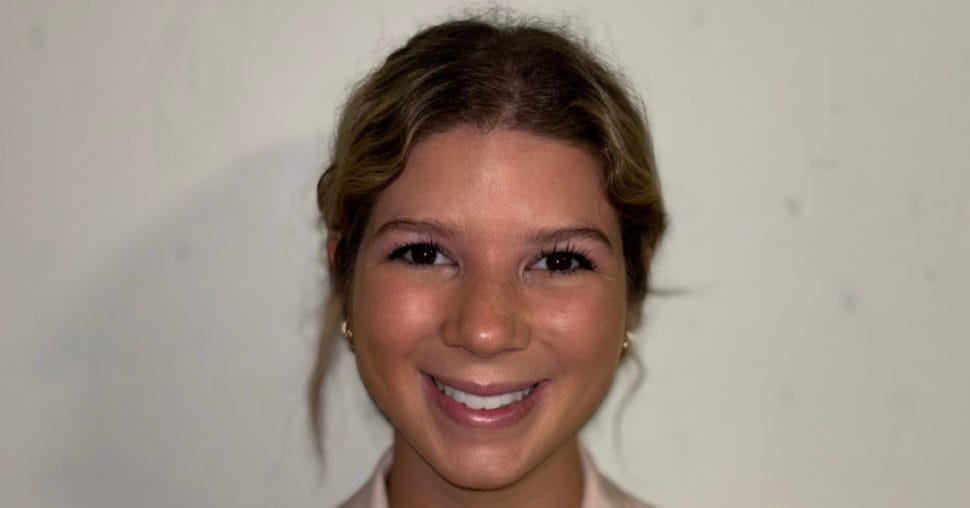
Elodie Degage grew up between two worlds. She is fortunate to have a mix of cultures and a family that shaped her into someone curious, confident, and full of heart. Raised in a close-knit family, she looked up to her older brother and learned the value of hard work from her mom, a dedicated teacher.
From a young age, Elodie stayed active. She danced ballet, rode horses, and ran with passion. In high school, she joined the cross country and track teams. She helped her team win a state championship and later, in Hawaii, ran a full marathon—proving her drive early on.
After graduating in 2018, Elodie moved to Hawaii to pursue a nursing degree at the University of Hawaii at Manoa. She balanced her studies, Army ROTC training, and life on an island far from home. She made the Dean’s List, joined the nursing association, and still found time for CrossFit, reading, and beach walks.
Elodie worked hard in many different jobs—from serving on a boat to working in a boutique. She also rekindled her love for horses, seeking opportunities to help at a stable near her home.
But what really sets Elodie apart is her heart. She has volunteered with a homeless shelter, a food bank, and a dog rescue. Helping others is simply part of who she is.
Elodie earned her nursing degree in May 2024 and now works as a registered nurse in a clinic. With a life full of purpose, movement, and kindness, she’s just getting started—and the world is better for it.
What is your typical day, and how do you make it productive?
My day usually starts around 5:30 a.m. I’ll do a workout to get my energy up. Then I review patient notes or nursing resources over breakfast. Most days are packed with shifts at the clinic, so I map out time blocks the night before to stay focused. If I want to volunteer, I’ll fit that in during my off-hours. I’ve learned to batch tasks—if I’m meal prepping, I’ll do a whole week’s worth. If I’m working on continuing education, I put my phone away and use timers to stay on track.
How do you bring ideas to life?
I usually test ideas out in the real world. For example, I used to sketch out wellness products when I worked at the boutique. I never launched anything, but I’d ask customers what they thought of certain designs or scents. I like to observe people and ask questions—then I start small, try, fail, and adjust. Whether it’s volunteering or learning a new nursing skill, I’ve found it’s all about being hands-on and willing to get messy.
What’s one trend that excites you?
The rise of animal-assisted therapy in healthcare. I’ve volunteered at dog rescues, and I’ve seen firsthand how calming animals can be. Integrating that into care—especially for veterans or people with chronic illnesses—makes so much sense to me. I’d love to be part of that in the future.
What is one habit that helps you be productive?
Running. Even if it’s just a short jog, it resets my brain. I ran cross country in high school and even finished a marathon later on. It’s like moving meditation. My best ideas and mental clarity come after a run.
What advice would you give your younger self?
Stop thinking everyone else has it all figured out. When I joined Army ROTC, I was intimidated by how confident everyone seemed. But over time, I realized most people are just figuring things out as they go. It’s okay to be unsure, as long as you keep going.
Tell us something you believe almost nobody agrees with you on?
I think horses are better therapists than people in some cases. Working at a stable again reminded me how deeply animals can reflect human emotion. People talk too much—horses just listen.
What is the one thing you repeatedly do and recommend everyone else do?
Volunteer. It keeps you grounded. I’ve helped at homeless shelters, food banks, and rescue shelters. No matter how stressed or busy I am, volunteering reminds me why I became a nurse in the first place.
When you feel overwhelmed or unfocused, what do you do?
I walk to the beach. Living in Hawaii has taught me the value of silence and nature. Just sitting in the sand or watching the waves gives me a sense of control again. If I can’t get to the beach, I do deep breathing with a timer—three minutes can change everything.
What is one strategy that has helped you grow your business or advance in your career?
I treat every job, even small ones, like it matters. Working on a boat as a server taught me communication. At the boutique, I learned how to read people. At the horse barn, I learned how to manage responsibility without supervision. That mindset—taking every opportunity seriously—has opened doors I didn’t expect.
What is one failure in your career, how did you overcome it, and what lessons did you take away from it?
In my first semester of nursing school, I failed a med math quiz because I didn’t ask for help. I thought needing a tutor meant I wasn’t cut out for the field. Eventually, I admitted I was struggling and joined a study group. I learned that asking for help is a strength, not a weakness.
What is one business idea you’re willing to give away to our readers?
A mobile wellness unit that brings therapy dogs to community shelters and transitional housing. It could be volunteer-run and partnered with healthcare organizations. Simple, low-cost, and high-impact.
What is one piece of software that helps you be productive? How do you use it?
Notion. I use it to plan my weeks, track my workouts, keep running logs of professional development, and store personal goals. It’s like my second brain.
Do you have a favorite book or podcast you’ve gotten a ton of value from and why?
When Breath Becomes Air by Paul Kalanithi. It offers a profound exploration of mortality, purpose, and the meaning of life through the lens of a neurosurgeon facing his own death. It taught me that life’s fragility makes it essential to live with intention, love deeply, and find meaning even in suffering. It changed how I see my role as a nurse.
What’s a movie or series you recently enjoyed and why?
I really liked the series The Pitt. It brings an immersive, emotionally resonant portrayal of modern emergency medicine—showcasing the relentless intensity of ER life, systemic healthcare challenges, and deeply human staff and patient stories, all delivered in a gripping “real-time” format.
Key learnings
- Consistency and small routines—like running and time-blocking—build long-term productivity.
- Real-life experience, even in unrelated jobs, can develop transferable skills for any career path.
- Volunteering fosters empathy and provides clarity during periods of stress or burnout.