
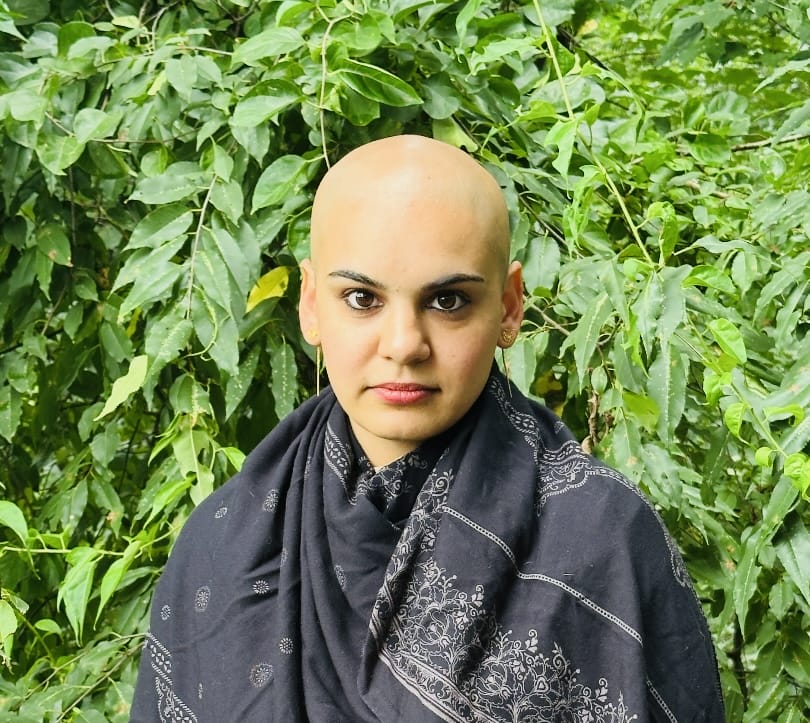
Palveshey is the founder of Alternative Coaching Methods where she redefines health and wealth through plant medicines, helping the greatest leaders from all walks of life transcend trauma and transform into high performers.
She specializes in revealing the limiting beliefs and subconscious narratives that dictate and shape behavior, health, relationships, and performance.
Previously, Palveshey was the founder and CEO of Protonode Strategies, Inc. a blockchain hedge fund which she sold, making this her second successful exit. Palveshey has also served as an AI Researcher at the Massachusetts Institute of Technology. Prior to this she served as a lecturer at the University of Florida’s World Bank Program and an adjunct lecturer at Harvard University. Palveshey has an exemplary academic background ranging from graduate studies in financial technology from Harvard to post graduate studies in Quantum Physics. She has taught subjects from blockchain technology to block universe theory. After an extraordinary journey of her own, Palveshey has now geared her mission towards helping to spread consciousness and self-awareness.
While Palveshey has received many accolades, and built a heroic resume, ultimately the biggest challenge she faced in her adult life was realizing, that her race to receiving titles and wealth left her depressed, addicted to drugs, and unable to face severe trauma from her past as a homeless youth. Now, Palveshey is on a mission to help others do what she has done: Take ownership of their life by transmuting their current pain, suffering, and limiting beliefs into freedom. She believes that the most advanced technology in the world is the human body, and if it can be truly harnessed, a person can do anything that they set their sights on.
These days Palveshey runs her own coaching programs, travels around the world giving talks on consciousness in leadership and hosts plant medicine retreats in Jamaica.
In her free time Palveshey is painting, hiking, or writing a book on How to Kill Yourself – Finding Peace and Purpose through Pain, sharing client stories and detailing her integration process to free the mind.
What is your typical day, and how do you make it productive?
My days are structured around one simple truth: discipline is the highest form of self-respect. I rise at 6 a.m., clear my mind, and record my dreams. A glass of lemon water and celery juice to cleanse my system, followed by one hour of meditation, thirty minutes of walking, and ninety minutes of yoga. I read for half an hour before turning to my professional work: calls and sessions from 11 a.m. to 3 p.m., then two focused hours of writing. Evenings are for unwinding with chamomile and lavender tea, a shower, more reading or painting, and rest. By 8:30 or 9 p.m., I’m in bed, honoring the cycle that sustains both my clarity and my strength.
How do you bring ideas to life?
I don’t force ideas into existence any more than I would force a garden to grow faster. Creativity needs time to take root. That’s why I dedicate space for meditation, allowing concepts to germinate quietly in my mind until they’re ready to bloom. Only then do I gather them, once they are fully formed and vibrant, into something worth sharing, like a bouquet arranged at the right season.
What’s one trend that excites you?
One trend that excites me is the rise of health over hustle, as the new status symbol. True success is no longer measured by exhaustion and overwork, but by vitality, balance, and resilience.
What is one habit that helps you be productive?
Meditation is habit that has completely changed my life. While on the outside it may look like I’m sitting doing nothing, the complete opposite is true. Meditation is not an escape from life, it is an escape from the illusion. Productivity does not come from constant doing, but from creating space. Space to process and release what no longer serves, and to welcome what is new. Prayer may be how we speak to the universe, but meditation is how the universe speaks back. The only question is: are we listening?
What advice would you give your younger self?
Hi Posha, I know you’re scared and hurt but sometimes you need your feelings hurt so you wake the f*ck up and focus on yourself.
Pain isn’t punishment, it’s a redirection.
As you venture out on your own, remember once you make a decision, stand on it. Don’t wobble because someone else doubts you. Only you know what’s best for you.
And don’t forget, everyone’s timing is different so don’t compare yourself as you grow. Flowers are pretty but so are sunsets and they look nothing alike.
Lastly, taking care of yourself when you feel like sh*t is the bravest thing you can do.
Keep going. You’re not broken. You’re becoming.
Tell us something you believe almost nobody agrees with you.
ADHD and depression are not chemical imbalances in the brain and can be “cured” by training the mind with the right tools and guidance. Meditation > Medication.
What is the one thing you repeatedly do and recommend everyone else do?
Meditate. If I could make one law in the world it would be for everyone to sit in silence for 15 minutes a day. I’ve learned more sitting in silence in my bedroom than I ever learned sitting in the hallowed halls of Ivy League universities.
When you feel overwhelmed or unfocused, what do you do?
When I feel unfocused or overwhelmed, it usually means I’ve slipped into doubt by comparing myself to others. Meditation reminds me that my chapter 1 is not meant to look like someone else’s chapter 10. And when that isn’t enough, I turn to painting, writing, or walking. I’ve learned that creation and contribution are the antidotes to comparison and criticism.
What is one strategy that has helped you grow your business or advance in your career?
One strategy that’s helped me grow my business is learning to have hard conversations with compassion. As leaders, it’s easy to micromanage or reprimand when things don’t go our way, but that rarely serves anyone. By owning where my own need for control comes from, I show up with more patience to actually hear where my team is struggling and how I can help them move forward for the greater good. Difficult conversations demand responsibility; there’s a fine line between owning your sh*t and being full of it.
What is one failure in your career, how did you overcome it, and what lessons did you take away from it?
One failure in my career came while running my crypto hedge fund. I had a revolving door of employees because, truthfully, no one wanted to work with me. I spent more time training replacements than managing client portfolios, and eventually I sold the company because it wasn’t sustainable. What I learned is simple: we don’t manage people, we manage files. We lead people. And real leadership means staying a student and willing to learn from those we lead.
What is one business idea you’re willing to give away to our readers?
A global “Human Skills Exchange” platform. Not a job board, not a freelancer marketplace, but a structured exchange where individuals and organizations can “trade” lived wisdom, cultural practices, and experiential skills. Think of it as Airbnb for human knowledge: a retired farmer in Kenya could teach regenerative agriculture to startup founders in California; an artist in Peru could guide corporate teams through creativity rituals; a former nurse could teach resilience practices to tech workers. Instead of credentials or résumés, the currency would be demonstrated human experience and verified impact.
This would help:
- Bridges knowledge gaps that traditional education and business training overlook.
- Elevates underrepresented voices by giving value to wisdom not found in textbooks.
- Democratizes access: anyone can teach, anyone can learn, anywhere.
- Strengthens global empathy by creating exchanges across cultures, industries, and generations.
What is one piece of software that helps you be productive? How do you use it?
OneNote has been my anchor for nearly two decades. While others rave that Notion “makes their brain happy,” I’ve found clarity and order in OneNote, organizing my notes, ideas, art, and more. Productivity isn’t about the trendiest tool; it’s about the one that actually works for you.
What is the best $100 you recently spent?
The best $100 I recently spent was on a juicer. That thing is amazing! I can juice everything from fruits and vegetables and even make homemade hummus! Yum!
Do you have a favorite book or podcast from which you’ve received much value?
One book that’s given me immense value is Spiritual Implications of Quantum Physics by Jeff Carreira. He takes complex ideas like the observer effect and quantum entanglement and makes them digestible, while showing how these principles aren’t just theory, but tools we can apply in daily life.
I also love Peter Crone’s podcast because instead of having celebrities and well-known individuals on, he brings his clients and helps coach them through their problems which is incredibly insightful and inspiring.
What’s a movie or series you recently enjoyed and why?
I love Lessons in Chemistry for its rich 1950s setting (my favorite era – I’ll watch anything set in the 50’s & 60’s) and Brie Larson’s incredible range. She brings depth, wit, and strength to Elizabeth Zott, making the story unforgettable.
I also love the Dune series for its rich, archetypal storytelling and layered mythology. Timothée Chalamet brings real depth to Paul Atreides, capturing the burden of a character caught between destiny and choice. It’s got some real biblical vibes.
Key learnings:
- Discipline is the highest form of self-respect
- Flowers are pretty but so are sunsets and they look nothing alike.
- Pay attention to the whispers before your entire life has to be put on hold to address the screams.
- Even steps backwards are part of the dance.
- Ctr + alt + del: control yourself, alter your thinking, delete negativity