
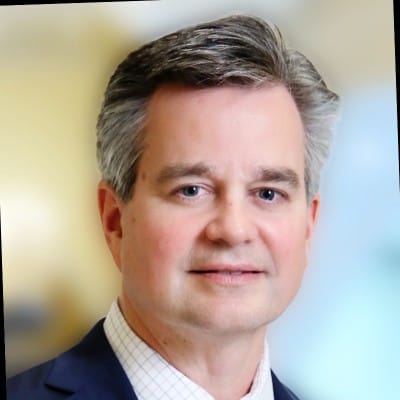
An alumnus of the University of Pennsylvania, Dr. Philip Schoenfeld MD of Gastroenterology, earned a bachelor’s degree in biology, and MD, and a master’s degree in health professions education from the school. He completed an internal medicine residency at Naval Medical Center in Portsmouth, Virginia, and a fellowship in gastroenterology at the National Naval Medical Center in Bethesda, Maryland. Upon completing his fellowship, Dr. Philip Schoenfeld worked as an assistant professor of medicine at Uniformed Services University of the Health Sciences.
Dr. Philip Schoenfeld joined the University of Michigan School of Medicine in 2000 and spent 16 years in clinician-researcher. As a clinical researcher funded by the National Institutes of Health and Veterans Affairs, he investigated potential areas of improvement in colorectal cancer screening and assessed the safety and efficacy of treatments for functional gastrointestinal disorders. Selected studies include “An evidence based position statement on the management of irritable bowel syndrome,” published in the American Journal of Gastroenterology.
Dr. Philip Schoenfeld has worked at John R. Dingell VA Medical Center since 2016. As of 2019, he serves as chief (emeritus) and research scientist and staff physician in its Gastroenterology Section. He has received more than two dozen research grants throughout his career and earned awards such as the Wyeth Outstanding Gender Based Research Award (2005) and Joseph A. Maher Award for Excellence in Clinical Research (1999).
What is your typical day, and how do you make it productive?
No day is the same! As an academic gastroenterologist, I spend time doing colonoscopies to prevent colorectal cancer, seeing patients in my clinic, teaching GI trainees in lectures and small-group settings, and collaborating with my research team about optimal ways to prevent colon cancer. In the evening, I’m usually holding conference calls or designing curriculum for programs sponsored by EBMed, which is a nonprofit program that I started to mentor women and first-generation college graduates and underrepresented minorities into careers in academic medicine.
How do you bring ideas to life?
I rely on a large network of colleagues for input and advice. Woody Allen said it best: “90% of life is just showing up.” By simply showing up again and again in academic medicine, I’ve been exposed to so many ideas and effective leaders. Fortunately, when I don’t know something or don’t have the expertise to implement a plan, then I can rely on colleagues for assistance. It’s a team effort.
What’s one trend that excites you?
The focus on evidence-based medicine in gastroenterology practice. I actually started a publication for the American College of Gastroenterology entitled Evidence-Based GI. Physicians need to understand how to interpret clinical research trial methodology, ensure that the trial is producing accurate results, understand basic statistical interpretation, and then effectively apply those results to patient care. Physicians should not rely solely on their experience nor on information that they learned many years ago in training. Evidence-Based GI summarizes the latest and most important GI clinical research to help gastroenterologists practice evidence-based medicine.
What is one habit that helps you be productive?
Making lists. My wife jokes that my favorite pastime is crossing items off my to-do list. Nevertheless, there is a lot of wisdom in the old adage to “plan your work and work your plan.”
What advice would you give your younger self?
First, I do believe that if you love your work, then you never really work a day in your life. Being a physician is my passion. Second, work to your strengths and recognize your limitations. Organization is my strength, but I try to surround myself with creative, unconventional thinkers to generate ideas. Finally, you’ll learn much more from your failures than from any successes.
Tell us something you believe almost nobody agrees with you on?
There is nothing wrong with eating grilled chicken (or salmon) and mixed green salads every night for dinner.
What is the one thing you repeatedly do and recommend everyone else do?
There is no substitute for hard work and preparation. I may not be smarter than my colleagues, but my work ethic is strong. Grit to persevere in pursuit of your passions is an invaluable trait. Also, I try to exercise every day: weightlifting, Stairmaster, or exercise bike, etc. Being physically fit makes a huge difference in my mental health, as well as my physical health.
When you feel overwhelmed or unfocused, what do you do?
Meditate for 10 minutes. I didn’t feel comfortable with this initially, but it’s a great tool to clear your mind. Then, start writing down tasks that need to be completed and prioritize them.
What is one strategy that has helped you grow your business or advance in your career?
Be willing to help others without expecting anything specific in return. Don’t burn any bridges as you advance your career. Listening is more important than talking. All of these tools have helped me build a network of colleagues and friends.
What is one failure in your career, how did you overcome it, and what lessons did you take away from it?
Early during my internal medicine residency, one of my patients with metastatic cancer passed away. Emotionally, I felt that I could have saved the patient if I just worked harder or had been smarter, although there really was no possibility to save this patient. It helped me understand that my role as a physician involved more than simply ordering diagnostic tests and prescribing medicine. Sometimes, the most important thing for me to do as a physician is to simply sit with a patient and hold their hand.
What is one piece of software that helps you be productive? How do you use it?
I sheepishly admit that my technological expertise is quite limited, although I’m constantly trying to improve. Zoom is invaluable since I collaborate with people throughout the US, and Zoom allows for a more personalized experience. However, always make sure that you have an agenda (even if it’s only your internalized list) to make sure that the meeting is effective and efficient.
Do you have a favorite book or podcast you’ve gotten a ton of value from and why?
When I started Evidence-Based GI: An ACG Publication to summarize the best GI clinical research and provide expert commentary about how to apply the data to patient care, we decided that each summary should be accompanied by an Evidence-Based GI podcast. Hosting a podcast and interviewing various experts in gastroenterology was a terrific learning experience.
What’s a movie or series you recently enjoyed and why?
Saturday Night Live because I always watch it with my daughter, and it always makes us laugh. It has turned into a bonding experience for us.
Key learnings
- Evidence-based medicine, which facilitates the application of clinical research to patient care, is critical to improving outcomes.
- There is no substitute for grit and hard work.
- Organize your work in writing. Check your plan with other members of your team and then “work the plan.”
- Surround yourself with creative individuals to broaden your thinking—a large network of colleagues facilitates this.
- Be willing to help others without expecting anything in return. Down the road, those efforts will pay off in unexpected ways.