
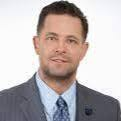
Frank Okunak is a distinguished business leader and advisor with more than 30 years of experience guiding multinational corporations, start-ups, and restructured businesses. Throughout his career, he has held key senior leadership roles in finance and operations, focusing on helping companies scale operations, enhance client service, and achieve sustainable expansion. His deep expertise lies in transforming business models and implementing strategic initiatives that lead to long-term growth and operational excellence. Frank’s ability to provide clear, actionable guidance has made him a trusted resource for leadership teams aiming to drive meaningful change.
Beyond his professional achievements, Frank is passionate about giving back to his community. He has dedicated his time to volunteering at homeless shelters and at Eva’s Kitchen in Paterson, New Jersey, supporting individuals and families in need. This commitment to service extends to his mission of mentoring young professionals. He enjoys sharing the valuable lessons learned from his career, helping the next generation navigate their own paths to success.
Frank believes in the importance of continuous self-improvement and carries with him core principles of resilience, accountability, and a dedication to serving others. These values guide his personal and professional life as he strives to improve each day. Frank holds a Bachelor of Science in Business Management from Rutgers University and a Master of Business Administration from the University of Notre Dame. He firmly believes in the right to fix things that need fixing and approaches every challenge with a solution-oriented mindset.
What is your typical day, and how do you make it productive?
My days are a mix of strategy and execution. I start early with either a workout or mindfulness practice to set the right tone. Mornings are reserved for deep work — mapping out a growth strategy for a client, refining a brand positioning, or sketching a new business idea. Afternoons are for collaboration, calls, and problem-solving. I end the day with reflection and planning for tomorrow. Sticking to that rhythm keeps me focused and productive. 1440 = one day at a time.
How do you bring ideas to life?
I move quickly from concept to structure. I sketch an outline — whether it’s a business model, positioning framework, or product — and then test it with collaborators. I believe in rapid iteration: get the idea out, refine it fast, and surround it with smart people who sharpen it.
What’s one trend that excites you?
The merging of health & wellness into functional foods and supplement. Consumers now expect their nutrition to fuel their bodies and enhance their skin, energy, and confidence. It’s a cultural shift toward everyday wellness that feels both empowering and fun with lots of opportunity if done correctly.
What is one habit that helps you be productive?
Blocking time. I treat my calendar like a strategy tool, not just a meeting log. By carving out space separately for creative thinking, relationship-building, and execution, I avoid the trap of reactive multitasking.
What advice would you give your younger self?
Trust your instincts earlier. Some of my biggest opportunities were slowed down because I thought I needed more validation or experience. The voice inside often knows before the world does. Do the right thing.
Tell us something you believe that almost nobody agrees with you on?
I believe failure is underrated. Most people treat it as something to avoid at all costs, but I’ve seen failure accelerate growth, expose blind spots, and even open doors that success never could learn from your mistakes and help others to avoid those traps.
What is the one thing you repeatedly do and recommend everyone else do?
Write things down. Not just tasks — but insights, reflections, and goals. It sharpens your thinking, builds accountability, and leaves a trail of your growth.
When you feel overwhelmed or unfocused, what do you do?
I step away. Sometimes it’s a walk, a workout, or just five minutes of silence. Clarity rarely comes by pushing harder; it comes from creating space for perspective.
What is one strategy that has helped you grow your business or advance in your career?
I build platforms, and plans not just services, I focus on creating scalable systems that compound over time. That shift — from transactional to platform-thinking — has been a game-changer.
What is one failure in your career, how did you overcome it, and what lessons did you take away from it?
Early in my career, I clung too tightly to traditional corporate structures and resisted change. A business pivot forced me to confront that rigidity. I overcame it by embracing adaptability and now approach change as opportunity, not threat. The lesson: evolve before you’re forced to and live up to your responsibilities – no shortcuts.
What is one business idea you’re willing to give away to our readers?
A “recovery-forward” wellness brand. Just as the sober-curious movement is becoming mainstream, I believe products that fuse recovery principles with nutrition, mindfulness, and community will be the next big wave in consumer health.
What is one piece of software that helps you be productive? How do you use it?
Notion. It’s my external brain. I use it to manage client workstreams, track supplement R&D, and organize personal goals. It keeps everything in one place and scales as my projects do.
Do you have a favorite book or podcast you’ve gotten a ton of value from and why?
Book: The Hard Thing About Hard Things by Ben Horowitz. It’s brutally honest about leadership and entrepreneurship, reminding me that challenges aren’t exceptions — they’re the path.
Podcast: How I Built This. I love hearing the unpolished stories behind big successes; it humanizes the entrepreneurial journey.
What’s a movie or series you recently enjoyed and why?
Painkiller on Netflix. It’s not enjoyable in the traditional sense, but it’s powerful. It underscores the importance of accountability in business and reinforces why I gravitate toward purpose-driven work.
Key learnings
- Protect your time — structure creates productivity.
- Failure is a teacher, not the end.
- Platforms and frameworks create sustainable growth.
- Recovery and wellness are converging in meaningful ways.
- Writing things down unlocks clarity and focus.