
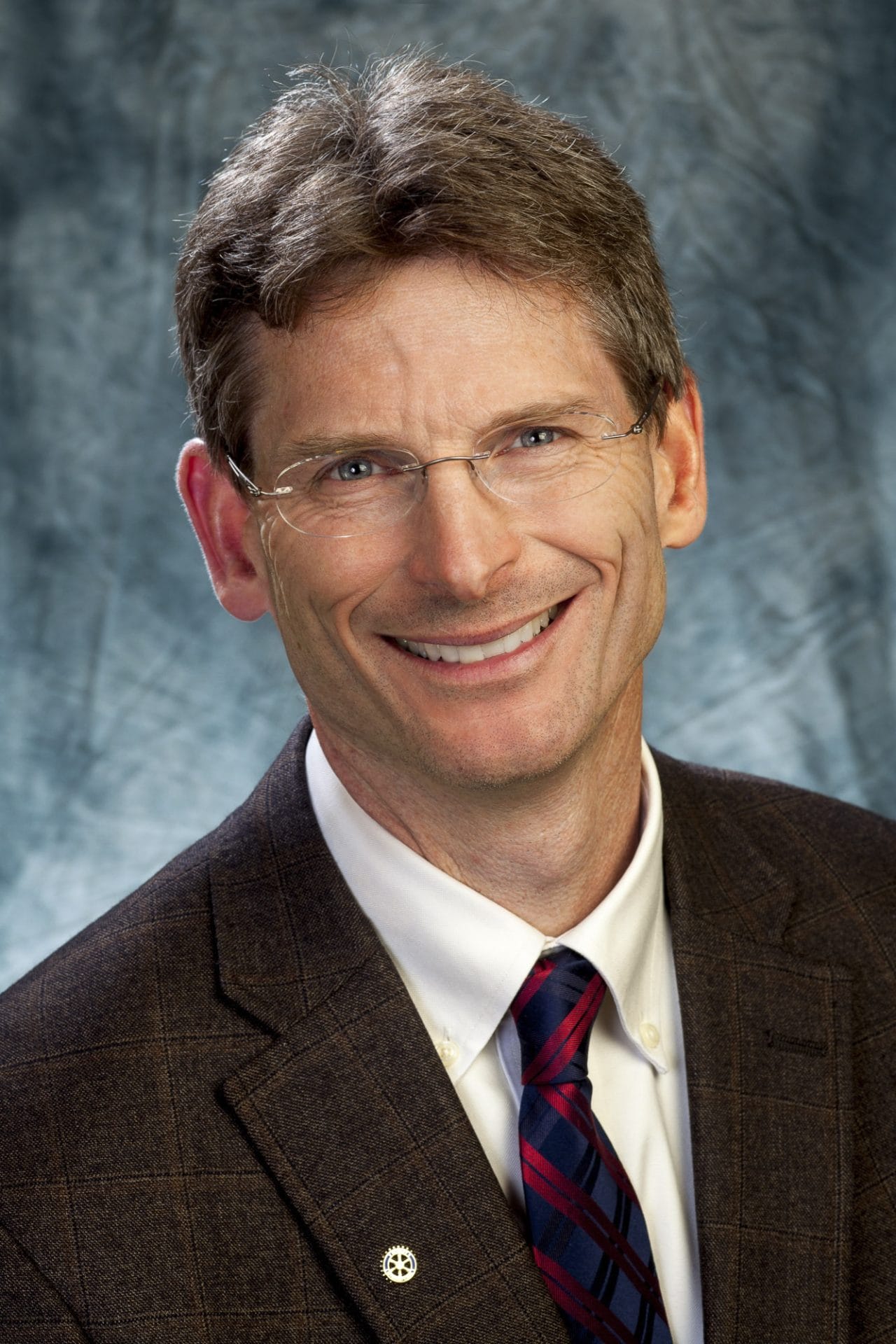
Dr. Jon Connolly has always believed in showing up with purpose. Raised in Basking Ridge, New Jersey, he learned early on that effort and heart matter just as much as results. In high school, he played football, hockey, and lacrosse—scoring the first goal in the JV hockey team’s history. That same drive carried him from the ice to the lab and eventually to the president’s office.
At Colby College, Jon studied biology and geology. He earned the Webster Chester Award in biology for his research work. From there, he earned a master’s degree at Yale and a Ph.D. at the University of Maine, diving deep into the biological sciences.
But Jon’s story isn’t just about science. It’s about people. Over the years, he’s taught biology, helped build a sustainable farm and culinary institute, and worked with faculty and industry to create programs like lineman training and optics technology. He’s led colleges in Maine, Texas, New Jersey, and beyond—always aiming to make education more meaningful and accessible.
Whether launching new campuses, supporting students, or guiding complex software transitions, Jon approaches every role with integrity, clarity, and care. His leadership style is grounded in listening, empowering others, and doing the hard work behind the scenes.
He believes in education that transforms lives—and he’s spent his life proving that belief, one student, one program, and one step forward at a time.
What is your typical day, and how do you make it productive?
Dr. Jon Connolly starts his day early— before sunrise. He gets out of the house after taking care of the indoor plants and outdoor farm plants. At the office he reviews tasks and meetings from the previous day, checks his calendar, and sets priorities for the day.
He also makes time for walking meetings. Jon finds that conversations while walking help break down hierarchies and encourage more open thinking. It’s one way he keeps his day grounded in connection, not just task lists.
How do you bring ideas to life?
Jon is a connector. Whether it’s launching a culinary institute with a working farm or an optics/optical instruments training program in partnership with local industry, he starts by listening—really listening—to people. His approach combines research, vision, and practicality.
When an industry leader came to him with the idea of creating an optics technology/photonics program, he didn’t just greenlight it immediately. He pulled together other businesses, educators, and community thought-leaders to consider all angles of such a project. When it became clear to everyone that it was possible, then he and the optics industry partnered to make it real. He’s always looking for the thread that ties vision to action.
What’s one trend that excites you?
Workforce-aligned education. Jon sees a future where traditional degrees and technical certifications aren’t in competition—they’re integrated. He’s excited about partnerships between colleges and industries that offer flexible, stackable credentials, especially in rural communities.
What is one habit that helps you be productive?
Getting adequate exercise and sleep.
What advice would you give your younger self?
Being wise is just as important as being sincere.
Tell us something you believe almost nobody agrees with you on?
Jon believes that the best strategic planning documents should fit on one page. He argues that if a plan can’t be explained clearly and simply, it probably won’t work. Most people want exhaustive detail—he wants direction that sticks.Additionally, to follow-through it needs to be measurable, and you cannot measure everything. Keep it short. Keep it to the most important priorities.
Jon also believes that faculty teaching loads in community colleges are too high. Faculty should only teach 4 classes a semester, not five. Jon notes that the course load model hasn’t changed in 60 years even though the nature of instruction is completely different. With online instruction and modern instructional expectations of assessment and program review, faculty cannot find the time to be scholars and keep current in their discipline and craft. Jon comments that colleges are stuck with the budgetary implications of reducing course loads for full time faculty, but insists that someone needs to prove reductions can be done.
What is the one thing you repeatedly do and recommend everyone else do?
Jon remarks that one should not make decisions or act without waiting. Just…wait… things change and then you have made a mistake if you act too quickly. It is best to use your brain, not your reflex response.
When you feel overwhelmed or unfocused, what do you do?
He steps away—often literally. A short walk or just changing physical space helps reset his focus. Jon also keeps a habit from his research days: when something feels too big, he breaks it down into its smallest actionable piece.
What is one strategy that has helped you grow your business or advance in your career?
Jon focuses on building and re-building systems, not just solving problems. When he helped launch a second campus or guide an ERP migration, he didn’t just aim to “fix” something. He worked to leave behind tools, documentation, and leadership pipelines that others could use.When it comes to facilities, Jon has literally focused systems: on HVAC systems. These are always troublesome, and are often handled by making do and getting by, rather than really digging in and asking the hard questions engineers do not like to field.
What is one failure in your career, how did you overcome it, and what lessons did you take away from it?
As president, Jon found there were times when the college had monies at the end of the fiscal year that exceeded fiscal projections generated by the team. When this occurred, Jon recommended to the Board of Trustees that these monies be awarded to the employees as one-time extra compensation for the work the employees had done to help the college succeed and deliver value to the students. Jon referred to it as “rewarding the people who do the work around here.” Jon found the conversations were always difficult because the Board of Trustees believed that this could result in creating an expectation amongst employees that such one-time compensation events would happen every year. Jon fought in these discussions with the Board harder than usual to convince them. He argued that the expectation of continued extra compensation, if it occurred, would be his management challenge, but not the Board’s responsibility. Unfortunately, the Board would not allow Jon to give the employees this compensation despite his passion around the topic. An accommodation was reached during COVID when the Board felt that the Federal dollars for COVID relief would shield the college from unhelpful expectations around compensation.
Jon’s regret is that he feels he should have fought even harder and that he should have been public about it, rather than “professionally discrete” about it. Jon said “To this day, only the Chief Budget Officer of the college is/was aware of my efforts with the Board to make this happen.”
What is one business idea you’re willing to give away to our readers?
Jon has always been keen on saying that “higher education is not a business, but one must use business practices to deliver the mission.” The business practice that matters the most is similar to Simon Sinek’s philosophy of “Start with Why.” Jon believes that an organization must start with its mission. It must ask why it exists. Anything that violates the mission is a business practice that takes the organization in the wrong direction.
What is one piece of software that helps you be productive? How do you use it?
Jon uses Excel religiously. He organizes data and puts it into a format that allows for application, analysis, and research. This way, robust questions are tied directly to numbers.
Do you have a favorite book or podcast you’ve gotten a ton of value from and why?
He frequently revisits The Anatomy of Peace by Arbinger. It is about how to stay emotionally calibrated and not trapped in self-justification as life happens.
What’s a movie or series you recently enjoyed and why?
He enjoyed Ted Lasso for its layered take on attitude, leadership, humility, and resilience. “It’s not just feel-good,” he says. “It’s about how small acts of trust can create big shifts.” Jon said the best lesson is when Ted says “Don’t be judgmental, be curious.”
Key learnings
- Leaders who listen before acting tend to create more lasting, impactful solutions.
- Keep strategy simple. A one-page plan often beats a 100-page binder.
- Don’t chase speed. Sustainable progress happens through collaboration.
- Create systems, not just fixes—especially in education and leadership.
Don’t judge, be curious