
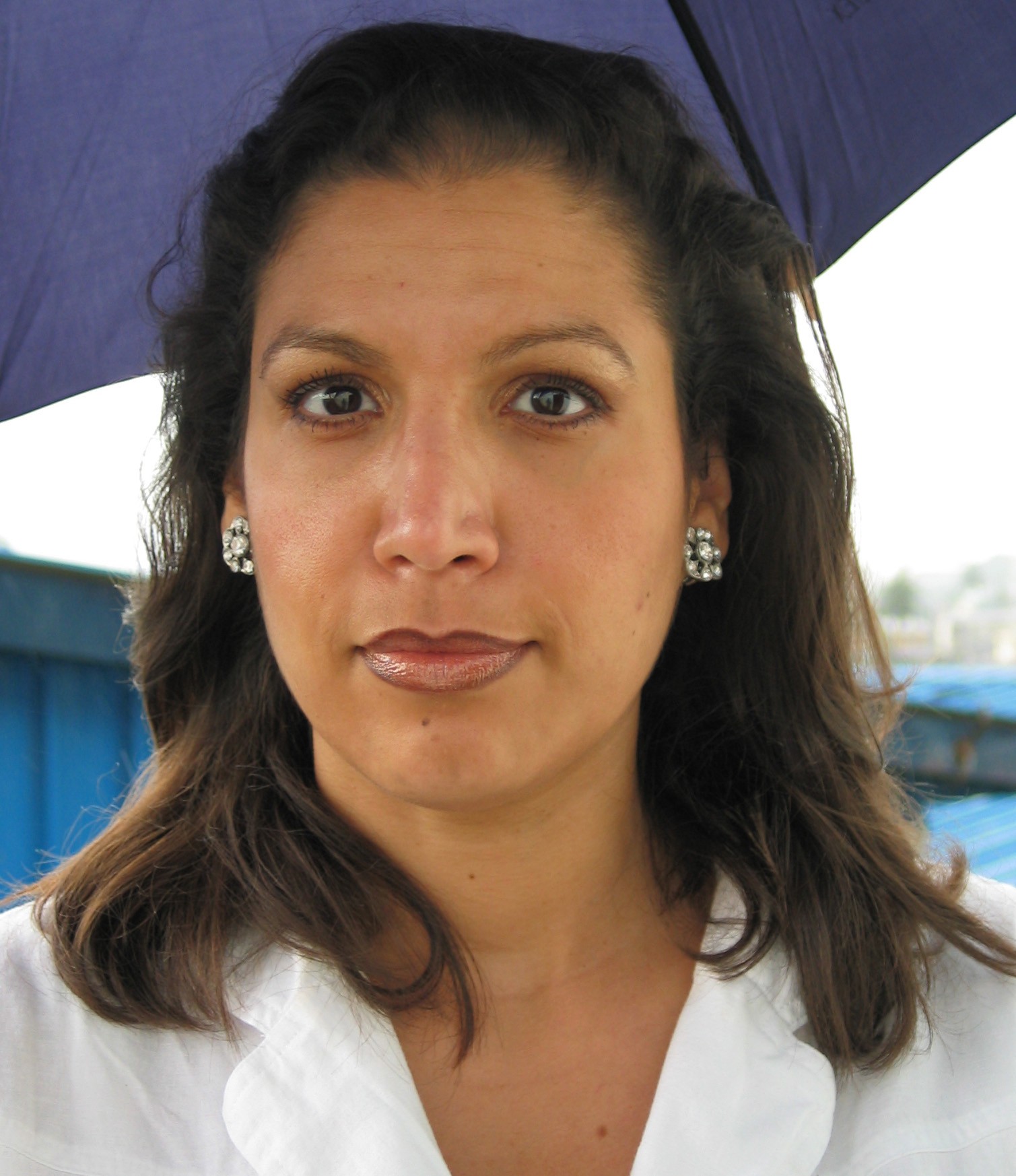
Simone Monasebian has an extensive background in law and public policy and is committed to assisting those who have endured human trafficking and gender-based violence. As Chief Program Officer for Sanctuary for Families, she develops and oversees programming for an impactful domestic violence service provider and advocacy agency in New York City. Simone Monasebian and her team help survivors secure legal, clinical and economic empowerment services and move forward on paths of recovery.
As an associate at the Law Offices of Michael Kennedy, PC, in the 1990s, Ms. Monasebian handled a diverse range of criminal and civil matters. Two landmark cases – one on behalf of a child welfare system survivor and the other focused on civil rights – received nationwide attention. In the early 2000s, she worked in Tanzania and Rwanda as a Trial Attorney with the Office of the Prosecutor for the United Nations International Criminal Tribunal for Rwanda. Her duties centered on prosecuting war criminals, and she was successful in achieving a trio of groundbreaking guilty verdicts against media executives who used their radio station and newspaper to encourage genocide and sexual violence.
From 2015 to 2019, Ms. Monasebian held leadership roles at the United Nations Office on Drugs and Crime (UNODC) as the New York office director, focusing on protecting women’s and girls’ rights through criminal legal system reform. She also elevated the voices of those who had endured sexual violence. Ms. Monasebian’s efforts helped establish the UN Global Plan of Action to Combat Trafficking in Persons and its associated Trust Fund for Victims.
What is your typical day, and how do you make it productive?
Waking up early in our 1896 Harlem townhouse. Reading the NY Times in bed before our three-year-old, Justice, awakes to a ton of my kisses. I make him a quick breakfast, get him off to school, and drink my chai, listening to Morning Joe and checking emails and texts. I go through my to-do list for my work as Sanctuary for Families chief program officer and start a series of meetings with exceptionally talented and committed staff, inspiring survivors of gender-based violence, interesting funders and board members and other collaborators. Some days in person, others by zoom. After work, it’s spending time with my son, making his dinner and getting him off to sleep with more kisses. I prepare for the next day, may work from my home office on pending job or home reno matters, followed by organizing and tidying up the house and Justice’s ubiquitous toys. Decompress with home décor endeavours, weekend country trip/cultural activities planning while listening to music or my guilty pleasure (The Real Housewives on Bravo). I go through and answer messages one more time, prioritize my work and home to-do list for the next day, check in with family and friends, and try to land with something inspiring (art/music/article/photos) before trying to get to sleep early. Sometime between midnight and 3 am, Justice will sprint from his bedroom to mine. I used to offer him incentives not to. I no longer fight it. He will only be three for so long, and soon I will miss his warm, tiny body holding onto mine for dear life. (Before Justice, I would get in a great workout every morning and have just started getting back to that—not easy). A lot different than my globe-hopping days, but grateful to be home in my own bed with our little one these days (and, whenever possible, a small cottage in the countryside (particularly in Litchfield or Hudson Valley)).
How do you bring ideas to life?
Seek out both likely and unlikely allies as you fight for your vision. Spread credit and ownership widely. Be persistent and overprepared, keep your word, and always add in a sense of style and humour whenever possible.
What’s one trend that excites you?
Melani Sanders’ We Do Not Care Club, intended for all women going through perimenopause/menopause. Tempting…. (Wholeheartedly approve, but am not quite fully there yet).
What is one habit that helps you be productive?
Starting and ending each day with going through a to-do list and crossing off things accomplished or things you realize are not worth your time.
What advice would you give your younger self?
Take even more risks. Try more things. Learn more things (especially more languages and cooking and instruments and how to drive). Invest in more things. Write more things. Dance more. Continuously create.
Tell us something you believe that almost nobody agrees with you on.
Please do make waves. As the late great Frederick Douglass said, “Those who profess to favour freedom yet deprecate agitation are men who want crops without ploughing up the land. They want rain without thunder and lightning, they want the ocean without the awful roar of its mighty waters.”
What is the one thing you repeatedly do and recommend everyone else do?
Continually strive to advance change for human rights, peace, and social justice.
When you feel overwhelmed or unfocused, what do you do?
Listen to the Groove (old school R&B) on Sirius FM, as music can move mountains in your mind; I do the NY Times Spelling Bee; contextualize by reminding myself of all there is to be grateful for and obstacles greater than mine that friends and clients have and are overcoming; and then come up with a plan of action on how to move forward.
What is one strategy that has helped you grow your business or advance in your career?
My career was considerably advanced by understanding that the lived experience of survivors, their contribution and expertise must be sought out and valued. As an advocate for survivors of human trafficking, gender-based violence, atrocity crimes, as well as victims of the criminal legal system, a big part of my strategy for success was listening to the people who have been harmed by the crimes I sought to stop. Their advice and testimonies informed and strengthened my work as a criminal defense attorney in New York City in the 90s, as a prosecutor of war criminals in Rwanda in the 2000s, and as the head of the UN Office on Drugs and Crime NY Office thereafter, as well as my current position as chief program officer of a leading NGO fighting gender-based violence. Were it not for cultivating and relying on the essential contributions of survivors, I would not have been able to achieve professional highlights I am most proud of and leveraged into other successes. Be it building and passing the UN Global Plan of Action to Combat Trafficking in Persons and its UN Voluntary Trust Fund for Victims of Trafficking in Persons, Especially Women and Children, or securing the landmark convictions of three media executives who fanned the flames of genocide in their newspaper and radio station, it was earning the trust and support of survivors that was most key to my success.
What is one failure in your career, how did you overcome it, and what lessons did you take away from it?
Working in an awesome yet fraught global political organization (the United Nations) for over two decades had its highs and lows, successes, and failures. One failure was my stagnation due to fear of moving on from the familiar and feeling unsure of my place outside that bureaucracy and its comfortable pension. It was only upon giving birth to my first child during the pandemic that I found the courage to take on a new chapter in my career serving and advocating for survivors of gender-based violence. Keeping grounded in my values and vision is what always got me through in times of failure or success—and helped me understand and define, even during setbacks, what success really looks like.
Moving from the UN (to the NY NGO Sanctuary for Families) Lan Nguyen Chaplin’s brilliant Harvard Business Review piece titled “Let’s Talk About Our Career Failures” (8/2/21) very much resonated with me, in particular her noting, “Work with purpose will offer fulfillment for years to come, and not just temporary happiness. What this really comes down to is living a life of integrity. You have the power to define your own limits and what you stand for. When you attach yourself and your worth to a value as opposed to a title, a rank, or a salary—even if you want to continue to fight for those things—you empower yourself to craft your own narrative around what success looks and feels like.
She goes on to write as follows: “Career advancement is gray with unspoken policies and hidden norms. Outcomes do not depend solely on your performance……Stop overanalyzing your shortcomings…. [R]eflect on the work that has made you proud. Write down your top five moments or `professional highlights.’ …. [Mine] all related to other people: my spouse, my kids, my students, my collaborators, my friends, and the children that my non-profit … serves…. [T]ry to redefine your metric of success. It should include two things: work that aligns with your values and work that is recognized and rewarded by your organization. …. Lean on people who believe in you…. Spend time nurturing the relationships with the ones who lift you up, share your values, and appreciate your contributions to the future of your organization and to society…. [Seek] out colleagues on different career tracks than yourself, who can offer you […] entirely new and refreshing take[s]…. [L]et your loved ones remind you of your many achievements. …. When I added gratitude to my daily journaling routine, my awareness and appreciation of the support I had been receiving from everyone heightened, and I was happier. …. Once we own the good, bad, and ugly parts of our stories, the only person who has the power to define our worth is ourselves. And that is powerful. That is what will allow us to move forward, challenge the status quo, and be daring.”
What is one piece of software that helps you be productive? How do you use it?
Zoom and Teams. Cuts out my considerable commute time, making space for more productivity.
What is the best $100 you recently spent? What and why?
Yoto player for my son. Helps us get through two-hour trips to the country with imagination, not screens. He won’t use the headphones though.
Do you have a favorite book or podcast you’ve gotten a ton of value from and why?
Gloria Steinem’s book Outrageous Acts and Everyday Rebellions came out just before I was turning 16 and told my conservative Iranian parents I was dropping out of high school to “find myself.” Am still looking, but by no means lost thanks to Gloria and other warrior women who led the way.
What’s a movie or series you recently enjoyed and why?
Recently rewatched Summer of Soul (…Or, When the Revolution Could Not Be Televised), the 2021 Academy Award-winning documentary directed by Questlove about the 1969 Harlem Cultural Festival at Marcus Garvey Park (right across the street from my home), featuring never-before-seen footage and performances by Stevie Wonder and Nina Simone. Joyful, meaningful, profound.
Key learnings
- Celebrate your achievements.
- It’s never too late to reinvent yourself.
- Music, art, and culture can help you out of a rut.
- Have a side hustle.
- Craft your own narrative around what success looks and feels like, grounding it in your values and vision.