
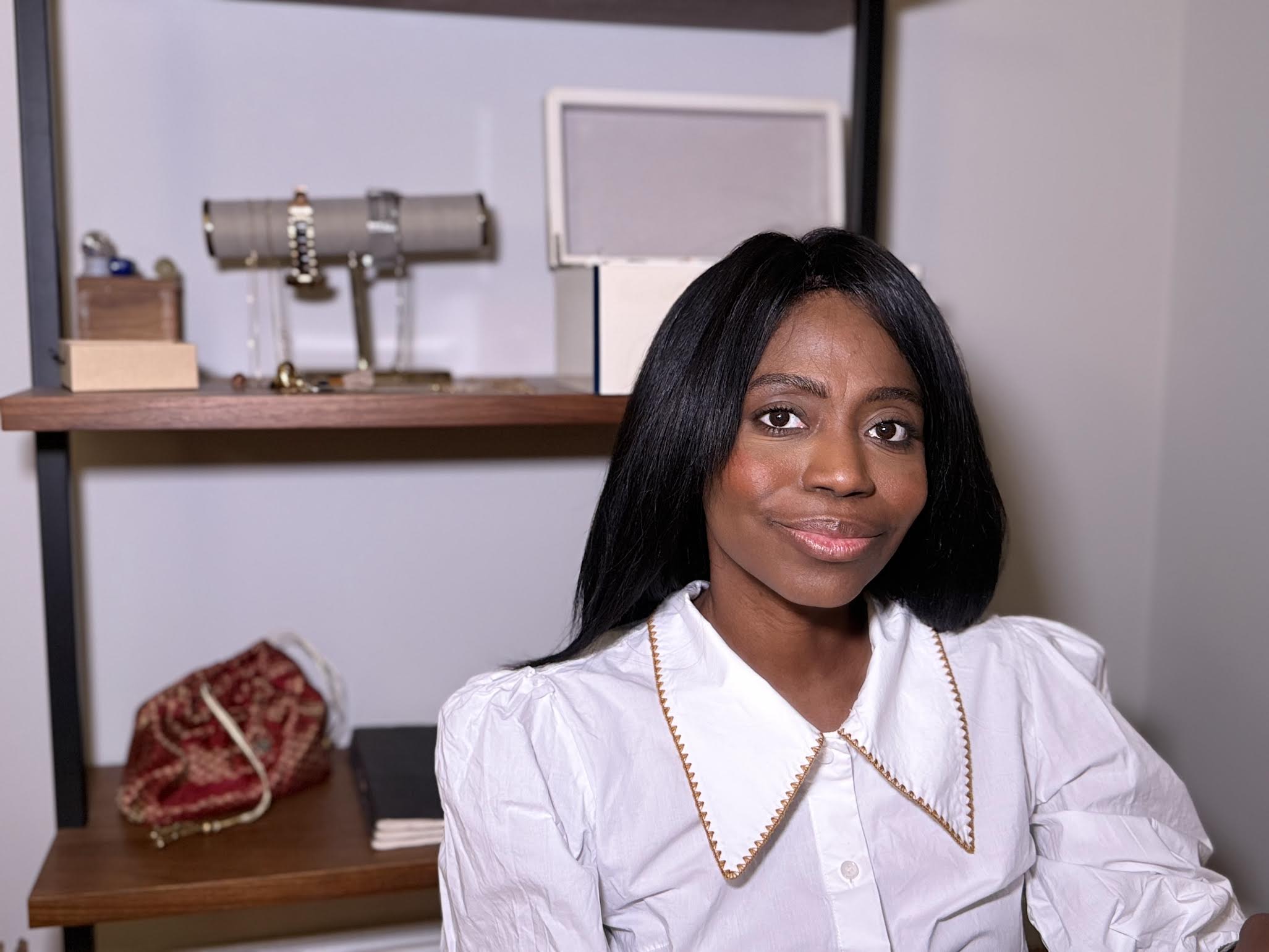
Daeyna Grant is a former attorney turned entrepreneur working on her startup, Gold Crush Cocktails, which is mixing natural ingredients and the spirit of Caribbean rum culture into convenient, ready-to-drink cocktails.
Daeyna debuted Gold Crush earlier this year in New York and recently launched an online store to deliver cocktails to 45 states in the continental U.S. Gold Crush is Daeyna’s second startup. She worked on a clothing brand concept prior to this company.
Daeyna is a graduate of Colgate University and Columbia School of Law. Originally from Jamaica, Daeyna now lives in Manhattan. When not working, Daeyna spends her time running, trying new restaurants and writing short-form fiction. Daeyna is a member of Dreamers & Doers and Old Girls Club.
What is your typical day, and how do you make it productive?
I usually start the day by going over the to-do list I made the night before and checking emails while making breakfast. I try to tackle the tasks that require the most focus early in the day, when I’m energized, and save more mindless tasks for evenings and nights. Most days are filled with the back-end admin work that my brand requires—things like marketing and financial analysis, coordinating with service providers and vendor outreach. On days when I have brand-building activities, such as tastings, I take extra care to set up blocks of time to make sure that the to-do list I build the night before is prioritized so nothing mission critical slips through the cracks. Since leaving my corporate job to focus on Gold Crush full time, I find that I need some physical activity during the day to be productive; otherwise I start to feel a little sluggish. These days, I block out time to get in an outdoor run, which helps clear my mind to work.
How do you bring ideas to life?
It depends on the idea! Some I spend months mulling over and researching (sometimes subconsciously)—often, the people around me think these are my spontaneous ideas because once I decide to actuate, the execution usually comes together very quickly and happens in a flurry of activity. Then there are ideas that really benefit from my former life as a corporate attorney, which has informed so much of my thinking and planning processes in pleasantly surprising ways. I will say, a well constructed checklist can get you far when you’re just starting out with a great idea and an exciting end goal, but have no clue which step to take first!
What’s one trend that excites you?
I might get some backlash for this but I’m really excited to see resistance to ubiquitous usage of artificial intelligence. While there are definitely use cases that make sense, I worry that some engagements with the technology are robbing us of our humanity. We don’t need AI actors or art and most of us can solve our day-to-day problems on our own. We don’t need to use AI tools in ways that replace our own good judgement. I’m so glad to see that many folks, myself included, want to be intentional about our usage; it makes me hopeful for an entirely new sub-industry built around allowing us to put up our own personal guardrails.
What is one habit that helps you be productive?
I write everything down in my Notes app. Particularly on days when I’m running from fire drill to fire drill and all I can do is make sure that I write down all of the ideas I’m generating. It’s helpful to have a record of my ideas and the connections that I’ve made that I can come back to. Everything I jot down then forms part of my prioritized running to-do list once I’ve had a chance to process the day.
What advice would you give your younger self?
Relax. All the steps along the way, while they seem like detours, are important to the process. Instead of being so stressed about getting to the right result, try to pay attention to what is interesting to you and where you find joy. You can’t think creatively with a stressed-out mind and most problems require your creative thinking.
Tell us something you believe almost nobody agrees with you.
Most cases of imposter syndrome are misdiagnoses. I see so much literature that’s geared towards how an individual can overcome feelings of inadequacy through self-improvement. And while all of us have insecurities, I’ve found that if you consistently feel like you don’t belong in an environment, it’s most likely because that environment is designed to exclude you—whether purposefully or not. If it’s an environment that you want or need to be in, your energy is likely better spent creating adaptive techniques. I’d love to see more literature on that than more prescriptions for endless self-improvement.
What is the one thing you repeatedly do and recommend everyone else do?
Talk to customers directly; not filtered through a third-party. Be in proximity to and in conversation with your customers. I want to see real time reactions and responses, not just data. So much of consumer goods (but especially food and beverage) is about how you make consumers feel. You can’t get that from a spreadsheet.
When you feel overwhelmed or unfocused, what do you do?
I literally dance. If I feel stuck on something and I can’t seem to push past it, I throw on a high-energy song and dance (if I have the privacy). At the very least, I get up and physically shake the energy off. Also, I read somewhere that procrastination is tied to having negative associations with a task, so if I’m having a hard time focusing, I spend time thinking about why I don’t want to engage. Usually, I can get myself going by figuring out what’s creating the stumbling block for me. Then I challenge myself to start, with a promise to quit after 15 minutes if I haven’t gotten into a groove. About 95% of the time, with a good plan, I get back on track before the 15 minutes is up.
What is one strategy that has helped you grow your business or advance in your career?
It sounds easy, but networking. I’m not a natural networker. As a lawyer, I wasn’t very interested in the politics and inauthenticity that can be part of playing the legal industry networking “game”. Now that I have my own company, I spend a lot of time meeting with people and engaging with them. I’ve used the flexibility I’ve gained from working for myself to create opportunities to get to know people without an agenda. But then, almost invariably, I can help that person or they can help me. So many cool opportunities have been created for the brand by just meeting people out in the wild.
What is one failure in your career, how did you overcome it, and what lessons did you take away from it?
Gold Crush Cocktails is my second startup. Before this, I built a clothing brand and it failed. In hindsight, I was missing product-market fit. The people I wanted to buy my product, just didn’t. I worked hard on that brand because I really believed in the mission but ultimately it wasn’t sustainable. Frankly, overcoming the end of that business required a host of strategies. I was surprised to find that the easiest part was the mourning period. Had I any doubt that I’d tried everything that I could to make the brand viable, it might have been more difficult. The harder part for me was accepting that my first brand’s failure is a facet of my journey to Gold Crush. I’ve had to remind myself of the many, many lessons learned in my previous venture that are enabling me to be savvier and more efficient with Gold Crush. One of the most important lessons I’ve taken with me is product-market validation. Making sure I know who the customer is and how to sell to them is paramount.
What is one business idea you’re willing to give away to our readers?
Without a doubt, a customizable tech stack for small business owners. Every day, I hear about a new platform that usually does something new and interesting, but also overlaps with a pre-existing product. I would love the ability to customize an end-to-end platform that helps manage inventory, tracks my cost of goods, helps me forecast and does my books each month. I would pay top dollar to have one platform to cover all of that back-end with no fat.
What is one piece of software that helps you be productive? How do you use it?
If I can’t say the software that powers the Notes app in my phone, I’d have to say Canva! It’s such a wonderful resource for small business owners. No code. No real design skills. Just creative direction and intention. So much of our creative work is done in Canva, and it’s done efficiently and well. It’s a huge lift to not worry about learning other, more technical programs or hiring someone for the myriad of design assets that we need on any given day. Having that power has elevated design across the board for brands and really raised the bar of what even the smallest, most cash-strapped brand can do content-wise.
What is the best $100 you recently spent?
I recently registered for a half-marathon! A few years ago, a half-marathon would have been inconceivable to me. For as long as I can remember, I’ve had trouble running even a mile without stopping to catch my breath, so 13 miles was out of the question. In 2022, I found a doctor who figured out why my endurance was so diminished and, a year and two “second” opinions later, I had life-altering surgery that has changed my body and its abilities. Now I run almost daily and have completed some races. It’s incredible to be able to do that, and every time I go out, I’m grateful to be able to push my body in a way I haven’t been able to for most of my adult life.
Do you have a favorite book or podcast from which you’ve received much value?
I read Designing Your Life by Bill Burnett and Dave Evans about 8 years ago and it completely shifted my perspective on work. It’s essentially a guided exercise that allows you to take stock of your time and assess how energizing and engaging you found your day’s activities. The book was great for me because I was in a transitional period where I was asking a lot of questions about work and how I could be happier in my work life. I knew I didn’t want to be a lawyer, but I had a really limited view of what else I could do.
The book allowed me to play around with various scenarios and relied on my self-reported data to create roadmaps to jobs that could be more fulfilling. The book then guides you through testing and re-working, over time. Going through that exercise helped me to get comfortable with the idea that a well-lived life isn’t about an outcome. At any given moment, I get to choose which great life I’m building toward next.
What’s a movie or series you recently enjoyed and why?
Task on HBO. I haven’t seen must-see TV from HBO in a little while and, for me, Task hit all the marks: an ensemble cast and beautifully written characters, including an old salt who’s got a troubled home life (a favorite trope of mine). Tom Pelphrey and Mark Ruffalo are great, but what grabbed me was how deftly the characters interacted with each other. Each is dealing with their own failures and baggage, and how their personalities and traumas intersect is the story of how all of us are fumbling around triggering one another.
Key learnings:
- The detours are where some of the most useful lessons are found.
- Spend time talking to people. The best innovation and connections come from being in community with other humans.
- Relax. Maybe even do a little dance. Your creativity and progress depend on it.