
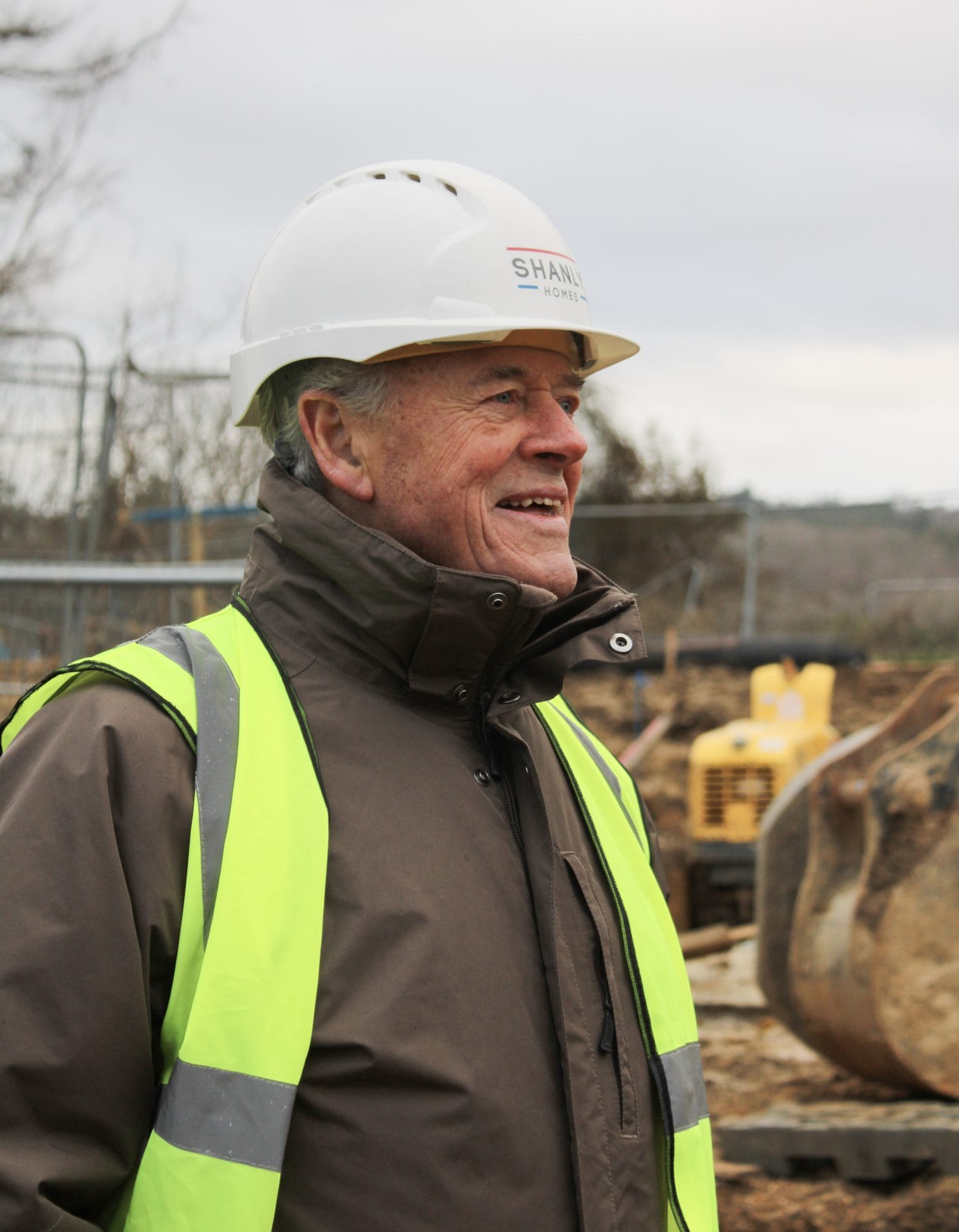
Michael Shanly is the founder and chairman of the Shanly Group, a property enterprise that has constructed more than 12,000 homes across southeast England and supports over 1,500 commercial tenants. What began in 1969 with a single refurbished house in Pinner has grown into an integrated property business spanning residential development, commercial investment, and affordable housing.
A defining moment came during the 1974 property crash. Rather than waiting for conditions to improve, Shanly converted a house on one of his development sites into rental flats to generate steady income. This decision revealed a crucial insight: property investment could provide stability through economic cycles. The strategy laid the groundwork for Sorbon Estates, formally incorporated in 1994 as the commercial property arm of his enterprise.
Shanly’s commitment to quality and community-led development is exemplified by the Chapel Arches regeneration in Maidenhead, which delivered 270 homes and 30,000 square feet of commercial space whilst revitalising the town’s historic waterways. The project earned multiple awards, including the RICS Regeneration Award and the Maidenhead Civic Society Design Award.
“Volume builders play a big part in the industry, but we all need to keep up standards—quality design, good landscaping, and communities that feel cared for,” Shanly says. “The difference between us and the big operators is that they’re all about volume; we’re more bespoke. Our team care about the details—the materials, the gardens. It’s in our DNA.”
In 2024, Shanly announced plans for the Shanly Foundation—his charitable arm established in 1994—to assume future ownership of his businesses, ensuring profits will be permanently reinvested into charitable work.
What is your typical day, and how do you make it productive?
I wake at 6am, make tea for everyone, check my (paper!) diary, and head to work, usually making a couple of family or work calls on the way. At the office I might have a meeting or two, check in with my MDs, and catch up with the teams on anything that needs resolving. Every day is different in property – something always goes wrong and you have to fix it – and I love that. I check my lists through the day and only cross things off when they’re fully resolved. If something is niggling me, I’ll pop to one of our development sites to see what’s going on. I love being out there in the muck and bullets, climbing around and getting stuck in.
At the end of the day I head home, make more calls on the way, then have a small glass of sloe gin and some cashew nuts (I’m not much of a drinker). I read the paper, watch some telly with my other half – news, a documentary, or something lighthearted – and sometimes fall asleep in the armchair but pretend I didn’t. I’m very active, so I’m ready for bed before midnight once I know everyone’s home safe. Then repeat!
How do you bring ideas to life?
I write things down as soon as they pop into my head, I keep numerous notes and pass them on to different people in my business to bring to life, but I always follow them up. I also take photos of building designs I like as I am walking around towns or cities, especially traditional designs, and send them to our in-house architects, who bring them to life in their CAD drawings and ultimately end up in our developments.
What’s one trend that excites you?
I find AI very interesting, especially seeing how my team are starting to make it work for the business. It’s moving quickly, and I like watching how it can help us improve what we do.
What is one habit that helps you be productive?
Handwritten lists! I’ve always worked this way. I never got my head around computers, so I stuck to pen and paper and it still works. I don’t get involved in technology, and while some people might think I’m a bit of a dinosaur, I do get things done. I’ve never sent an email myself, I’d always rather pick up the phone and talk to people. Then it’s back to the lists to make sure I follow up on any actions or ideas.
What advice would you give your younger self?
Keep doing what you are doing.
Tell us something you believe almost nobody agrees with you on?
When my finance team put brackets around a number and say it means minus, I just don’t get it! If there’s no minus sign, then surely it must be a plus!
What is the one thing you repeatedly do and recommend everyone else do?
Tidying up! When your environment is calm and organised, your mind feels clearer. I like a tidy house and I’m always neatening things. I’m the same at work — I love having a clear-out in my office, I like sites tidy, bricks stacked neatly. It has a knock-on effect if things aren’t tidy. If you let a site get messy, some subcontractors take the mickey and don’t tidy up after themselves. It’s the same in the community too — when places are looked after, people take more pride, they feel better, and the whole environment improves.
When you feel overwhelmed or unfocused, what do you do?
I’m always focused; I never really stop. If there’s a problem, no matter how frustrating it is, you have got to deal with it. I have never experienced not being able to focus, I think it must be down to my upbringing, not having a dad around, and having to survive to make ends meet from a young age.
What is one strategy that has helped you grow your business or advance in your career?
One strategy that has helped me grow the business is staying focused on constant improvement, regardless of what is happening in the market. I’ve always genuinely enjoyed what I do, and that has made it natural for me to keep pushing for better. I love improving our properties, our service, and the way we operate. During tougher periods, we’ve been disciplined about reducing costs, so the business stays resilient. In stronger markets, we’ve invested in quality and service to make sure we’re well-positioned for what comes next. Continuous improvement has been key.
What is one failure in your career, how did you overcome it, and what lessons did you take away from it?
I wouldn’t say it is a failure but one thing I have never mastered is to be a good speaker or to write well. I think that’s probably down to my dyslexia. But I have people in my team who can get up and speak publicly or write very well, and they do a great job of it. I guess it has taught me to work around things.
What is one business idea you’re willing to give away to our readers?
I’m not sure it’s a big idea, but one thing that has helped me is simply improving what’s already in front of me. New ideas are great, but day-to-day progress comes from tightening up the basics, like making things run smoother, looking after customers better, making decisions faster, keeping costs sensible. I just try to make the business a bit better each day. That steady approach has always worked for me.
What is one piece of software that helps you be productive? How do you use it?
I don’t use a computer, believe it or not. My productivity software is a pen and paper, and my memory has always been good. If I’m not on my phone, catching up with the team, or out on site, I’m checking my handwritten lists. It’s not high-tech, but it works for me!
What is the best $100 you recently spent? What and why?
I don’t really spend much so that is a tricky question. I have a house full of stuff and I always tell the kids not to buy me anything at Christmas. I don’t need or want anything and I don’t get excited about objects. I just like to get up in the morning and be useful. Actually, I filled up my car with petrol this morning which cost about £100, and that got me to work which was handy!
Do you have a favorite book or podcast you’ve gotten a ton of value from and why?
I haven’t read a book in over 30 years and have never listened to a podcast! But I do read the newspapers every day. They give me a strong feel for what’s happening in the world. Property is a cyclical industry and highly sensitive to consumer confidence, so the papers are a good gauge for how the country is feeling and what may lie ahead.
What’s a movie or series you recently enjoyed and why?
Celebrity Traitors was great fun to watch!
Key learnings
- Steady, everyday improvements can be a better focus for many businesses than chasing big ideas. Concentrating on what’s right in front of you often moves things forward.
- Whatever system you use, whether paper or digital, the important part is following things through. Productivity comes from action, not the tool.
- Staying close to the work – visiting sites, solving problems, checking progress – builds stronger judgement and better outcomes.
- Surrounding yourself with people whose strengths balance your weaknesses is essential for growth.
- Tidy, well-kept environments – from offices to building sites to whole communities – create pride, better behaviour, and a stronger sense of responsibility.