
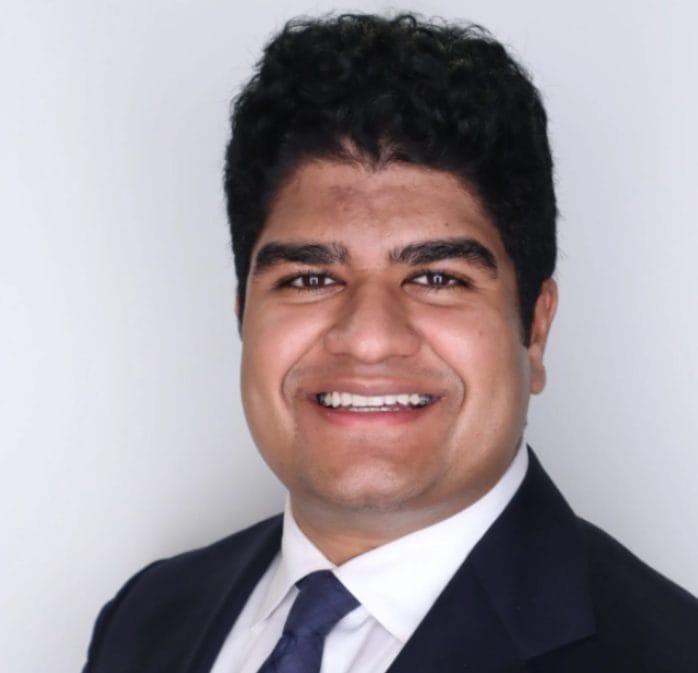
King Vanga is a founder and operator focused on building durable systems at the intersection of technology, decision-making, and long-term value creation. His work emphasizes clarity, leverage, and disciplined execution, with a consistent focus on designing systems that scale through simplicity rather than complexity.
With a background rooted in analytical thinking and first-principles reasoning, King approaches business and problem-solving through a long-term lens. He believes that sustainable outcomes are created by aligning incentives, reducing friction, and concentrating effort on the few inputs that compound over time. Across his work, he prioritizes execution quality over novelty and consistency over intensity.
King is the founder of CivicSentinel AI, a technology initiative focused on building responsible and transparent systems for long-term institutional resilience. His broader interests include how emerging technologies reshape productivity, judgment, and organizational leverage. He is particularly interested in how small, well-aligned teams can achieve outsized impact by combining clear thinking with effective tools and processes.
In addition to his entrepreneurial work, King maintains a strong emphasis on personal operating systems. He treats physical health, energy management, and focus as foundational infrastructure rather than lifestyle choices. Daily routines, environment design, and attention management are viewed as strategic assets that directly influence long-term output and decision quality.
King is also a proponent of simplicity as a competitive advantage. He believes that removing unnecessary complexity often produces better results than adding layers of optimization, both in business and in life. This philosophy informs how he builds teams, evaluates opportunities, and allocates time.
Based in Stanford, California, King continues to build and advise on projects that prioritize durability, clarity, and long-term thinking. His approach reflects a belief that calm execution, thoughtful systems, and sustained focus remain enduring advantages across industries and market cycles.
What is your typical day, and how do you make it productive?
I try to start the day without an alarm to protect sleep quality. I follow that with a daily 20-minute walk to think clearly and set priorities. Mornings are reserved for deep focus and high-leverage work that’s organized into execution blocks rather than reactive tasks. Physical training is treated as infrastructure, not optional. Finally, I use my evenings for review, learning, and recalibration. I believe productivity comes from designing the day intentionally, not filling it.
How do you bring ideas to life?
I start with a clear problem rather than a preconceived solution. I use raw action as the primary validation mechanism. I build quickly to expose real constraints. From there, I let reality—not theory—determine what survives. I iterate based on actual usage and feedback, and I walk away early from ideas that don’t compou
What’s one trend that excites you?
A trend that excites me is the acceleration of AI-driven decision support. As software begins to remove judgment bottlenecks, small teams gain outsized leverage and move faster with greater confidence. The focus is shifting away from mere access to information and toward clarity and discernment—tools that help people understand what matters and act on it. In that environment, systems designed to simplify consistently outperform those that add complexity.
What is one habit that helps you be productive?
One habit that helps me stay productive is ruthless prioritization. I’m deliberate about designing my environment to reduce friction and protect focus as a scarce resource rather than something to be spent casually. I regularly review decisions and outcomes to see what’s working and what isn’t, and I treat energy management as a strategic input, not an afterthought.
What advice would you give your younger self?
I would tell my younger self to focus on skills that compound and to optimize for long-term optionality rather than short-term wins. I’d stress the importance of avoiding unnecessary distractions and doing fewer things, but doing them with higher quality. Most of all, I’d remind myself to think in decades, not quarters, and to make decisions with that longer horizon in mind.
Tell us something you believe almost nobody agrees with you.
I believe that raw action is the only reliable way to validate an idea, and that planning without execution often creates false confidence. I also think constraints tend to improve outcomes by forcing clarity and better decisions, while simplicity scales far better than sophistication. Above all, I believe calm, steady execution consistently beats urgency, even though that runs counter to how most people approach work and progress.
What is the one thing you repeatedly do and recommend everyone else do?
One thing I repeatedly do—and recommend to everyone else—is to audit how time is actually being spent. That awareness makes it easier to remove low-value activities and replace them with systems that don’t rely on motivation. I revisit priorities weekly to make sure effort is aligned with what matters most, and I protect attention aggressively, since focus is the foundation everything else depends on.
When you feel overwhelmed or unfocused, what do you do?
When I feel overwhelmed or unfocused, I deliberately reduce the scope to the next concrete action rather than trying to solve everything at once. I step away from screens and move physically to reset my state, then write to clarify what’s actually on my mind. From there, I re-establish a single objective and focus on that until momentum returns.
What is one strategy that has helped you grow your business or advance in your career?
One strategy that has consistently helped me grow my business and advance in my career is focusing on leverage rather than scale. Early on, I put effort into building durable systems that could support growth without constant intervention, and I’ve been deliberate about choosing partners carefully. By prioritizing trust and credibility in every relationship, I’ve been able to create opportunities that compound over time. The common thread is optimizing for long-term durability instead of short-term expansion.
What is one failure in your career, how did you overcome it, and what lessons did you take away from it?
One failure in my career was trying to execute too many initiatives in parallel, which spread my attention thin and slowed meaningful progress. I came to understand the real cost of fragmented focus and how it undermines decision-making and execution. To overcome it, I shifted toward clearer sequencing and more deliberate focus, using stronger decision filters to determine what truly deserved attention. The experience reinforced the value of concentration and the impact it has on both outcomes and momentum.
What is one business idea you’re willing to give away to our readers?
One business idea I’d give away is a fast-casual concept called Naanstop, built around Indian-inspired comfort food with modern execution. The idea centers on a simple, focused menu that allows for fast throughput and consistent quality across locations. It’s designed from the start for scalability and clear brand positioning, with an emphasis on operational efficiency rather than novelty.
What is one piece of software that helps you be productive? How do you use it?
One piece of software that helps me stay productive is Notion, which I use as a personal operating system. I rely on it for planning, prioritization, and knowledge storage, essentially externalizing my thinking to reduce cognitive load. It houses my principles, frameworks, and decision logs, giving me a clear place to return to when I need context or clarity. I review it regularly rather than constantly, so it supports decision-making without becoming a distraction.
What is the best $100 you recently spent?
I bought a $45 form-fit pillow designed to support back sleeping. It noticeably improved my sleep consistency and recovery, which reduced daily friction and fatigue. For a small cost, it delivers a compounding daily benefit, and the return shows up in better energy, focus, and overall performance.
Do you have a favorite book or podcast from which you’ve received much value?
A book I’ve gotten a great deal of value from is The 80/20 Principle by Richard Koch. It reinforced leverage-based thinking and the idea that a small number of inputs often drive most outcomes. The book emphasizes focusing on what truly matters, which makes it applicable across both business and life, and it consistently encourages simplicity and clarity in decision-making.
What’s a movie or series you recently enjoyed and why?
Lately, I’ve gravitated more toward stand-up comedy than scripted content, especially recent live sets from Dave Chappelle and Chris Rock. I enjoy the sharp observation and clarity that good stand-up brings, using humor as a lens on human behavior. The direct, unsanitized communication resonates with me and often says more about how people think and act than a tightly scripted series ever could.
Key learnings:
- Consistent execution matters more than elaborate planning when validating ideas.
- Simplicity and focus create stronger long-term outcomes than complexity.
- Protecting attention and energy is essential for sustained productivity.
- Systems and habits outperform motivation over extended time horizons.
- Long-term thinking enables compounding advantages across careers and businesses.