
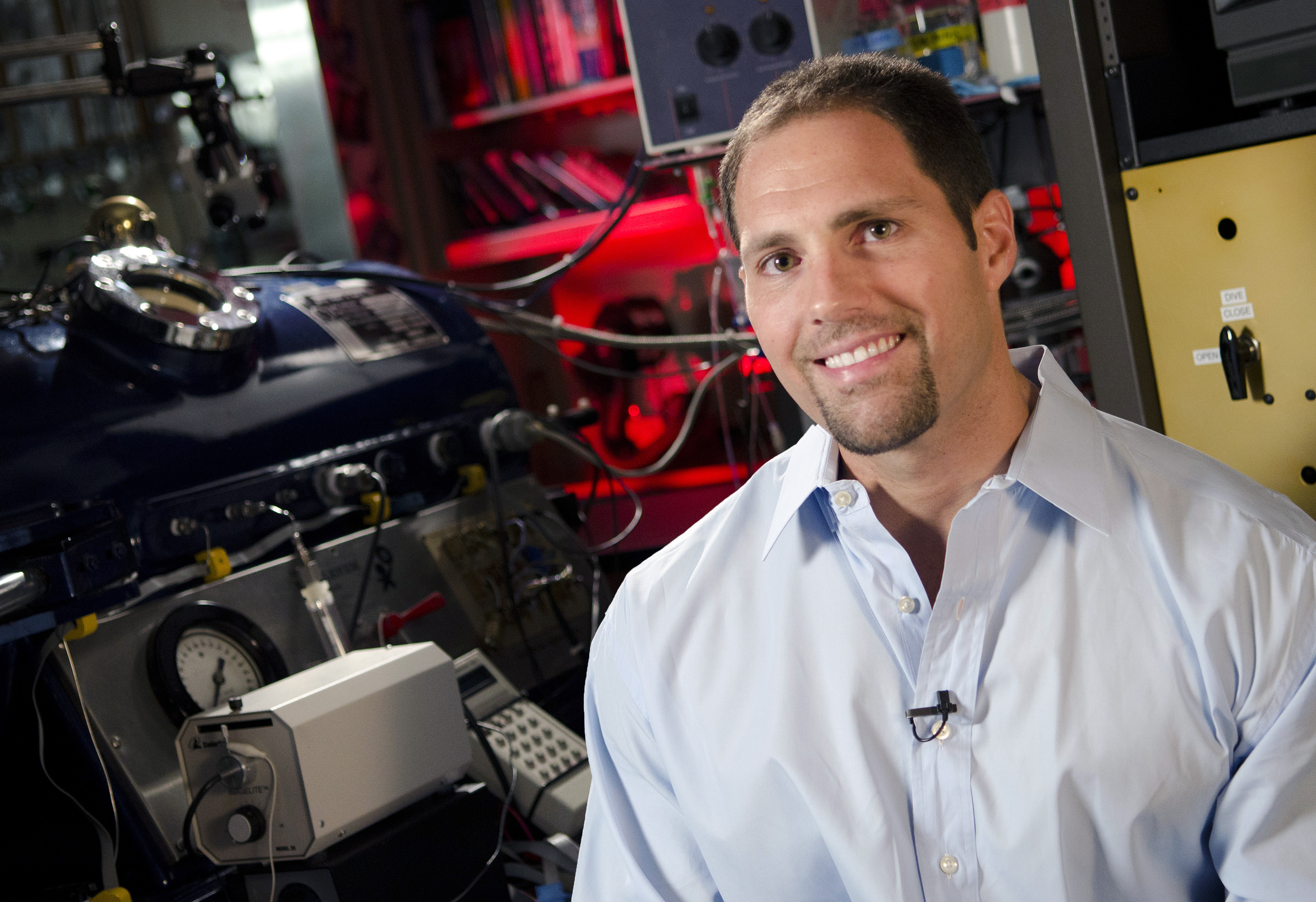
After Dominic D’Agostino graduated from Robert Wood Johnson Medical School with a Ph.D. in Physiology and Neuroscience, he completed two Postdoctoral Fellowships as part of his postgraduate research. The first was a two-year fellowship in Neuroscience, Cell Biology and Physiology at Wright State University Boonshoft School of Medicine. Dominic D’Agostino came to the University of South Florida during his second Postdoctoral Fellowship, which was at USF’s department of Molecular Pharmacology and Physiology. He continues to teach advanced courses at the university, and he conducts research in neuroscience, physiology, and nutritional science.
Dominic D’Agostino has written numerous peer-reviewed papers, which have appeared in publications such as the Journal of Microscopy, AJP Regulatory, Integrative and Comparative Physiology, and Microscopy and Microanalysis. Mr. D’Agostino has also contributed chapters to books on topics including physiology and nutritional science. During his career at the University of South Florida , he has developed dietary-related research programs on CNS oxygen toxicity (seizures), epilepsy, cancer, Alzheimer’s disease, amyotrophic lateral sclerosis, and other conditions. Groups that have contributed to Dominic D’Agostino’s research endeavors include the Office of Naval Research (ONR), the Alzheimer’s Association, the Department of Defense (DOD), and the American Heart Association (AHA).
Thoroughly involved in local nonprofit organizations, Dominic D’Agostino has been a Big Brother/mentor in the Big Brothers Big Sisters Association for several years. He supports the Humane Society of Tampa Bay. In addition to spending eight hours per month volunteering at this organization as an animal companion, he is a registered foster parent for animals in need of temporary homes. He works with nonprofit groups that aid homeless people, including Metropolitan Ministries. Dominic D’Agostino also contributes to Lifelink, a group that aims to promote organ donation, by participating in fund-raising events and raising awareness about the organization and its cause.
What is your typical day, and how do you make it productive?
A typical day starts with writing down at least three major tasks the night before. In the morning, I review my to-do list and may revise and add a few things. This list typically includes goals related to my work (research, teaching), physical health, and relationships.
Writing my goals down and sharing them with people close to me has been the most crucial factor in making the day productive.
How do you bring ideas to life?
The first step in bringing ideas to life is to just start the process of righting the ideas down and revisiting them periodically for refinement. Many of my original ideas get discarded, and if they advanced to the next stage of action, they always go through several iterations. Bringing ideas to life is a process of refinement. This could be a new experiment, workout routine, home improvement project, or even just vetting out a new travel destination.
What’s one trend that excites you?
One exciting trend is using various new AI platforms to advance and refine the scientific process, the various experiments needed to answer a new question. For example, producing a series of experiments to answer an important question and then refining that approach to maximize human impact and translational potential. The new AI tools in existence can suggest alternative methods, cost savings, and ways to ensure the project is feasible and reproduceable.
What is one habit that helps you be productive?
One habit that helps productivity is having an accountability partner. For me this is my wife. I tell her about my daily plans at breakfast and, at the end of the day, follow up with how things went.
What advice would you give your younger self?
Important advice for my younger self would be to spend more time cultivating personal relationships with people that are exceptional in their field and chose these mentors wisely. When younger I was a voracious reader and took away actionable lessons from many experts, but never really took the time to engage with them on a personal level. Later in my career, I had the opportunity to connect with them personally.
Tell us something you believe that almost nobody agrees with you on.
When it comes to exercise, I have always felt that less is best. My approach has been to do the minimum effective “dose” of exercise, but to make each session count. For example, using a progressive overload and periodization structure to ensure that each session is an incremental step towards my strength of fitness goals.
What is the one thing you repeatedly do and recommend everyone else do?
I have always felt the “movement is medicine” and simply taking a brisk walk after each meal is a terrific way to improve metabolic health and even connect with your partner. You can even use the time to listen to an audiobook or just enjoy being out in nature. My wife and I also do at least one lengthy walk together each day, especially after the last meal of the day.
When you feel overwhelmed or unfocused, what do you do?
It is quite common to feel overwhelmed and unfocused, especially with demanding careers. The best way for me to snap out of that situation is to dramatically change my physical and mental state by doing something different that involves considerable effort. This is a tactic I learned from Anthony Robbins. This could be an intense set of push-ups or pull-ups to failure or just playing outside with my dogs to do a fast reset.
What is one strategy that has helped you grow your business or advance in your career?
Building authentic, reciprocal professional relationships—and maintaining them with consistency—has been one of the most universally effective strategies for me to grow in my career.
What is one failure in your career, how did you overcome it, and what lessons did you take away from it?
A major career failure for me has been letting the fear of failing prevent progress. This has been in the form of not pursuing various radical scientific ideas that were later discovered by others. The lesson is that the people who grow and succeed are those who learn to act, adapt, and extract lessons, rather than freeze or stay complacent when it with resistance.
What is one business idea you’re willing to give away to our readers?
One idea I often ponder is to create a science-driven wellness company, not a supplement brand. Each participant receives baseline cognitive and metabolic assessment (attention tests, EEG, HRV, blood biomarkers). In addition, personalized “brain performance” program combining evidence-based behavioral interventions (e.g., mindfulness, light exposure timing, diet structure) and optional physiological tools (wearables, CGM, HRV feedback, breathwork). This digital platform would have progress dashboards and virtual coaching, with the specific goal to optimize nutritional and therapeutic ketosis.
What is one piece of software that helps you be productive? How do you use it?
Notion has helped me stay productive by centralizing information, streamlining workflows, and enhancing collaborative projects.
What is the best $100 you recently spent? What and why?
We recently did a half-day sunset dolphin cruise that cost $100, and this experience created amazing memories that we will have for a lifetime.
Do you have a favorite book or podcast you’ve gotten a ton of value from and why?
I recently finished a book entitled The Art of Spending Money, which was more of a philosophical value of money instead of a how-to book. It was about aligning spending with your values, specifically on things that genuinely improve your wellbeing, relationships, and personal growth. It also emphasized that wealth without purpose often leads to anxiety and emptiness, whereas purpose-driven spending builds freedom, security, and contentment.
What’s a movie or series you recently enjoyed and why?
I love history documentaries and find the series entitled America in Color to be a spectacular deep dive into many of the key events, places, and people that shaped America. It really deepened my understanding of how our nation’s struggles and innovations shaped the modern world. This information is more relevant today than ever, and it is a great series for younger viewers to get an appreciation of the current world we live in.
Key learnings
- Intentional planning enhances productivity: Writing down goals each day and maintaining accountability helps align actions with long-term objectives.
- Progress comes from action and refinement: Ideas evolve through iteration—starting, testing, and adjusting are crucial for bringing concepts to life.
- Relationships fuel growth: Building authentic, reciprocal connections and choosing mentors wisely accelerates both personal and professional development.
- Movement supports mental and physical health: Simple daily habits, such as walking after meals, improve metabolic health and create space for reflection and connection.
- Fear of failure hinders success: Overcoming hesitation and taking calculated risks leads to learning, innovation, and long-term advancement.