
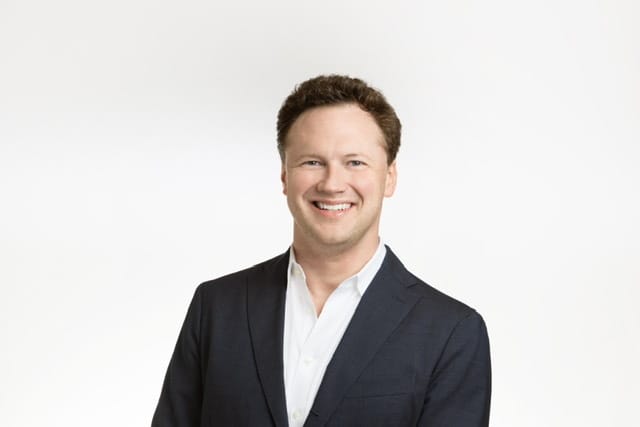
Dr. Nathan Starke is a fellowship-trained urologist specializing hypogonadism, sexual dysfunction, Peyronie’s disease, male infertility, and reconstructive urology.
He served as the founding Director of the Houston Methodist Men’s Health Center, where he help establish a comprehensive care model that addresses urological concerns while providing an accessible entry point for men to engage with their overall health and wellness. Dr. Starke was also the Chief Medical Officer of Vivify Medical, a biotechnology company that develops surgical solutions for enlarged prostate symptoms.
He graduated with a degree in neuroscience from Vanderbilt University and earned his medical degree from Baylor College of Medicine, where he was inducted into the Alpha Omega Alpha Honor Medical Society. He completed his urology residency at UT Southwestern Medical Center and pursued fellowship training in andrology at the University of Virginia.
His contributions to urological research include peer-reviewed publications on topics from male fertility to novel diagnostic techniques. A sought-after medical expert, Dr. Starke has been featured in Men’s Health, GQ, and local news programs, discussing men’s health with candor and accessibility.
Dr. Starke is passionate about mental health awareness and addiction recovery. Deeply committed to community service, he volunteers weekly at Special Pals animal shelter in his hometown of Houston, Texas. Starke’s professional approach centers on serving others and living outside oneself, making every interaction meaningful.
What is your typical day, and how do you make it productive?
About a year ago, I stepped away from my professional life as a surgeon on an extended sabbatical. So, my typical day over the last year looks a little different than it used to. It is centered around activities geared toward self-improvement and improving the lives of others. Every day is a bit different, but common activities include social activities like getting coffee, having lunch, and/or having dinner with friends. I’m also very lucky that my brother, sister, and their families all moved back to Houston within the last year, so I also spend lots of time with them doing similar things. I participate in group and individual therapy sessions of various sorts several times a week. I exercise every day and spend time with my new rescue dog on long walks or at the dog park. Perhaps the highlight of each week is the few days I spend volunteering, often at an animal shelter called Special Pals, taking care of animals before, during, and after undergoing a variety of surgical procedures. It’s so rewarding to give back to the community, especially to its most vulnerable, furry members. And I find that when I keep the focus on serving others and bettering myself in healthy ways, “productivity” is achieved every time.
How do you bring ideas to life?
I don’t have a set process for “bringing ideas to life,” but I think it usually follows a predictable pattern. After an idea occurs to me, I typically spend time refining the idea in my head in a sort of meditative process. I then read, do research, and study everything I can about all of the necessarily related concepts that will be needed to make the idea into something tangible. Once I have a pretty good framework in my mind of the idea and what is needed to make it a reality, I then consult with trusted advisors and friends who are generally smart folks or who have expertise in particular fields. My network is large enough that even if I don’t know an expert in X, I can usually find a friend of a friend who knows all about X with whom I can talk things over and through. This discussion-with-others part of the process is crucial, as it refines and validates the idea and the plan further. Once all of that groundwork is laid, I’m able to make the calls, write the emails, fill in the paperwork, get the supplies, work diligently, and wait patiently (the hardest part) until the idea becomes a real thing.
What’s one trend that excites you?
I am very excited by the ongoing trend of a greater public awareness of and appreciation for the complexity of mental health and addiction. These issues are finally discussed openly and with much less puritanical judgment than ever before. Things previously considered to be moral failings or indicators of being a bad or terminally flawed person are now understood better as the illnesses that they are, with the complex management required to treat them. I find this to be true on a small scale/regular person level in conversations with friends, as well as at a large scale/national level, with well-known, noteworthy people speaking honestly about their own struggles and their journeys toward improving their lives. The only way things of any sort can get better is for us all to acknowledge them, admit our shortcomings in how we’ve previously addressed them, and to discuss possible solutions to strive toward in the future.
What is one habit that helps you be productive?
Exercise. I have learned over the past year how important movement and physical exertion are at improving health. Not just in the obvious way, physical health, but also in terms of strength and agility mentally, psychologically, and spiritually. When all of these aspects of one’s health are aligned and ever-improving, “being productive” is so much easier on a day-to-day basis.
What advice would you give your younger self?
Great question. Something like “YOU ARE NOT THE CENTER OF THE UNIVERSE”. I think all of us people have the innate tendency to view ourselves as the main character in each of our own life stories. I listened to a great graduation speech once given by the late author David Foster Wallace entitled “This Is Water”. The title refers to the idea that young fish don’t recognize that they are even swimming in water until it is pointed out by an older, wiser fish, because it is all they have ever known. Wallace explains that in a similar way, many people develop and maintain an egocentric view of the world and universe, and because this is the only way they have ever experienced anything, they are not even aware they are doing it. He terms this our “default setting,” and muses that a “well-adjusted” person is one who has successfully adjusted this setting to come to understand that we are all but tiny pieces of a much grander picture. It was only once I was able to understand this on a fundamental level that I was able to change my approach to life and shift my focus away from the selfish (and ultimately self-consuming) drives that had motivated me my whole life and toward helping others and living outside of myself.
Tell us something you believe almost nobody agrees with you on?
That the loudest voice in the room often belongs to the most fearful man, and the quietest voice to the most powerful.
What is the one thing you repeatedly do and recommend everyone else do?
Find a set of practices that keeps you centered and grounded, no matter what is going on around you. In my case, that includes deep thought/prayer, social interaction, exercise, discussing my problems openly and honestly with other individuals or groups, and practicing selflessness by intentionally serving others. Whenever I am feeling anxious or uneasy, I always return to those practices to get my mind, body, and spirit back in alignment, and the uncomfortable feelings quickly fade.
What is one strategy that has helped you grow your business or advance in your career?
I think I have been particularly adept at understanding what my immediate goal was, deciding exactly what was needed to achieve it, doing exactly those things to “complete the mission,” and then deciding on and moving to the next goal. However, until relatively recently, I lived without much of a set of principles or code of living; I had one end goal in mind at the end of the road, and never gave much thought to what I would do after I reached it. And this led me down a dark path. So, while I think my goal-oriented nature, drive, and relentless pursuit of success are worthwhile qualities professionally, moving forward, I will strive to ceaselessly develop new goals based on my newly established principles, particularly focusing on the good of others instead of self-centered material success. This will be the key to avoiding the previous circumstance of reaching “the ultimate goal,” then finding myself lost and without purpose.
What is one failure in your career, how did you overcome it, and what lessons did you take away from it?
One major failure I made in my career was to become fixated on achieving specific objectives without properly developing guiding principles for myself along the way. A medical career is often very step-by-step achievement focused. College, then medical school, then residency, etc. I was always successful at making it to the next step, but once I had reached the supposed end goal of getting hired into my dream job, I was kind of lost. This ultimately led to developing some bad habits that led to unhappiness, burnout and my leaving that job. I ultimately overcame that feeling of aimlessness and despair by seeking help from others to unlearn those self-destructive habits, starting to live in a more healthy way and treating myself better, focusing my energy on being of service to others, and coming to understand that I am not in control of everything around me and to be OK with that. As long as I live openly, honestly, and with intention, with the focus outside of myself and my own will and desire, I have learned that everything else will fall into place and my life and the lives of those around me will be better for it.
What is one business idea you’re willing to give away to our readers?
The idea of “women’s health centers”. Such centers exist in the form of breast cancer screening, obstetrics and gynecological care, and even medispas focusing on aesthetic optimization. But on the men’s side, there exist many men’s health/Low T centers (some more reputable than others) that focus on physical vitality and wellness for men. I think a female-focused version of something similar would fill a current void in the market.
What is one piece of software that helps you be productive? How do you use it?
As basic as it sounds, high-quality dictation software, now nearly ubiquitous on personal computers, cell phones, electronic medical record software, etc. has greatly improved my productivity. I think nearly everyone can speak faster than they can type, myself included, and I find that great voice-to-text functionality helps me get my thoughts down on paper more quickly. And while I always go back to proofread and make precise edits with the keyboard, the whole process enables me to express and fine tune my ideas more effectively and efficiently.
What is the best $100 you recently spent? What and why?
The best $100 I recently spent was for Christmas gifts for my six-year-old nephew, Tommy, and my four-year-old niece, Coco. Tommy loves football, so I got him an indoor “silent” football (which also keeps his parents happy) and a Houston Texans hoodie. Coco is a unicorn enthusiast and a born performer, so I got her wooden chest with five different unicorns in it and a pink karaoke microphone (which may cancel out the silence of Tommy’s football). They are small gifts and it’s not a ton of money, but I’m excited for the joy they will bring when they open them Christmas morning.
Do you have a favorite book or podcast you’ve gotten a ton of value from and why?
My favorite podcast for a couple of years now is called Acquired. Hosted by Ben Gilbert and David Rosenthal, the series takes VERY deep dives into the history, development, and modernization of myriad interesting companies around the world. From Standard Oil to Trader Joe’s, from Hermes to Coca-Cola, I am always enthralled by their presentations (often 3-4 hours and beyond), particularly their thoroughness, attention to detail, and thoughtful analysis of every aspect of corporate development. It has not only provided me with lots of interesting cocktail party fun-facts, but it has fostered in me a great interest in business and innovation that I previously didn’t know existed. Highly, highly recommend.
What’s a movie or series you recently enjoyed and why?
Taboo on Amazon Prime. It’s a great historically-set series starring Tom Hardy as the heir to a shipping magnate in early 1800s London. I won’t spoil anything, but it combines real historical events, including the business dealings of the fascinating East India Company, with well-crafted characters, great action, an amazing script, and a bit of the supernatural. Sadly there was only one season made in 2017, but I was recently told that a script for season two has been written and will come into production nearly 10 years after the first.
Key learnings
- The most transformative realization I’ve had is understanding that I’m not the center of the universe—recognizing myself as a small piece of a much larger picture allowed me to shift my focus from self-centered achievement to serving others.
- I learned the hard way that relentless goal achievement without guiding principles is a recipe for emptiness. Once I achieved what I thought was the ultimate goal, I struggled to understand my purpose. The lesson is to develop your core principles alongside your ambitions.
- The practices that keep me grounded aren’t just nice-to-haves, they’re essential. Sustained productivity and peace come from maintaining these daily disciplines that keep me centered no matter what’s happening around me.