
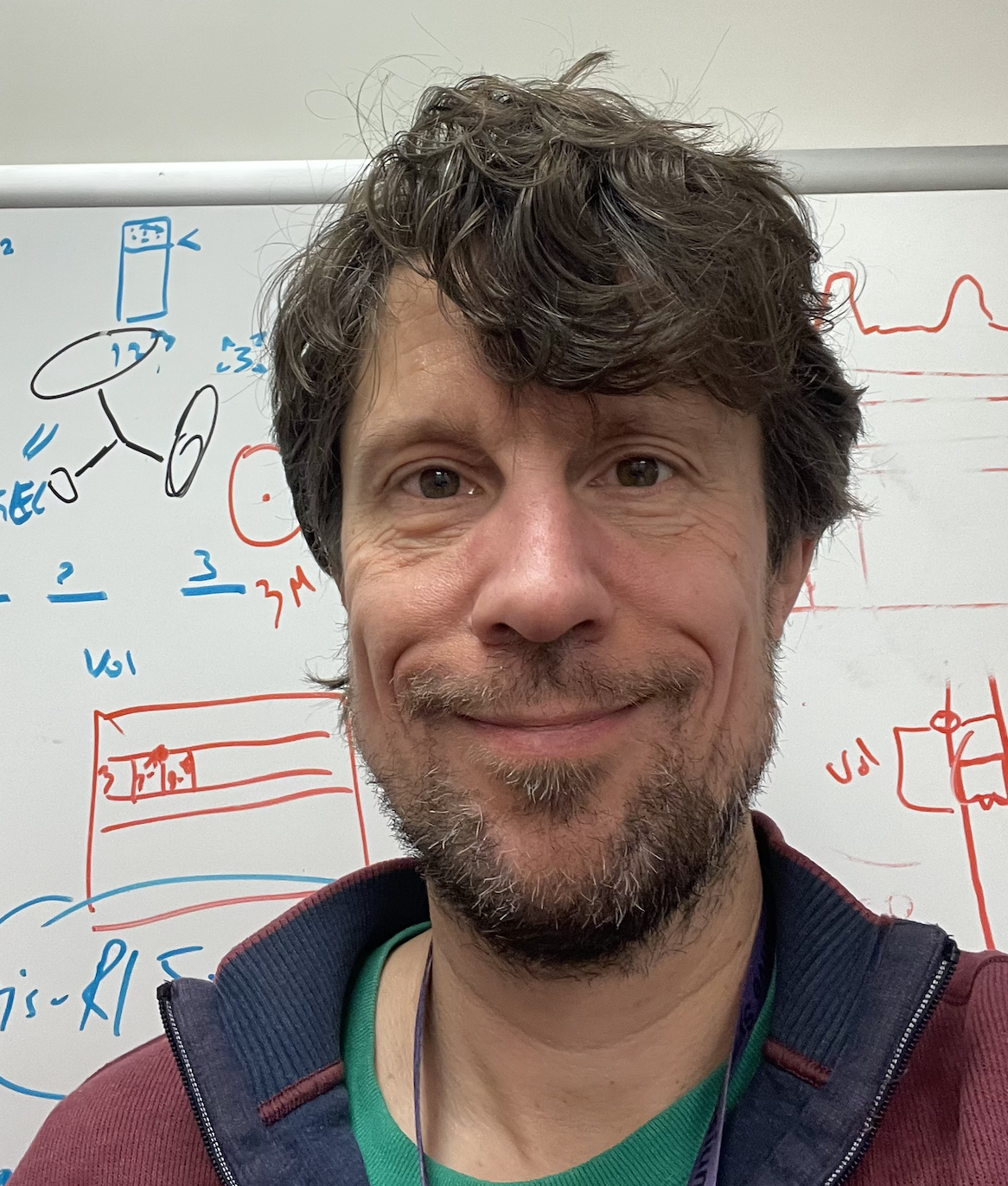
An experienced structural biologist, Simon Messing, PhD, has served in the position of scientist 3 at the Frederick National Laboratory for Cancer Research in Frederick, Maryland, since 2015. His responsibilities in this role involve the development and optimization of drug screening protocols, with a focus on protein production. In addition to optimizing reagents for drug screening assays, Simon Messing publishes protein production group results with the RAS Initiative and engages with the larger scientific community on relevant topics.
Simon Messing has written or contributed in part to more than 30 publications during his career as a cancer scientist. He is particularly interested in the RAS associated proteins LZTR1 and PIK3. His work in this area resulted in a high-impact publication.
Simon Messing holds a biology degree from Macalester College. He earned his doctor of biophysics from the Johns Hopkins School of Medicine, followed by five years of post-doctoral experience with the National Institutes of Health. Beyond his activities at the Frederick National Laboratory for Cancer Research, his interests include gardening with his neighborhood group and for the Shepherd Elementary School.
What is your typical day, and how do you make it productive?
My typical day I wake up early, and drink coffee and get my family ready for the day. Then I head out to work, while at work I do laboratory experiments, communicate with collaborators via email, go to meetings centered around specific research goals, attend seminars of note, give seminars of note, meet with reports to see how their projects are going and whether or not they are on track, deal with administrative issues, etc. After work I head home to take care of my family, and go for a run. Really, I try to make my day productive by getting work done as much as possible and being the best father I can be.
How do you bring ideas to life?
At work, this is simple—I will read an interesting journal article, or I am in a project-specific meeting and come up with an idea or a hypothesis. I then try to carve out an hour a day to come up with an experimental plan to see if my idea is correct. This proceeds either via me doing experiments in the lab or giving this work to one of my reports.
A good example of this in life outside work is the local elementary school garden. Ten years ago, I noticed that no one tends the school landscape. I talked to the principle about the sorry state and asked if I could just start gardening around the school property. She said yes. So, I set aside an hour every couple weekends to work on the school property. I also started beautification events twice a year to get the community involved. Through this effort, I was able to establish a rain garden, wildflower beds, etc. The school grounds look better and are educational, as everything I planted is a native to Maryland.
What’s one trend that excites you?
How despite everything, little acts of environmental restoring are gathering steam. For example, the increase in native wildflowers in people’s gardens. Invasive-plant removal in Rock Creek Park. Beaver reintroduction to clean up streams and improve hydrology. I find it hearting that everyday people are taking time to care about the world around them.
Professionally, I think the future is using mRNA vaccines to train T cells to fight cancer. This could be the big thing that changes things. Also, between statins and GLP-1 medications, we can vastly improve longevity and quality of life.
What is one habit that helps you be productive?
I think one thing that certainly holds me back—and I think also holds others back—is fear of failure. If I stop thinking about failure and simply start doing, then not much holds me back. Also, I try not to be idle. If I am sitting down, I check myself and go through the list of things I could be doing. On the other hand, I always make sure to carve out time to relax because to be productive, you need to regenerate—which is why I go run, play with and hang out with my kids.
What advice would you give your younger self?
Do more travel and do it cheaply. When you do travel cheaply (backpacking/hostels), you have way more fun when you are young. Also, don’t turn down invitations to doing something fun. The other advice I would give myself is that I should have asked for a divorce after my now ex-wife turned down my offer to fix our marriage after finding out about her affair. If the other person is not interested and wants to be with someone else, no amount of effort is going to make it work.
Tell us something you believe that almost nobody agrees with you on.
Well, lately it seems nobody agrees on me with the statement that vaccines are good things and should be required. As someone who understands immunology (I worked on the COVID mRNA vaccine night and day during the pandemic from 2020-2021), I can say without a doubt that vaccines are good! Also, climate change. As a scientist, the data gets clearer and clearer every day. People always say, “I don’t believe in vaccines or climate change.” Well, sorry, diseases don’t care what you believe in, and the planet doesn’t care what you believe in either—some things are just facts.
What is the one thing you repeatedly do and recommend everyone else do?
I guess one thing I keep recommending is yoga. Back in 2017, I had serious back pain. I started doing yoga, and the back pain went away within a couple months. Since then, I do 1-hour yoga sessions at least twice a week. So many people have this or that thing—yoga can help!
When you feel overwhelmed or unfocused, what do you do?
At work, if it’s a small thing, I just switch tasks. If it’s bigger, then I generally go to my boss/mentor for advice or just talk it out for a bit.
What is one strategy that has helped you grow your business or advance in your career?
One strategy that I often employ is to simply admit that I do not know much about something or a specific subject matter and then ask a subject-matter expert to explain. The next part is easy: it is to simply to listen! Active listening is really important because no one person knows everything or can’t know everything (if they claim to know everything, then they are lying). Then take this new understanding and drive a project forward. Also, don’t forget to acknowledge someone who has helped you out in this regard because by giving them credit, you can pull them into a project.
What is one failure in your career, how did you overcome it, and what lessons did you take away from it?
I started off in graduate school with one project that showed promise but kept failing for three years. I overcame it by letting it go and taking on two different projects. Sometimes you just have to let an idea or project go and move on to something else. Admitting defeat is difficult but sometimes necessary to find success. Now if something is not working, I will put it on the back burner and work on something else.
What is one piece of software that helps you be productive? How do you use it?
More than anything, the Calendar app on my iPhone. It reminds me about appointments, special events, that I need to buy a present for someone for their birthday, work meetings, etc. Absolutely indispensable if you are overbooked!
What is the best $100 you recently spent? What and why?
The best money I recently spent was to buy two Exit Games advent calendars. One for my aunt and uncle (he recently lost his job) to cheer them up over the holidays and another for me and my middle son. These escape room puzzle games are great to do together with someone and share in some family fun. My middle child and I spend quality time together and more.
Do you have a favorite book or podcast you’ve gotten a ton of value from and why?
I have read several volumes of Shadow Slave by Barisbi Alborov, which my oldest read first. I love it, as it is a fantasy novel (I grew up on a heavy dose of Tolkien, Marion Zimmer Bradley, and David Eddings). Also, the book allows me to bond with my oldest, as he can spend hours talking about this book and so can I.
What’s a movie or series you recently enjoyed and why?
Only Murders in the Building. I really enjoy the characters and how they bonded to give themselves community and family. Also, nothing better than a whodunit mystery.
Key learnings
- Family is really important.
- Engage your kids, as they are only kids once,
- Do interesting work that you enjoy if you can,
- Always help a friend out,
- Keep working at big tasks, one hour at a time, and they will get done.