
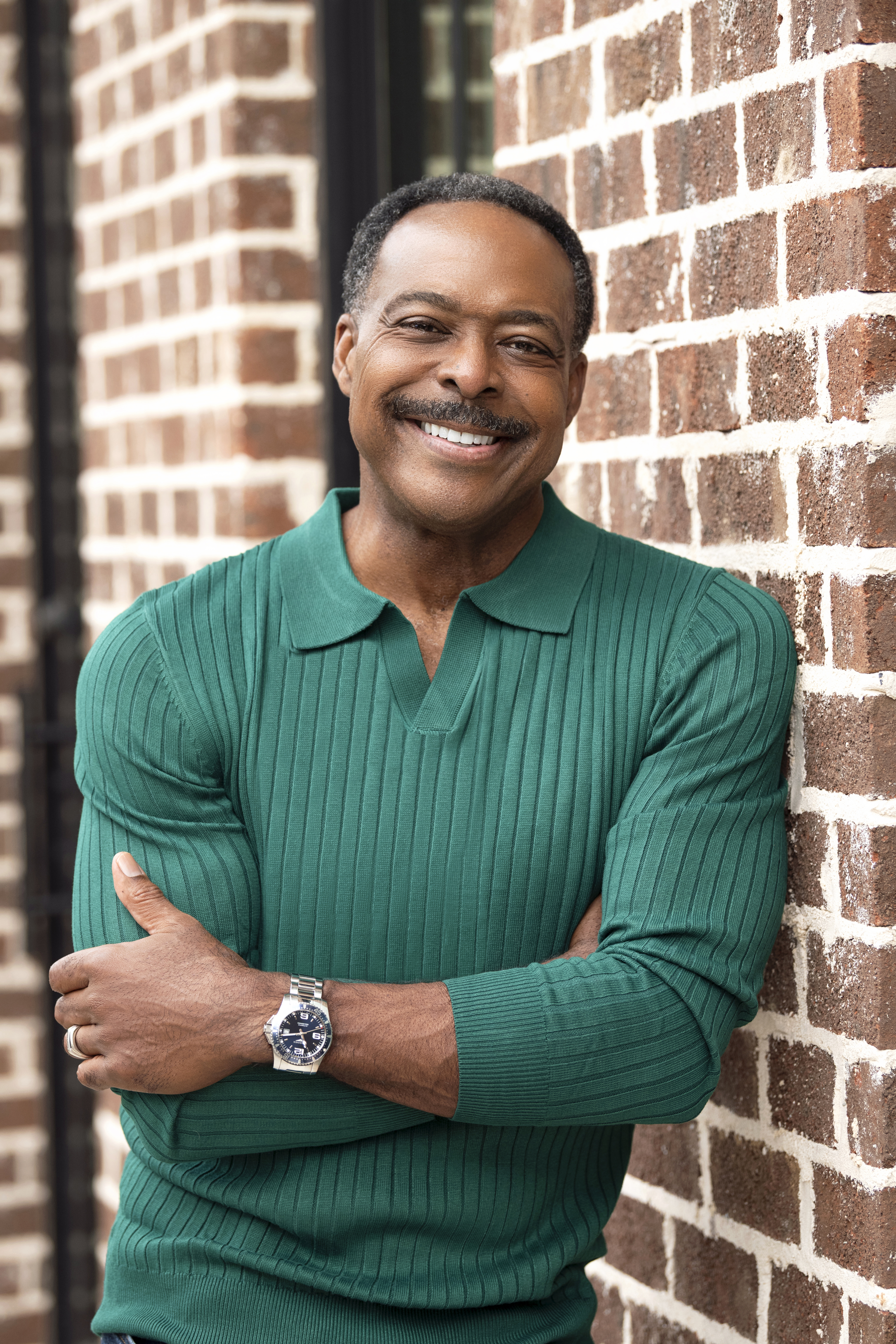
Leon Harris is a nationally and locally award-winning news anchor, motivational speaker, podcaster, and mentor, whose career spans more than three decades. He began his professional journey at CNN, where he spent over 20 years covering some of the most pivotal events in recent history, including the O.J. Simpson trial and the 2004 tsunami in Thailand. Later, he became a trusted anchor at NBC4 and WJLA-TV in Washington, D.C., where he continued to bring clarity, context and a human touch to complex stories, including the January 6th riots at the U.S. Capitol.
A proud alumnus of Ohio University, Leon has remained closely connected to his alma mater, supporting scholarships and the Harris Student Internship Center, which helps prepare aspiring media professionals for successful careers. Beyond the newsroom, Leon is a sought-after motivational speaker, emcee, and mentor, known for his ability to connect with diverse audiences through storytelling, encouragement, and humor.
Passionate about service, Leon dedicates much of his time to non-profit organizations in his adopted hometown of Washington, D.C. He actively supports community initiatives, provides mentorship, and lends his voice to causes that promote resilience, opportunity, and education.
Leon also created the Leon Harris Road to Recovery Scholarship, a $1,000 award supporting undergraduate students who are pursuing higher education after completing recovery programs. Through this initiative, he continues his legacy of uplifting others, proving that perseverance, growth, and education are key to building brighter futures.
Currently based in Washington, D.C., United States, Leon remains a dynamic presence in broadcasting, speaking, and community advocacy.
What is your typical day, and how do you make it productive?
My day usually starts early with reading the latest headlines and preparing for my goals for the day, like interviews, speaking engagements, or experiences I want to pursue. I find that setting a clear schedule with time blocks for information gathering, exercise, and creative work helps me stay productive and focused.
How do you bring ideas to life?
I’ve always believed ideas take shape when you share them out loud. Whether it’s in a newsroom or during a brainstorming session with friends or colleagues, I test an idea by talking it through, refining it, and then taking the first step to execute. Nothing beats good give-and-take with people I think are smarter than I am.
What’s one trend that excites you?
The rise of independent voices around the world in the information ecosystem – podcasts, news and cultural websites – excites me. Voices from all walks of life are out there sharing authentic stories and views that might otherwise go unobserved and unappreciated.
What is one habit that helps you be productive?
Set a goal to accomplish each day, no matter how big or small. Also, I believe in blocking out “no-screen” time. Stepping away from technology allows me to reset and return to my work with a clearer mindset.
What advice would you give your younger self?
Beware of overconfidence, and don’t be afraid of detours. The path you imagine for yourself may need to change, and that’s often where the best opportunities are waiting. Lean on the power of listening.
Tell us something you believe that almost nobody agrees with you on.
I believe failure is not only necessary but underrated. Most people avoid it, but I see failure as a powerful and reliable teacher of lasting lessons.
What is the one thing you repeatedly do and recommend everyone else do?
Take time to journal. Writing down thoughts and reflections, can be amazingly therapeutic and self revelatory. I also find a reason (or three) for gratitude daily, which has a way of grounding me and offering perspective.
When you feel overwhelmed or unfocused, what do you do?
Exercise, meditation and talking with someone else always work. I hit the gym, or get in a good walk listening to a variety of music, an audio book or a good podcast. Using the telephone as it was originally intended can both relax and re-energize me. Getting a good laugh also helps a lot.
What is one strategy that has helped you grow your business or advance in your career?
Mentorship. I wouldn’t have had the life or career I’ve had without its influence and power. Both giving and receiving mentorship has shaped my growth. Surrounding myself with people who challenge me to improve has been invaluable.
What is one failure in your career, how did you overcome it, and what lessons did you take away from it?
Early in my career, I underestimated the importance of balance. I overcommitted to work at the expense of health and family. I overcame it by resetting my priorities and realizing that success means little if your health and personal life suffers.
What is one business idea you’re willing to give away to our readers?
A mentorship app that pairs professionals with students in recovery or transitional stages of life. I know firsthand -support and guidance can change a life’s trajectory.
What is the best $100 you recently spent? What and why?
On books for students at a mentorship event. It was an investment in their future, and seeing their excitement was priceless and inspiring.
Do you have a favorite book or podcast you’ve gotten a ton of value from and why?
Any book by historian Yuval Noah Harari. He can make even the furthest reaches of human history come alive and, at the same time, reveal unifying (and sometimes amusing and encouraging) insights into the future of humankind. I also rely upon “The Daily” podcast from The New York Times. It’s concise, well-researched, and keeps me grounded in the bigger picture of world events.
What’s a movie or series you recently enjoyed and why?
The movie “Sheepdog”, a true, raw and inspiring story of an Iraq war vet, really resonated with me. His struggles after returning home involved battles with substances, domestic conflict, post-traumatic stress, self-doubt and social scrutiny. The heart-wrenching examples set by this warrior and the community of friends and professionals who somehow made him believe in himself and recover his life are so important for us all. It’s a real eye-opener.
Key learnings
- Productivity comes from balance—time blocking and reflection are as important as hard work.
- Failure should be embraced as a teacher, not feared as a setback.
- Mentorship and authentic human connections play a vital role in personal and professional growth.
- Taking breaks and unplugging from screens is essential for creativity and focus.
- Storytelling, whether through broadcasting, podcasts, or scholarships, remains a powerful tool for impact.