
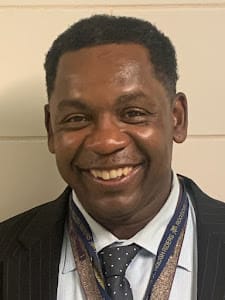
Brodrick Spencer’s life and career have been shaped by service, discipline, and a deep belief in people.
He was born in Jackson, Mississippi, and moved to Long Beach, California, at the age of seven. Raised by his mother, Clara Spencer, he learned early the value of hard work and responsibility. In school, he excelled both academically and athletically.
He was a scholar-athlete who lettered in football, baseball, and basketball, earned multiple honors, and served as student government class president. Even then, he was drawn to leadership and mentoring others.
Spencer continued his education and athletics at Jackson State University and later at the University of California, Santa Barbara, where he earned a degree in Law and Society. He went on to receive a Master’s in Education from Howard University, choosing a career focused on learning, growth, and opportunity.
His professional journey spans nearly three decades in education and nonprofit leadership. He spent years in the classroom as a teacher, coach, and department chair before moving into school administration. As an assistant principal and principal in New York, he led middle and high schools, expanded academic access, strengthened student support systems, and built partnerships that connected schools to their communities.
Today, Spencer serves as Southern California Director of Operations for the William Law Foundation. Outside of work, he remains active in community service, mentorship, and lifelong learning. His story reflects a steady commitment to building systems that help people thrive.
What is your typical day, and how do you make it productive?
My day starts early. I review priorities before emails. I ask myself what actually needs to move forward today. In my current role, overseeing afterschool programs and childcare centers, mornings are for compliance checks, staff support, and problem-solving. Afternoons are for meetings and follow-ups. I keep productivity simple. If it does not connect to student safety, program quality, or staff support, it waits.
How do you bring ideas to life?
I start by listening. In schools and nonprofits, the best ideas often come from people closest to the work. I observe first. Then I test ideas on a small scale. For example, when expanding AP access as a principal, we piloted one course, tracked outcomes, and adjusted before expanding. Ideas only work when systems support them.
What’s one trend that excites you?
I’m encouraged by the growing focus on data-informed equity in education. Not just talking about access, but actually measuring outcomes and adjusting systems. When data is used honestly, it improves decision-making and accountability.
What is one habit that helps you be productive?
I use a written check-off system. Digital tools help, but writing things down makes me commit. I also revisit unfinished goals weekly to reanalyze why they stalled.
What advice would you give your younger self?
Be patient with progress. Early in my career, I wanted results fast. Sustainable change takes time and trust.
Tell us something you believe almost nobody agrees with you on?
I believe strong leadership is quiet most of the time. Visibility does not equal impact. Some of the best work happens without recognition.
What is the one thing you repeatedly do and recommend everyone else do?
I ask for honest feedback from people who understand the work. Not friends. Not cheerleaders. People who will tell the truth.
When you feel overwhelmed or unfocused, what do you do?
I narrow my focus to what I can control in that moment. I take a walk, usually without my phone. Then I reset priorities and reach out to someone I trust for perspective.
What is one strategy that has helped you grow your business or advance in your career?
I consistently built human capital. As a principal, I invested time in developing assistant principals, department chairs, and teacher leaders. When teams grow, outcomes improve. That reputation followed me into nonprofit leadership.
What is one failure in your career, how did you overcome it, and what lessons did you take away from it?
Early as a principal, I tried to fix too many systems at once. Staff felt overwhelmed. Progress slowed. I learned to sequence change. Now I prioritize, communicate clearly, and pace implementation.
What is one business idea you’re willing to give away to our readers?
Create low-cost mentorship hubs that pair retired educators and professionals with youth programs. The experience is underused and highly effective.
What is one piece of software that helps you be productive? How do you use it?
Google Sheets. I use it for compliance tracking, staffing schedules, and before-and-after program metrics. Simple and effective.
Do you have a favorite book or podcast you’ve gotten a ton of value from and why?
The Fifth Discipline by Peter Senge. It reinforced systems thinking, which aligns with how I approach leadership and organizational improvement.
What’s a movie or series you recently enjoyed and why?
Remember the Titans. It shows how leadership, discipline, and trust can bring people together across differences. The story reflects what I’ve seen in schools and teams, where clear expectations and shared goals help people move past division and focus on collective success.
Key learnings
- Sustainable impact comes from building systems, not chasing quick wins.
- Honest feedback and data are essential for effective leadership.
- Quiet, consistent leadership often produces the most lasting results.
- Investing in people strengthens organizations over time.