
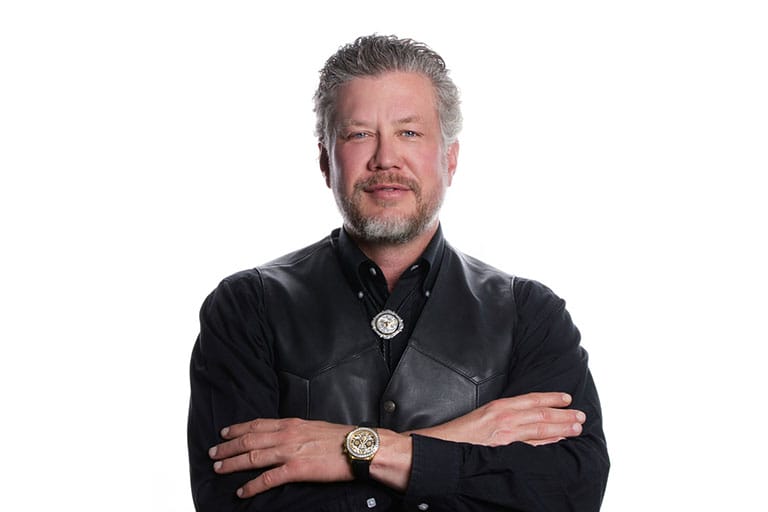
Elliot Omanson didn’t start his career in a corner office. He started it in the U.S. Army, serving multiple tours in the Middle East. Those years shaped how he thinks, leads, and shows up under pressure. They also gave him a deep respect for responsibility, teamwork, and helping people when it matters most.
After his military service, Elliot transitioned into financial services. Watching his younger brothers build careers as investment advisors sparked his interest in the field. He earned his Series 7 and Series 66 licenses, along with Life and Health credentials, and joined Sage Financial Inc. There, he learned the fundamentals of financial planning and the importance of values-driven advice.
Over time, Elliot realized he wanted to build something bigger. Something more complete. He acquired Sage Financial Inc. and rebranded it as OWLFI Strategic Advisors. Under his leadership, OWLFI grew into a fully integrated firm offering financial planning, tax strategy, insurance, and legal coordination—all under one roof.
Today, Elliot serves as Managing Partner and CEO of OWLFI. He is known for his ability to explain complex financial ideas in clear, human terms. Clients trust him not just for strategy, but for perspective. He focuses on long-term thinking, smart structure, and protecting what people work hard to build.
Elliot also shares insights through podcasts and market updates, always with the same goal: clarity over confusion. His guiding belief is simple—play the long game, protect what matters, and build something that lasts.
What is your typical day, and how do you make it productive?
I start early. That habit came from the Army and never left. Mornings are quiet, which is when I do my best thinking. I review priorities, not emails. If something doesn’t move a client decision, a team member forward, or the firm long-term, it waits. Most of my day is spent in conversations—reviewing plans, solving problems, or helping someone get unstuck. I block time for deep work and protect it hard. Productivity, for me, is less about doing more and more about doing the right things.
How do you bring ideas to life?
I pressure-test them fast. At OWLFI, ideas don’t sit in notebooks. If something sounds good, we run it through real client scenarios. That’s how OWLFI Tax and Accounting started—clients kept running into tax friction, so we built the solution instead of outsourcing the problem. I also talk ideas out loud. If I can’t explain it simply, it’s not ready.
What’s one trend that excites you?
The shift toward integrated advice. Business owners are tired of juggling five advisors who don’t talk to each other. The future belongs to teams that connect tax, legal, insurance, and investment strategy into one clear plan.
What is one habit that helps you be productive?
I write things down by hand. Every morning. It slows my thinking just enough to sharpen it.
What advice would you give your younger self?
You don’t need to prove anything. Focus on building skill, not speed. Confidence follows competence.
Tell us something you believe almost nobody agrees with you on?
Most people don’t need more aggressive investments. They need a better structure. Risk is often hiding in taxes, debt, and bad legal setup—not the market.
What is the one thing you repeatedly do and recommend everyone else do?
Review decisions after they’re made. Not to judge them, but to understand them.
When you feel overwhelmed or unfocused, what do you do?
I walk. No phone. That habit started overseas. Movement clears mental noise better than staring at a screen.
What is one strategy that has helped you grow your business or advance in your career?
Saying no early. We don’t chase every opportunity. We focused on retirement planning and business owners first, then expanded deliberately. That clarity allowed OWLFI to grow without losing its values.
What is one failure in your career, how did you overcome it, and what lessons did you take away from it?
Early on, I tried to scale too fast after acquiring Sage Financial. I added services before systems. It stressed the team and confused clients. I pulled back, rebuilt processes, and only then expanded again. Growth without structure is just chaos.
What is one business idea you’re willing to give away to our readers?
Create a quarterly “decision day” for your business. No meetings. Just review the biggest choices you’ve been avoiding and make them.
What is one piece of software that helps you be productive? How do you use it?
Notion. I use it as a decision log. Big choices, why they were made, and what assumptions were used.
Do you have a favorite book or podcast you’ve gotten a ton of value from and why?
Thinking in Bets by Annie Duke. It reshaped how I view decisions under uncertainty. Also, The Knowledge Project podcast for clear thinking.
What’s a movie or series you recently enjoyed and why?
Band of Brothers. Leadership under pressure never gets old.
Key learnings
- Long-term success is built through structure, not speed.
- Integrated thinking beats isolated expertise in complex decisions.
- Reflection after decisions creates better judgment over time.
- Clear communication is a leadership skill, not a personality trait.
- Focus and simplicity are competitive advantages in business.