
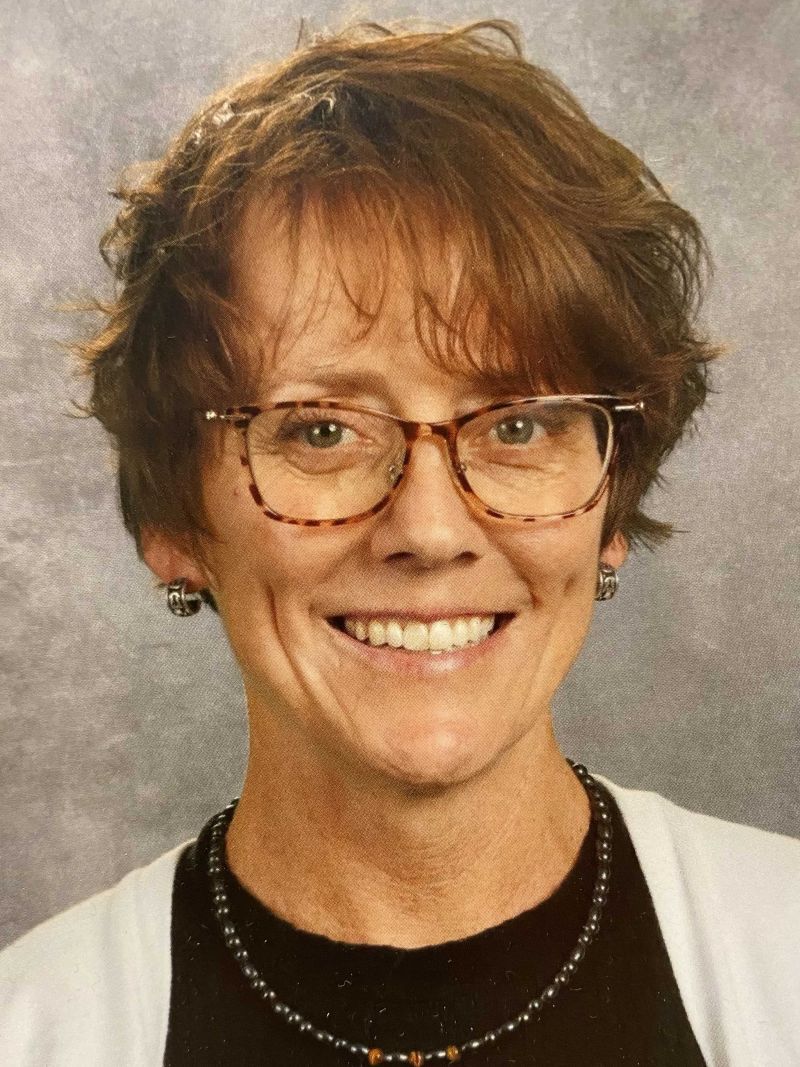
Catherine G. Hicks, Blaine Elementary School educator, specializes in special education. She has worked continuously for seven years to provide innovative, student-centered programs that address low-incidence complex learning disabilities and health impairments. She has extensive training in special education, including ABA therapy and crisis prevention training, and her background also includes adventure-based education, leadership in crisis intervention in the context of individualized wilderness intervention programs, and collaboration with diverse teams, consisting of school based and private care providers. At Blaine Elementary School, Catherine G. Hicks’ commitment to best practices and trauma-informed pedagogy ensures that all students receive equitable opportunities to succeed academically and functionally.
Between 2000 and 2005, Catherine G. Hicks served as a wilderness and crisis-intervention counselor. In this role, she led wilderness expeditions, taught survival skills, and facilitated emotional growth workshops, emphasizing resilience, teamwork, and personal development. It was during this time that she began to learn more about learning disabilities and social-emotional learning needs, as many of the students in her expedition groups suffered from undiagnosed learning disabilities. Seeing first hand the long-term affects of undiagnosed learning disabilities spurred Ms. Hicks to seek a more formal education through the teacher education program at Western Washington University, with an emphasis in special education and early childhood education. During her teacher education program she had the opportunity to travel with fellow teachers-in-training and two leaders in special education research and development to Kenya for a two-month teaching internship. Not only did this provide an opportunity to practice various teaching strategies, but it also strengthened her depth of understanding of education in general and in the context of international cooperation with teachers from a different pedagogical background.
In 2012, Ms. Hicks transitioned into public education as a special education teacher for Life Skills K–5 at the Meridian School District in Washington. She provided instruction for children with low-incidence learning disabilities, including dyslexia, ADHD, Down syndrome, Fragile X syndrome, and autism, as well as students with complex health impairments.
What is your typical day, and how do you make it productive?
My typical day as a teacher begins at about 7:30 am. I get to work before the school day starts so I can check emails and parent messages. Because my students have complex needs, their own daily routines can vary, and it helps me and my team to know if they will be late, need breakfast, or had a rough start to the day. I have a schedule planned, but it can be flexible to accommodate individual needs. I ensure my students get to their general education classrooms and have pockets of time when I teach them individually. We move in and out of the general education spaces and the self-contained spaces throughout the day, with breaks for rest, mealtimes, and recess. My students always attend all of their specialty classes like PE, art, science, and music, and I work with the general education teachers to accommodate their needs and modify the instruction as needed. As much as possible, I like to keep my students learning with their typically-developing peers, so I work with my peers and assistants to ensure that instructional level opportunities are always available within the context of the grade level lessons. This is one of the most dynamic and complex parts of the day, as I have students in several different grades and in several different locations. I spend my plan time and about 45 minutes after school making adjustments to curriculum and materials in order to be synchronized with their IEP goals, as well as the general education curriculum. I usually end my day with this task and check emails again to see what new plans I need to think about for the next day.
How do you bring ideas to life?
First of all, my ideas for my work stem from student needs. Because I work with students in special education, I constantly analyze the relationship between their skills and their areas of need and design plans to address any discrepancies. This starts with the IEP team, which includes the parents, and entails in-depth discussion and planning. For example, we begin planning for real-world communication skills like writing an email or texting friends and family, important information at the elementary-age level. So, our team chooses written expression as an individual goal. To bring this idea to life, I consider the student’s language skills and the fact that they most likely need not only verbal instruction, but also instruction that includes visual supports and hands-on experiences. For teaching written-expression skills, I have planned lessons that include a quick verbal instruction paired with visual supports or pictures that represent the main idea that I am presenting. One activity I designed also included a device that allowed the student to move a marker to indicate that they understood what I had said and that they were ready for the next step. When it came to actually doing a writing assignment, the student used the pictures and the markers to plan, execute, and track their own work, showing that they understood the assignment! This type of activity that includes conversation, pictures, and hands-on action helps to instill the concept and teach the student that words they think can be transformed into written messages that help other people understand them even when expressive language skills are a challenge.
What’s one trend that excites you?
One trend that excites me is the rapid growth of augmentative and alternative communication technology (AAC). AAC uses tablets and apps to help people who are nonverbal communicate with others. Many of these tools work on a device such as an iPad and use pictures to represent words, feelings, and ideas. The person can touch the pictures they want, and the app speaks the message aloud for them. Some apps can even save favorite phrases, predict words, and create full sentences. Of course, the voice can also be personalized to represent the person’s personality and image of themself. AAC technology is becoming more advanced, easier to use, and more personalized for each person’s needs. I am excited about this trend because it gives nonverbal people a real way to share their thoughts, opinions, and personalities. Instead of being limited by not speaking, they are able to take part in conversations, relationships, and learning. I believe this technology is powerful because every person deserves to have a voice and be understood.
What is one habit that helps you be productive?
One habit that helps me be more productive is starting my day with a consistent morning routine. For me, this starts the night before; I really do sleep better and get up ready to go if I limit television and phone-screen time and get to bed by about 9 pm. When I do this, I am able to wake up with enough time and energy to exercise before work. A run and some light weights help me feel more focused and energized. After that, eating a low-carb and low-sugar breakfast helps me stay alert and ready for the day. When I follow this routine, I do my best work and am usually most productive from about 9:00 am until about 2:00 pm.
What advice would you give your younger self?
If I could give advice to my younger self, I would say to keep speaking up and trust your own voice, even when your opinion is different or not the most popular one. I would remind myself that some of the most important ideas are ones that challenge people to think differently. I would also encourage myself to continue developing the skill of diplomacy—framing ideas in a thoughtful, respectful way that helps others hear them. The ability to pair conviction with persuasion and tell a story that draws people in is one of the most valuable communication skills a person can have. Staying true to what you believe while helping others understand your perspective is a skill worth building throughout life.
Tell us something you believe that almost nobody agrees with you on.
One belief I hold that not everyone agrees with is that students with special needs should still be held accountable for their behavior. I believe accountability and support can exist together. Expectations may need to be individualized and paired with the right accommodations, but students benefit when they learn that their choices have consequences. Holding students accountable, in a fair and developmentally appropriate way, helps them build responsibility, self-awareness, and independence. In my experiences, students are most successful when they are given both compassion and clear expectations.
What is the one thing you repeatedly do and recommend everyone else do?
One thing I do consistently and encourage others to do is exercise regularly. I have found that even a simple routine, like going for a run or a brisk walk or doing light weights (get the heart rate elevated and use the big leg muscles!!), improves my energy, focus, and mood. Exercise helps me manage stress and think more clearly throughout the day. It does not have to be extreme or time-consuming to make a difference. For me, regular exercise is one of the most effective habits for feeling and performing at my best.
When you feel overwhelmed or unfocused, what do you do?
When I’m feeling overwhelmed or unfocused, I move. I take a break, walk around the school, just change up the setting so I can get perspective on what is troubling me. This helps me come back with energy and a new point of view. I also try to simplify the moment by focusing on one task at a time instead of everything at once. For example, I focus on that one lesson, that one behavior challenge, or that one sentence my student is trying to read. Even a short break and a little movement can help me feel more organized and productive again.
What is one strategy that has helped you grow your business or advance in your career?
One strategy that has helped me grow my career is a commitment to continuous learning. I have invested in developing my professional skills by earning a master’s degree in curriculum and instruction and becoming a National Board Certified Exceptional Needs Specialist. I also seek out professional development opportunities like learning about applied behavior analysis with our local educational service district because I believe there is always more to learn. What matters most to me is not just gaining new knowledge but putting it into practice. I use what I learn to strengthen my teaching, improve how I support students, and become more effective in the classroom.
What is one failure in your career, how did you overcome it, and what lessons did you take away from it?
One lesson I have learned in my career is that I was so focused on developing my teaching skills and supporting individualized plans for students that I did not spend as much time learning how to effectively manage and guide noncertificated classroom assistants. If I could go back, I would seek more support from school and district administration on supervising and developing a team of support staff because teacher education programs at universities spend very little time educating teachers in this area. I would ask for clearer guidance, more collaboration, and a shared plan for how assistants should support students in the classroom. I have learned that support staff are most successful when they receive detailed training in educational best practices rather than relying only on instincts or parenting experience. That experience taught me that building and leading a strong team is just as important as strong teaching.
What is one business idea you’re willing to give away to our readers?
Since I’m a teacher, the business idea that I’m willing to share with others is a behavior management strategy called Check-In/Check-Out (CICO). This is a Tier 2 behavior support strategy often used in schools for students who need more structure and encouragement. It really does work, and it heads more serious behavior challenges off at the pass. At the beginning of the day, the student checks in with a trusted adult who is not their primary teacher—a counselor, principal, or vice principal or another teacher. During that meeting, the student receives a quick review of objectives for appropriate behavior, encouragement, and gets a daily point sheet or behavior card. Throughout the day, teachers briefly rate the student on specific goals, such as being respectful, staying on task, or following directions. The student then checks out with the adult at the end of the day to review progress, celebrate successes, and set goals for tomorrow. If the afternoon adult can be different from the morning adult, then this gives the student more support and encouragement from a broader range of supporting adults. Often, the point sheet is also sent home so parents can see how the day went. CICO works best because it gives the student regular feedback, positive adult attention, and clear expectations throughout the day. It is especially helpful for students whose behavior improves when they have consistent support and encouragement from the school community. It takes a village!
What is one piece of software that helps you be productive? How do you use it?
One tool that helps me be productive is using a calendar app with scheduled times for tasks and appointments. I find that I am more organized and focused when I can see my day planned clearly. Blocking out time for meetings, work, exercise, and other priorities helps me stay on track and use my time well. It also reduces stress because I do not have to keep everything in my head. Having a schedule in front of me makes it easier to stay productive and follow through on my goals.
What is the best $100 you recently spent? What and why?
The best $100 I recently spent was on the EquiSync meditation series. It has helped me build a more consistent habit of slowing down and resetting when I’m stressed or overwhelmed. I have found that using it regularly improves my focus, sleep, and ability to stay calm during busy days. It has also made me more intentional about taking a few minutes each day to recharge. For me, it has been a worthwhile investment because it supports both my productivity and overall well-being.
Do you have a favorite book or podcast you’ve gotten a ton of value from and why?
I like “The Telepathy Tapes” because it raises interesting questions about communication and reminds listeners not to underestimate people who are nonverbal. As someone who cares deeply about giving people with complex communication needs a voice, I appreciate that the podcast encourages people to think differently about what nonspeaking individuals may understand and want to express. I also enjoy the way it combines personal stories, mystery, and larger questions about how people connect with one another. Even if I do not agree with every conclusion, I find the podcast interesting because it highlights the importance of listening carefully and assuming competence. It connects with my interest in AAC and in finding better ways for nonverbal people to share their thoughts and experiences.
What’s a movie or series you recently enjoyed and why?
I enjoyed “Project Hail Mary” because it was suspenseful, humorous, and included science in a way that kept the story moving. The main character is relatable and intelligent, and I liked that he solved problems through persistence and creativity rather than being a stereotypical action hero. One of the best parts of the book is the friendship that develops between Grace and Rocky, which gives the story a lot of heart. I also enjoyed how the book balances serious stakes with moments of optimism and humor.
Key learnings
- Giving nonverbal students and people with disabilities meaningful ways to communicate and participate, including through AAC technology, is important.
- Balancing compassion with accountability helps students with special needs build responsibility, independence, and confidence.
- Continuous learning, professional development, and applying new knowledge are essential for growth as an educator.
- Speaking up, sharing ideas diplomatically, and helping others understand different perspectives are among the most valuable communication skills.
- Habits such as exercise, structure, and reflection support productivity, resilience, and long-term success.