
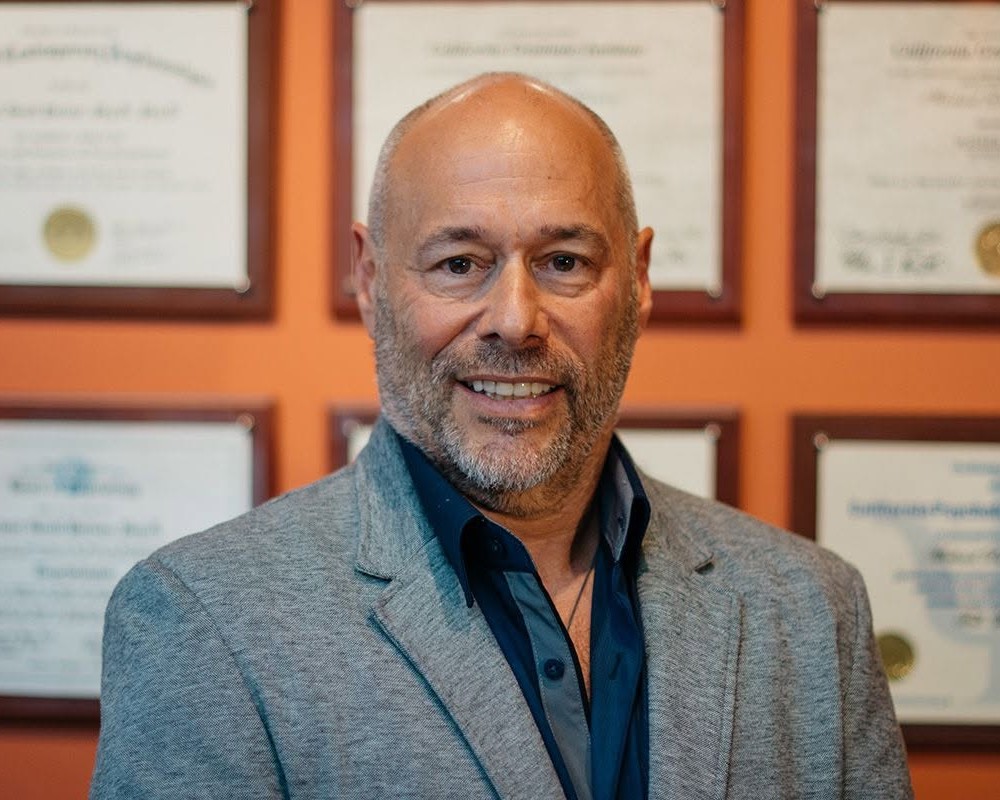
Dr. Michael Pariser is a Mental Health Coach based in Topanga, California, whose work is focused on raising his clients’ level of emotional intelligence, enabling them to live happier, more fulfilled lives. To do so, he stresses emotional self-awareness, empathy, emotional self-management, and the development of effective interpersonal skills. In increasing those areas of competence, he helps clients discover what they want and then utilize an assertive, non-aggressive approach to getting it.From 2000 to 2020, Dr. Pariser was a psychologist and psychoanalyst in private practice in Los Angeles, California. In 2003, he earned his Psy.D. in psychology at the California Graduate Institute, where he was later an instructor, and he became licensed as a psychologist in 2004. In 2011, he received his psychoanalytic certification and a Doctorate in Psychoanalysis from The Institute of Contemporary Psychoanalysis, where he became a Training and Supervising Analyst and an ongoing member of the faculty.
In 2020, Dr. Michael Pariser wrote and published “No More Mr. Nice Guy: The Hero’s Journey,” which is, in part, a companion book to Dr. Robert Glover’s well-known popular psychology book, “No More Mr. Nice Guy.” Dr. Pariser’s book expands on Dr. Glover’s ideas and provides a road map for men to move from passive and resentful Mr. Nice Guys to assertive and confident Integrated Men.
In all his work, Dr. Pariser’s primary focus is on the critical importance of emotions. Utilizing concepts from Contemporary Relational Psychoanalysis, Intersubjectivity Theory, and Emotion-Focused Therapy, he works to help his clients access, experience, and express their feelings. In doing so, they achieve greater self-awareness and self-discipline, along with increased empathy and compassion, all of which are central elements in living richer, fuller lives.
Dr. Pariser is currently working on two online courses: Assertiveness, which is designed to help people increase their confidence and get more of what they want out of life; and Feeling Feelings, a practical guide to emotional self-awareness. In addition, he is writing a new book based on his unique understanding of depression and how to treat it.
What is your typical day, and how do you make it productive?
My typical day entails striking a balance between typicality and originality. While I rely on stability and dependability, I also value novelty, growth, excitement. That doesn’t mean jumping out of airplanes or wrestling wild animals. But I relish learning, engagement, and deep thinking about emotional issues, along with the challenge of remaining fit and healthy as I age.
So, I get up at 5:30 in the morning, and I do different New York Times puzzles to keep my mind active. I read the news and form opinions about what’s going on in the world. I do some writing—right now, I’m working on an outline for an online course on emotional competence—, and I take care of whatever business is in front of me. Then I lift weights or go swimming or take a hike or get on the rowing machine. I play golf. I volunteer in my community, Topanga Canyon, to help with emergency preparedness. I am an avid wine collector, and I love to cook. I live with my wonderful girlfriend, and at the end of the day, we like to decompress together in the hot tub and talk over whatever is on our mind.
Then I do the same things the next day. Or maybe something different.
How do you bring ideas to life?
To bring my ideas to life, I use a gardening concept called topiary, which is the art of shaping bushes into fancy forms, like animals or geometric figures. Think Edward Scissorhands. The way I apply that concept is to start with whatever fragments of thoughts, images, or feelings come to mind and put them in a document. Then, little by little, I move them around, cut and trim, expand and detail, until I have something of a rough shape. Then I take the evolved idea out into the world and test it. I talk to people. I try it with my clients. I share it in blog posts. In doing that, I let the world tell me what it thinks of my idea. Then I use the feedback I’ve gotten to shape the idea further. And I go back and forth doing that until I have a more-or-less finished idea; although it’s never completely finished. Like topiary (which is a living thing, a growing bush), I keep shaping and refining as I learn more and more from life.
What’s one trend that excites you?
One trend that excites me is the increasing recognition of the importance of mental health. More people now recognize that emotions play a central role in their lives and that untreated emotional issues can trigger behavior that is aggressive, antisocial, and self-destructive. With the stigma lessened, more people than ever are monitoring their mental health, so they can identify and remediate potential problems before they create life crises. In addition, they are taking up practices to improve their emotional well-being: things like regular exercise, reduced alcohol and drug consumption, and meditation. More people than ever are also reaching out to therapists and coaches to get the kind of help they need.
What is one habit that helps you be productive?
Getting enough sleep. I’ve discovered that I’m more of a morning person, and I generally wake up around 5:00 or 5:30 am, so I make sure to be in bed and asleep by 9:30 or 10:00. I’ve noticed that sleeping a full night makes an enormous difference in my ability to stay focused during the day, concentrate on the tasks I have at hand, and handle the vicissitudes of life with greater acceptance and a better mood.
What advice would you give your younger self?
Buy Microsoft; it’s selling for a dollar a share.
Seriously, I would advise my younger self, “Get help. Now.” Growing up in an abusive family, I developed serious emotional issues that hindered my personal and professional growth. When I was older, my therapist and I were able to overcome these issues, at least to a significant degree. I wish, however, I had dealt with them in my teens and 20s, so I could have realized more of my potential and lived a happier, richer, and more successful life.
Tell us something you believe that almost nobody agrees with you on.
The secret to dealing with depression is to dive into the darkness.
Mental health issues are widely discussed and debated these days, and one of the most debated is depression. With the advent of modern antidepressant drugs, people hoped it could be medicated away, but that hasn’t turned out to be the case. Cognitive Behavioral Therapy promised relief, but telling people their convictions and beliefs are irrational doesn’t make them go away.
By contrast, I believe that, instead of running from the darkness, depressed people can benefit from facing it. Diving into their personal hell (with professional help, of course,) allows them to realize that they can tolerate, and even understand, the world of pain they inhabit. They can see the emotional workings beneath the surface and learn to deal with them, allowing them greater self-acceptance and contentment in the long run.
What is the one thing you repeatedly do and recommend everyone else do?
Of all the things I do (and I believe this belief is supported by a significant body of research), the one that produces the greatest long-term benefit and makes me feel the best is regular exercise. Over the course of my adult life, I have played tennis and racquetball, walked, jogged, skied, sailed, swam, kayaked, lifted weights, and played softball and golf. I thoroughly enjoyed every one of these activities, and they have helped me stay fitter, feel better, and look younger. I would recommend to anyone at any age that they take up (or continue) exercising in some way on a daily basis.
When you feel overwhelmed or unfocused, what do you do?
When I feel overwhelmed or unfocused, the first thing I generally do is to see if I can push through it with perseverance and grit. However, that doesn’t always work, and if not, I honor the overwhelm. I stop and assess my situation. Is there an underlying physical or emotional issue that’s sapping my strength and focus? Did something happen that needs immediate attention? Am I temporarily exhausted?
Once I have that answer, I try to apply an appropriate solution. If I’m exhausted, I take a nap or drink a cup of coffee. If there’s something more timely or pressing, I shift my attention. If an emotional issue is getting in my way, I take a walk and think about the problem or I get help from my partner or from a friend. Sometimes, I just accept that I’m overwhelmed, and I don’t know why. Then I go do something else until some time passes and I can return to focus again.
What is one strategy that has helped you grow your business or advance in your career?
A strategy I developed for myself early on in my psychotherapy career was to divide the people of the world into three categories. In the first were personal connections: family, friends, and romantic partners. The second category included professional connections: instructors, supervisors, and colleagues. Everyone else fell into the third category: potential clients. Perhaps that was a little cold of me. Perhaps I should have been thinking of people in more human, rather than business, terms, but I was just starting to build a practice and thinking this way allowed me to simplify my approach to social interchange. Rather than having random conversations, I focused on the emotional issues that were on the other person’s mind. I listened as carefully as I could and empathized with their plight. I didn’t hesitate to give them my contact information. And it worked. My practice grew, while that of many of my colleagues did not.
What is one failure in your career, how did you overcome it, and what lessons did you take away from it?
One failure that has happened to me more than once in my life has come as the result of large-scale economic shifts over which I have no control. The first happened to me in the 1990s, when I was working in the movie business, and suddenly, Canada began offering significant tax breaks to movie companies to entice them to film in Canada. And it worked. Almost overnight, many, if not most, of the studios were shooting in Vancouver and Toronto, and thousands of American film people struggled to get any work at all.
Of course, this kind of economic shift also took the form of the booms and busts in the dot.com and housing markets, leaving many people whipsawed, battered, and bewildered. It also cost me two-thirds of my therapy practice in just one fatal month.
The lesson I took from this has helped me a lot is to recognize that, just as “a rising tide lifts all boats,” a lowering tide will ground them. No one is sailing when they’re stuck on the sand. So, it’s important to avoid taking too much credit for success and too much blame for failure. Instead, I try to recognize that my successes and failures are the result of both my individual efforts and larger forces over which I have no control. So, when things are going well, I don’t crow about my ability or rest on my professional laurels. Instead, I keep trying to build on my success, so that when the tide turns, I’m not left floundering financially.
What is one piece of software that helps you be productive? How do you use it?
This is probably going to sound obvious and not very helpful, but the single most useful piece of software I know is Microsoft Word. As a writer, I simply can’t live without it.
What is the best $100 you recently spent? What and why?
Recently, I bought myself a good quality canteen: Takeya 40 ounces, double-walled. I don’t go a day without using it. I keep it at my desk to hydrate during the day, and I never hike or walk the golf course without it.
Do you have a favorite book or podcast you’ve gotten a ton of value from and why?
Over the course of my life, I’ve ready many books from which I’ve gotten great value, but I want to mention just one that changed my life personally: “No More Mr. Nice Guy” by Dr. Robert Glover. Before reading it, I believed I had a thousand emotional issues that plagued me daily, kind of like being surrounded by a swarm of stinging bees. After reading it, I realized that all the little issues were manifestations of one big issue, which allowed me to focus my efforts on the central problem. Over time, the work I did to deal with my “nice guy” issues has allowed me to become a more assertive, integrated man and live a far richer and more productive life.
What’s a movie or series you recently enjoyed and why?
I recently watched the brilliant series “The Last Kingdom,” set in Medieval England. The hero, Utrecht, was a warrior who was Saxon by birth but raised by Danes. As a result, he was constantly pulled in both directions, as both the Native Saxons of England and the community of Vikings wanted him to fight for them. The tension of that pull formed the central dynamic of his life, both strategically and emotionally, and it stayed with him up to and including his death.
Utrecht’s battle struck me as an apt metaphor for the internal pulls we all face at some point in our lives, along with the difficulty we have in making decisions in complex and ever-shifting contexts. I like to think that we have to hold many competing attractors in balance. For instance, taking care of ourselves versus taking care of others. Or the desire for connection with others versus the desire for solitude. Or the need for work versus the need for play. In all cases, we need to tolerate the competing pulls and hold our desires in dynamic tension. Then we try to be flexible and adapt to the given situation.
Key learnings
- Life is complex, but it is not impossible to negotiate.
- It can be useful to hold in mind the dynamic tension between competing goals.
- Emotions are the central forces of human beings, and it is essential to monitor them to live a healthy life.
- Don’t ignore your mental health—it is critical for happiness, health, and positive interpersonal relationships.
- Recognize the impact of large-scale social, political, and economic trends—persevere, don’t take too much credit for success, and don’t blame yourself overly for failure.