
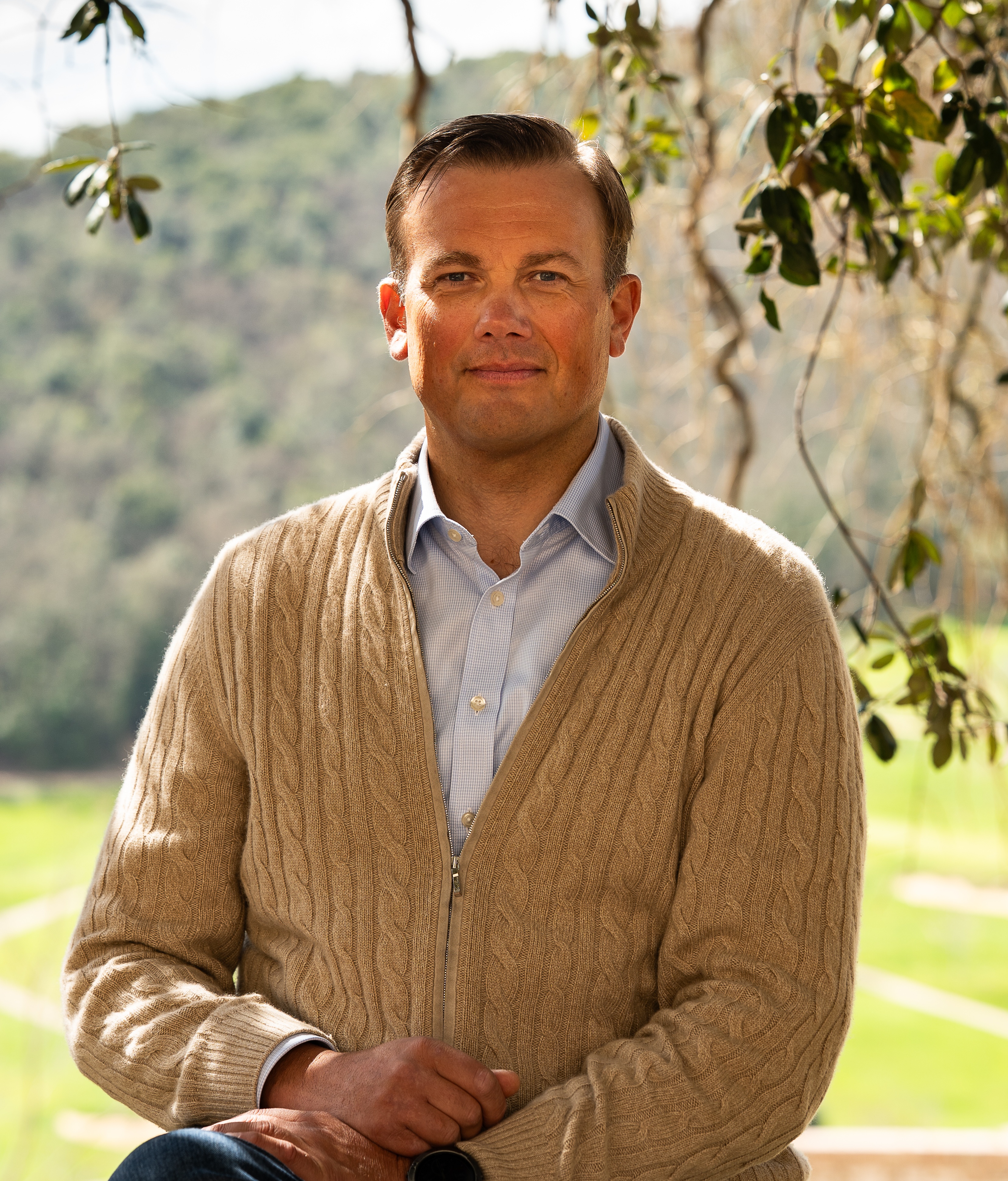
Andrey Yakunin is a British-Russian investor and entrepreneur with more than three decades of experience across finance, hospitality and real estate development. His career has focused on identifying complex or underperforming assets and transforming them into institutional-quality hospitality, residential and mixed-use projects.
Educated in Saint Petersburg, London and New York, Andrey holds a PhD in Finance and Credit from Saint Petersburg State University and an Executive MBA jointly delivered by London Business School and Columbia Business School. Andrey worked on projects involving leading international hotel brands, including Four Seasons, Radisson Blu, IHG and Six Senses. Among his best-known projects are the redevelopment of the historic Lion Palace in Saint Petersburg into the first Four Seasons hotel in Russia, Vienna’s Radisson Blu Park Royal Palace Hotel and Residences, and Antognolla Resort and Residences in Umbria, Italy.
At Antognolla, Andrey served as Chairman of the Board, overseeing the transformation of a historic Italian estate into a luxury resort and branded residential destination operated by Six Senses. The project was sold to the founder of Emaar Properties and Eagle Hills, Mohamed Alabbar, in October 2025.
Outside business, Andrey is closely involved in sailing and polar expeditions. He is often aboard his sailing vessel, Firebird, where he combines his interests in exploration, teamwork, preparation, and the natural world. He divides his time between London, Varese and expedition travel.
What is your typical day, and how do you make it productive?
It depends entirely on where I am.
When I am working on projects, my days tend to follow a certain structure. Mornings are usually quiet and start really early. After running, I always read something interesting prior the day kicks in. Then I catch up with the news and emails, read documents ahead of the calls with the team. The rest of the day is filled with meetings addressing projects’ updates and decisions we need to take to move forward. Evenings often spent editing photos and videos from our expeditions.
When I am on an expedition, the rhythm is completely different. The day is defined by watch systems, weather and operational priorities, including night shifts. Everything else is secondary.
I find the contrast useful. However, the difference is not that striking. Both, in their own way, reinforce the same principle, which is to focus on what actually matters and ignore the rest.
How do you bring ideas to life?
An idea on its own is not particularly valuable. Hard work is what makes a difference.
If the idea can survive contact with reality then we start with something concrete. A place, a building, a situation that can actually be improved.
From there it becomes a process of testing assumptions, adjusting constantly, and working with people who know what they are doing. Most ideas change quite significantly before they become viable. That is part of the process, not a problem.
For instance, when there is a plan to summit, then one needs 6-9 months to prepare, build aerobic endurance and learn the relevant skills. When it comes to business, the key advice is, as famous physicist Sergey Kapitsa once said: “To lead is not to interfere with good people doing their work.”
What’s one trend that excites you?
People are becoming more interested in experiences than in ownership.
In hospitality this is quite visible. Guests are no longer looking just for a place to stay. They are looking for something that feels coherent. Nature, design, culture, wellbeing, all working together.
What I find interesting is where this goes next. There is an opportunity to rethink how travel, exploration and hospitality connect. Those boundaries may become less rigid, and that creates space for more thoughtful and more interesting projects.
What is one habit that helps you be productive?
Protecting time where I am not interrupted.
It sounds simple, but it is surprisingly difficult to maintain. If the day is constantly broken into small pieces, it becomes very hard to do anything properly.
Even a short period of focused work without distractions tends to produce better results than a full day spent reacting.
What advice would you give your younger self?
Prepare yourself for when your dreams about polar expeditions come true!
Tell us something you believe that almost nobody agrees with you on.
There is a strong expectation that success should lead to “giving back”.
I have always been uncomfortable with that framing. Charity, in my view, should remain a voluntary act. Once it becomes obligation or something performed publicly, it changes its nature.
That is not a particularly popular position.
What is the one thing you repeatedly do and recommend everyone else do?
Keep learning new stuff. Never stop reading and exploring. Сuriosity, along with discipline, is what matters most.
When you feel overwhelmed or unfocused, what do you do?
Running helps. Hiking, skiing, anything that resets your perspective slightly.
Sailing is different. It requires more advanced planning and commitment, so it does not function as an immediate reset. It belongs to a different pace altogether.
What is one strategy that has helped you grow your business or advance in your career?
Working on things that others prefer to avoid.
If something looks straightforward, there will usually be a lot of competition around it. That often limits the upside.
More complex situations tend to be less crowded. Historic buildings, unfinished developments, assets that have been neglected. They require more effort and more patience, but they also offer more room to create value.
What is one failure in your career, how did you overcome it, and what lessons did you take away from it?
With long-term projects, failure is rarely a single moment. It is usually a phase.
Delays, changing conditions, decisions that do not work as expected. All of that happens.
The main lesson is that persistence matters. If the underlying idea is sound, you keep adjusting and moving forward. If it is not, you recognise it early and stop.
What is one business idea you’re willing to give away to our readers?
A simple one.
Help people do something they already want to do, but cannot organise easily on their own.
In travel, for example, many people want more meaningful experiences but do not know where to start. The same applies in other areas. Learning, fitness, even personal development.
A well-designed service that removes friction from something people already value tends to be more effective than trying to create demand from scratch.
What is one piece of software that helps you be productive? How do you use it?
Navigation software.
At sea it becomes a daily tool. It helps interpret weather, plan routes and keep track of where you are.
It is reliable, but only to a point. You still need to understand what you are looking at.
What is the best $100 you recently spent? What and why?
A nautical chart.
It is not particularly exciting, but it represents preparation. In remote places, preparation is what makes the difference between a good experience and a bad one.
Do you have a favorite book or podcast you’ve gotten a ton of value from and why?
I tend to return to history and literature.
They deal with the same themes people talk about in business today, but in a more nuanced way.
What’s a movie or series you recently enjoyed and why?
I do not watch much, to be honest.
If I have the opportunity, I tend to choose documentaries about exploration or history. They remind you how much of the world was understood by people who were willing to go a little further than was comfortable.
Key learnings
- Quiet, uninterrupted mornings are essential when working on complex projects.
- The most attractive opportunities are often the ones others choose to avoid.
- The quality of partners and teams has a decisive impact on outcomes.
- Experiences that combine nature, culture and design are increasingly shaping modern hospitality.
- Clear thinking and focus tend to outperform speed and constant activity.