
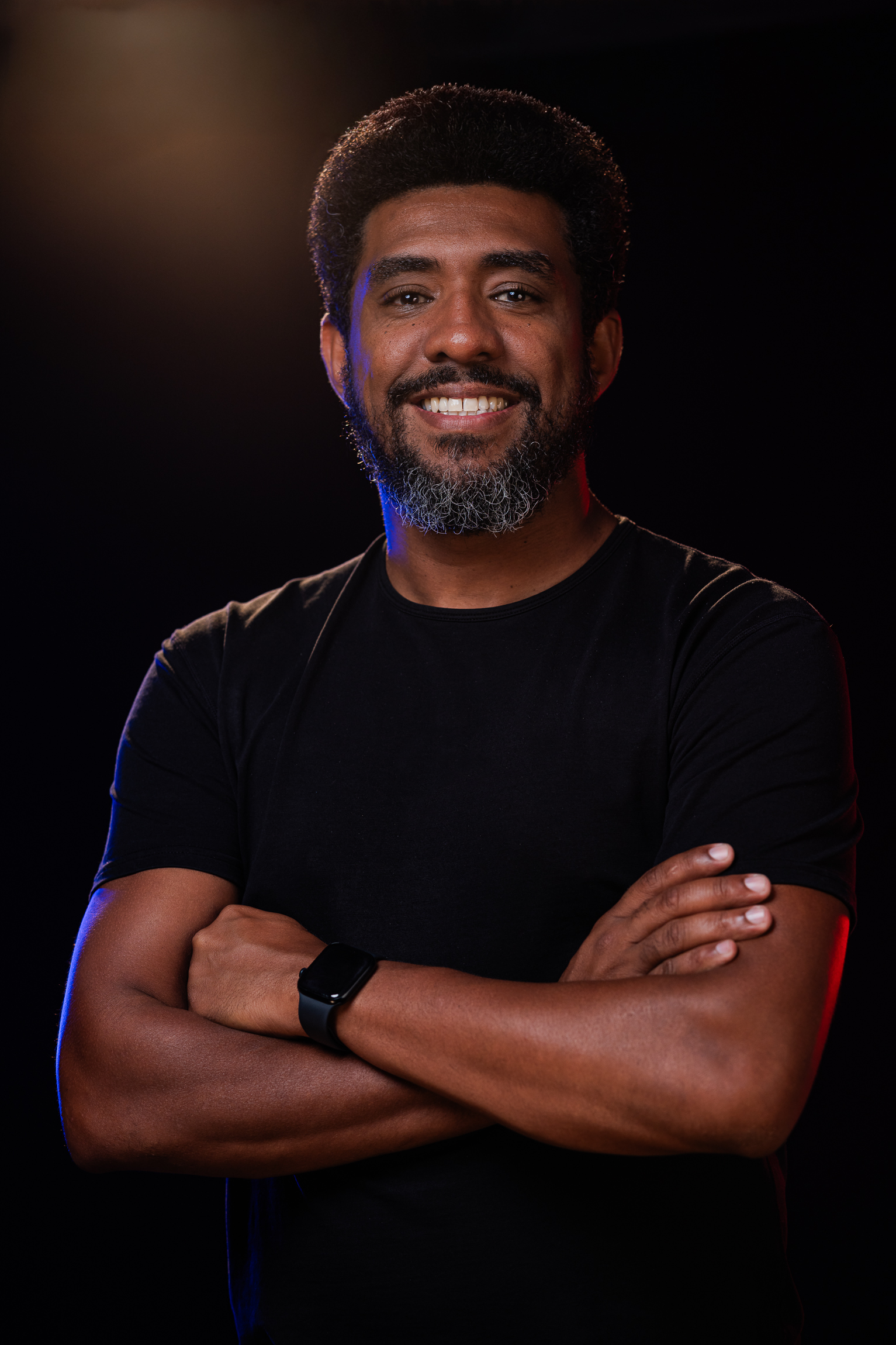
“After 20 years as a cinematographer for major Brazilian broadcasters — covering the World Cup, the Olympics, and national news — I rebuilt my career from scratch in the U.S., now producing award-winning work for nonprofits and churches in Florida while proving my expertise in a new market and language.”
What is your typical day, and how do you make it productive?
My days are rarely identical, which is one of the things I enjoy most about working in audiovisual production. Depending on the project, I may be preparing for a multicamera production, operating a camera, developing visual concepts, editing content, researching new technology, or coordinating with a production team.
I try to make every day productive by defining the three most important things I need to accomplish before I get distracted by smaller tasks. After more than two decades working in television, live production, journalism, and cinematography, I have learned that being busy and being productive are very different things. Productivity, for me, is knowing what deserves my attention and finishing it with excellence.
How do you bring ideas to life?
I start with the story, not the equipment. Before thinking about cameras, lenses, lighting, or technology, I ask myself what the audience should feel and understand.
From there, I translate the idea into visual decisions: composition, camera movement, lighting, pacing, sound, and eventually editing. My background in broadcast journalism taught me to make those decisions quickly, sometimes under significant pressure. Whether I am working on a live multicamera production, documentary, commercial project, or humanitarian story, I believe technology should serve the story rather than become the story.
What’s one trend that excites you?
intelligence in professional audiovisual production fascinates me. I don’t see AI simply as a way to replace tasks; I see it as another technological transformation in how we create and distribute visual stories.
AI is already influencing pre-production, camera tracking, transcription, editing, color workflows, content management, and live production. What interests me most is the relationship between automation and human creative judgment. Technology can analyze enormous amounts of information, but deciding where to place a camera, when to move it, and what deserves the audience’s attention still requires human sensitivity and experience.
What is one habit that helps you be productive?
Preparation. I try to anticipate problems before they become problems.
In production, a small oversight can affect an entire project, so I developed the habit of mentally walking through a production before it happens: equipment, batteries, media, lenses, lighting, audio, camera positions, backups, and possible technical failures.
That habit has followed me beyond production. Preparation gives me the freedom to be creative because I am not constantly reacting to preventable problems.
What advice would you give your younger self?
I would tell myself not to underestimate the value of the experiences that seem small at the time.
My career began at a very basic level in audiovisual production, long before I had the opportunity to work on major television productions and international events. Every position taught me something.
I would also tell myself to document my journey better. Save the photographs, credits, letters, articles, footage, and records of important projects. When you’re young, you’re usually focused on getting the next opportunity. Years later, you realize those records tell the story of how far you’ve come.
Tell us something you believe almost nobody agrees with you.
I believe expensive equipment is becoming less important while professional judgment is becoming more valuable.
The industry often focuses on resolution, dynamic range, lenses, sensors, and new cameras. Those things matter, but access to excellent equipment has become increasingly democratized. What remains difficult to acquire is judgment: knowing where to put the camera, recognizing the important moment before it happens, understanding light, anticipating human behavior, and knowing when not to film.
A great camera can produce an extraordinary image, but it cannot decide why that image matters.
What is the one thing you repeatedly do and recommend everyone else do?
Keep learning outside your immediate area of expertise.
I am a cinematographer and video producer, but I continuously study technology, artificial intelligence, broadcasting, editing, storytelling, leadership, and other areas of production. Understanding what happens before and after the camera makes you better behind the camera.
The professionals who remain relevant for decades are usually the ones who never decide that they already know enough.
When you feel overwhelmed or unfocused, what do you do?
I reduce everything to the next important decision.
Television and live production taught me this. There are situations where many things are happening simultaneously and you simply cannot solve everything at once. You have to identify what matters most at that moment.
When I feel overwhelmed, I stop looking at the entire problem and ask: “What is the next action that actually moves this forward?” Once that is completed, I move to the next one. Breaking a complicated situation into decisions makes it manageable.
What is one strategy that has helped you grow your business or advance in your career?
One of the most important strategies in my career has been accepting opportunities that expanded my experience rather than only opportunities that improved my title.
That approach took me through different areas of television and audiovisual production and eventually into major news coverage, international sporting events, live multicamera production, documentary work, and projects in both Brazil and the United States.
Working in different environments taught me to adapt quickly. Technology changes, companies change, and markets change. The ability to bring professional standards into unfamiliar environments has created opportunities throughout my career.
What is one failure in your career, how did you overcome it, and what lessons did you take away from it?
One of the hardest lessons in my career came from realizing that professional experience in one country does not automatically translate into opportunities in another.
After building a long career in Brazilian television and working on major productions, moving to the United States required me to rebuild professional relationships and demonstrate my abilities again in a completely different market.
Initially, I saw that as a setback. Eventually, I understood it as an opportunity to become more adaptable. I continued working, learning the market, improving my English, building relationships, and accepting opportunities where I could demonstrate what I could do.
It taught me that a career is not defined by maintaining the same position. Sometimes growth requires being willing to rebuild.
What is one business idea you’re willing to give away to our readers?
A specialized visual-content service for nonprofits and humanitarian organizations.
Many smaller organizations do extraordinary work but don’t have the resources or technical knowledge to document their impact at a professional level. A production company could offer scalable packages combining short documentaries, interviews, photography, vertical social content, and a digital archive of reusable footage.
The opportunity is not simply producing videos. It is building a long-term visual library that helps organizations communicate their impact to donors, volunteers, communities, and the media while maintaining strong ethical standards when documenting vulnerable people.
What is one piece of software that helps you be productive? How do you use it?
Adobe Premiere Pro is still one of the most important tools in my professional workflow.
I use it not only for editing but also for organizing stories. Reviewing footage, selecting moments, restructuring sequences, working with audio, and seeing how images interact on a timeline often changes how I understand the story itself.
Modern editing software also demonstrates how rapidly our profession is evolving. Features involving transcription, automated organization, and AI-assisted workflows can eliminate repetitive work and allow creators to spend more time making creative decisions.
What is the best $100 you recently spent?
of the best ways I can spend $100 is on education — a course, professional membership, industry event, or resource that gives me access to knowledge I didn’t have before.
Equipment eventually becomes obsolete. Knowledge usually compounds. Something I learn today can improve hundreds of projects over the next several years, and one professional connection can sometimes change the direction of an entire career.
That return is difficult to achieve with almost anything else that costs $100.
Do you have a favorite book or podcast from which you’ve received much value?
One book that has stayed with me is Man’s Search for Meaning by Viktor Frankl.
What I appreciate about it is the idea that circumstances do not completely determine how we respond to them. That perspective has relevance far beyond professional life.
A career lasting more than two decades inevitably includes uncertainty, change, success, disappointment, and reinvention. The ability to maintain a sense of purpose while circumstances change has been extremely valuable to me personally and professionally.
What’s a movie or series you recently enjoyed and why?
I continually return to films where cinematography supports the story without calling unnecessary attention to itself. 1917 is a great example.
From a cinematographer’s perspective, the apparent continuous-shot approach is technically fascinating, but what interests me most is that the technique has a narrative purpose. The camera keeps the audience physically and emotionally connected to the characters’ journey.
It is a reminder that sophisticated cinematography works best when the audience feels its effect without necessarily thinking about the technology that created it.
Key learnings:
- Build a career around continuous learning rather than a single title or technology.
- Preparation creates the freedom to make better creative decisions.
- Technology should support storytelling; human judgment remains the most valuable tool.
- Difficult transitions can become opportunities for professional reinvention.
- Document your journey — today’s ordinary project may become an important part of your professional story years from now.