
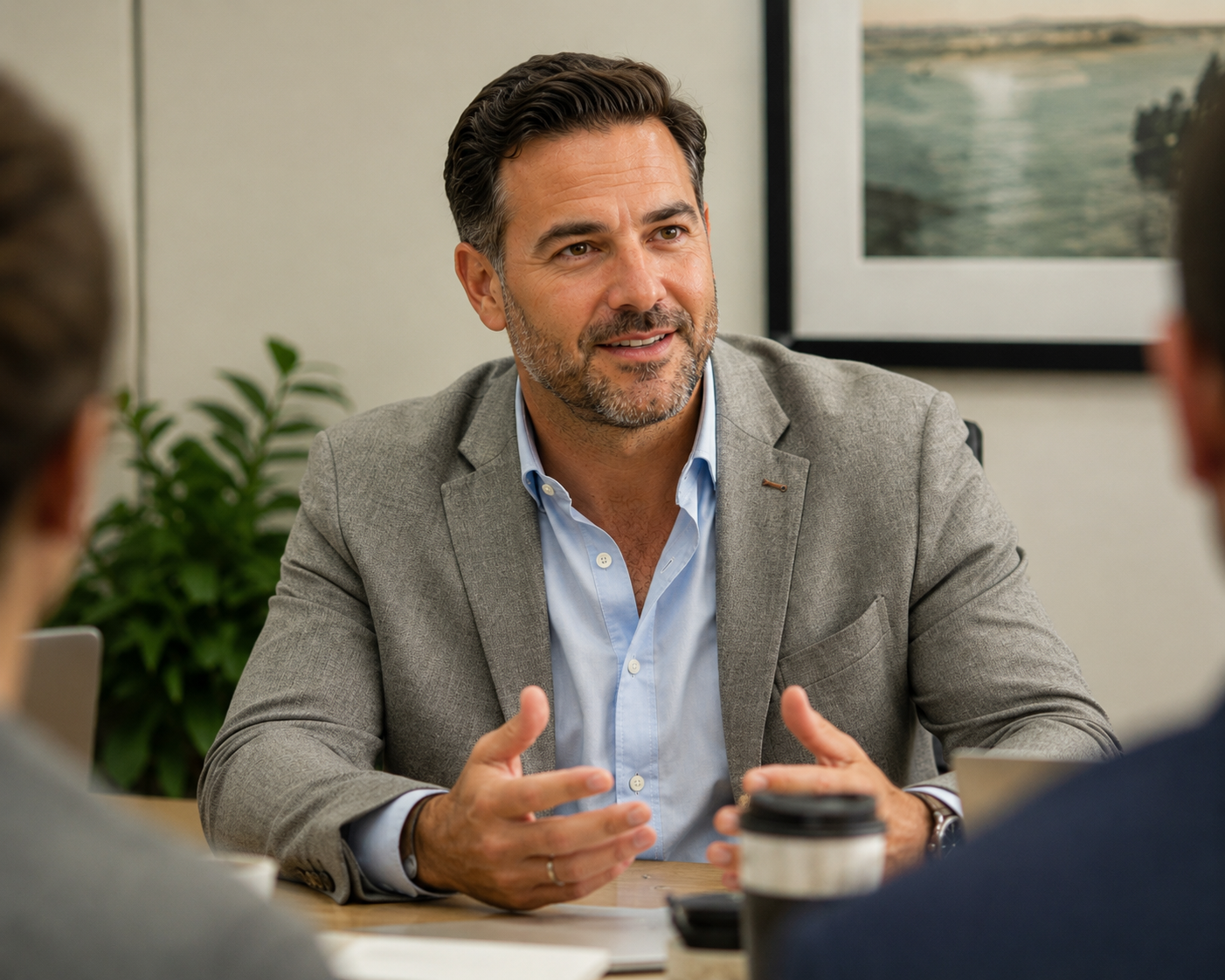
Robert Hoffecker has built his career around hospitality, tourism, and the people who make memorable travel experiences possible. Based in San Juan, Puerto Rico, he brings more than two decades of experience to an industry that has taught him the value of patience, preparation, and paying attention to the details others may overlook.
Hoffecker began his hospitality career in guest services. Working directly with travelers gave him an early look at what people expect when they are away from home. It also taught him how quickly plans can change. A delayed arrival, unexpected request, or operational problem can turn an ordinary day into a test of judgment and teamwork.
As his career developed, Hoffecker took on greater responsibilities in hotel operations, guest experience, employee development, and tourism partnerships. He became especially interested in helping employees grow. He believes strong leaders listen to the people doing the work, remain curious, and give others enough responsibility to develop their own judgment.
Living and working in Puerto Rico has also shaped how Hoffecker thinks about tourism. He sees the island as much more than a beach destination. Its neighborhoods, food, history, outdoor recreation, local businesses, and cultural traditions all contribute to the visitor experience.
Outside of work, Hoffecker enjoys sailing, hiking, and spending time outdoors. Those interests reflect the same curiosity that has guided his career. After more than 20 years in hospitality, he continues to value learning, observation, and the small human interactions that can make an experience memorable.
What is your typical day, and how do you make it productive?
My days can vary quite a bit, which is one of the things I have always enjoyed about hospitality. I usually start by figuring out what actually needs my attention rather than simply working through whatever reaches me first. In hospitality, there will always be something unexpected, so I try not to schedule every minute of the day.
I also like to spend time talking with people who are closer to the day-to-day operation. You can learn a lot from employees who are interacting with guests, answering questions, or solving small problems throughout the day. Those conversations often tell me more than a formal report would.
How do you bring ideas to life?
I usually start small. I have learned not to assume that an idea needs a complicated rollout before you know whether it actually works.
If I see a recurring issue, I first try to understand why it keeps happening. Then I talk with the people involved and test the simplest reasonable solution. Hospitality is useful that way because you get feedback quickly. Guests and employees will usually tell you, directly or indirectly, whether an idea is making their experience easier.
What’s one trend that excites you?
I am interested in travelers wanting to experience more of the places they visit. In Puerto Rico, that means looking beyond the beach or resort and becoming interested in neighborhoods, restaurants, history, outdoor recreation, and local culture.
I think that is healthy for tourism. When visitors explore more, their spending can reach more restaurants, guides, shops, and communities. It also gives them reasons to return because they realize how much they did not see the first time.
What is one habit that helps you be productive?
I write down the three things that actually need to happen that day. There may be twenty other things competing for my attention, but identifying three priorities keeps me from confusing activity with progress.
Hospitality can make you feel productive simply because you are constantly moving. I learned that being busy and accomplishing the right things are not necessarily the same.
What advice would you give your younger self?
I would tell myself to pay less attention to titles and more attention to people.
Early in my career, I naturally assumed the people with senior titles had the most to teach me. Some did, but I also learned enormous amounts from housekeepers, front desk employees, maintenance teams, restaurant employees, and other people who understood parts of an operation better than I did.
I would tell my younger self to ask more questions and listen carefully to the answers.
Tell us something you believe almost nobody agrees with you on?
I think a hotel occasionally benefits when guests spend less time at the hotel.
That probably sounds strange from someone in hospitality, but I think a property can create tremendous value by helping people discover what is around it. If an employee recommends a great local restaurant, walking tour, hiking trail, or neighborhood, the hotel still contributed to that memory.
Guests do not separate their vacation into neat categories. They remember the trip as a whole.
What is the one thing you repeatedly do and recommend everyone else do?
Ask one more question before offering a solution.
Someone may tell you what the problem is, but the first explanation is not always the whole story. That applies to guests, employees, and business problems. One additional question can completely change what you think needs to happen.
When you feel overwhelmed or unfocused, what do you do?
I get outside whenever possible. Living in Puerto Rico makes that easier. I enjoy sailing and hiking, and being near the ocean has always helped me reset my perspective.
If I cannot get away, I simplify the problem in front of me. I ask what actually needs to be handled now and what can wait. Most overwhelming situations become more manageable once you stop treating everything as equally urgent.
What is one strategy that has helped you grow your business or advance in your career?
Learning the operation instead of focusing only on my own role has helped me throughout my career.
I started in guest services, where you see problems from the guest’s side. As my responsibilities grew, I tried to understand what was happening behind those experiences too. That broader perspective made it easier to understand why problems occurred and how different departments affected one another.
It also taught me that good management requires listening to people who know things you do not.
What is one failure in your career, how did you overcome it, and what lessons did you take away from it?
Earlier in my career, I sometimes tried to solve problems too quickly. I thought being useful meant having an immediate answer.
I remember dealing with an operational issue where I suggested a fix before hearing from everyone involved. The solution addressed what the guest was experiencing but created extra work behind the scenes. Someone on the team eventually explained why, and I realized I had solved the visible problem without understanding the operational one.
Since then, I have tried to slow down enough to ask who else will be affected by a decision. Fast decisions are sometimes necessary. Fast assumptions usually are not.
What is one business idea you’re willing to give away to our readers?
I would create a hospitality service that builds highly specific local recommendation programs for hotels.
Instead of giving guests another generic list of attractions, the service would regularly train hotel teams on nearby restaurants, independent shops, guides, events, recreation, and cultural experiences. Employees would actually experience selected places so they could explain why someone might enjoy them.
A recommendation from a person who has actually been somewhere is much more useful than a list.
What is one piece of software that helps you be productive? How do you use it?
I use Google Calendar because I like having one simple place to see what requires my time. I block important commitments instead of assuming I will find time for them later.
I also intentionally leave some space open. Hospitality has taught me that a calendar packed from beginning to end is usually unrealistic.
Do you have a favorite book or podcast you’ve gotten a ton of value from and why?
I like Setting the Table by Danny Meyer because it treats hospitality as something larger than providing a service. The idea that the way people feel matters just as much as the transaction itself has always resonated with me.
It also applies outside restaurants. Hotels, tourism businesses, and managers all have opportunities to make people feel understood rather than simply processed.
What’s a movie or series you recently enjoyed and why?
I recently watched The White Lotus. I initially started it because the setting and hotel environment caught my attention, but I ended up enjoying the way it observes people when they are away from their normal routines.
Travel can bring out interesting sides of people. Expectations are higher, schedules are different, and small inconveniences can suddenly feel much more important than they normally would. After working in hospitality for so long, I found myself paying attention to those interactions as much as the actual story. The show exaggerates plenty of things for entertainment, but its observations about travelers, employees, and human behavior can be surprisingly sharp.
Key learnings
- Learn how the entire operation works instead of understanding only the responsibilities attached to one position.
- Ask another question before proposing a solution. The visible problem may not be the actual problem.
- Pay attention to employees who make work easier for the people around them. Leadership ability often appears before a leadership title does.
- Leave room for unexpected problems rather than planning every minute of the day.
- Help travelers connect with the communities around them. Restaurants, guides, shops, culture, and outdoor experiences can become some of the strongest memories of a trip.