
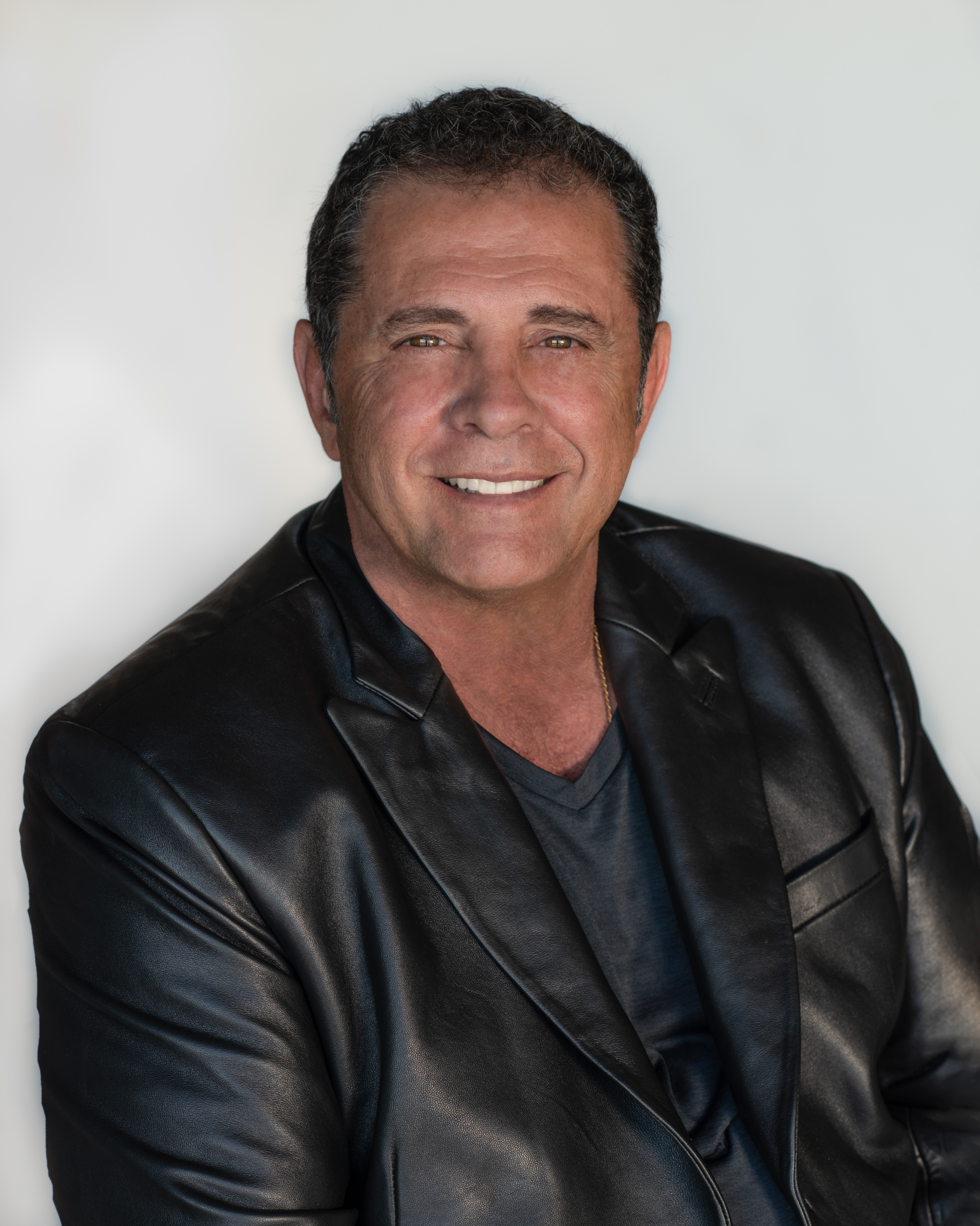
Dimitri Logothetis is a Los Angeles-based writer-director, whose latest film Gunner stars Luke Hemsworth and Morgan Freeman and has collected 48 international film festival awards, including the City of Angels Film Festival (2025) where he won “Best Action Film”.
Logothetis has spent much of his career making muscular independent action films with Hollywood stars and some of the world’s most accomplished screen fighters.
He revived the Kickboxer franchise with Kickboxer: Vengeance and Kickboxer: Retaliation, which he wrote and directed, bringing Jean-Claude Van Damme back to the series alongside Alain Moussi, Dave Bautista, Georges St-Pierre, Gina Carano and Mike Tyson. A third installment is in the works.
What is your typical day, and how do you make it productive?
My day usually begins early. I exercise. I’ve been involved with martial arts for much of my life and hold a black belt. Physical training clears my head, a bike ride, a gym workout, has always been part of my creative process.
Before the phone starts ringing and the business of filmmaking takes over, I like to have time to think and write. As a writer, producer and director, I’m essentially running several businesses simultaneously. I may spend the morning rewriting a screenplay, then have a financing meeting, speak with an actor or agent, review artwork or a trailer, and later deal with distribution or production issues.
I’ve learned not to confuse being busy with being productive. Every morning I ask myself: What are the two or three things I can accomplish today that will actually move a project forward? Those come first.
How do you bring ideas to life?
I start with one question: Would I enjoy watching this?
An idea can be intelligent, meaningful and beautifully written, but movies still have to capture an audience’s imagination. Once I find an idea that excites me, I begin seeing the movie in my head. I write it, rewrite it, start thinking about actors, locations, financing and how I can actually make it.
That last part is important. There are thousands of great ideas that never become movies. Bringing an idea to life requires creativity followed by relentless practicality.
I don’t wait for someone to give me permission to make something. That has probably been one of the defining characteristics of my career.
What’s one trend that excites you?
The democratization of filmmaking. Technology is making it possible for independent filmmakers to create imagery that once required enormous studio resources. AI is going to accelerate that dramatically — not by replacing imagination, but by giving imaginative people more tools. I’m particularly interested in what happens when those tools intersect with established intellectual property. I control rights in the Kickboxer franchise, and I’m looking beyond traditional feature films into animation, gaming and short-form storytelling. The future isn’t necessarily one piece of IP producing one movie every three years. A story world can live across multiple forms of entertainment simultaneously.
What is one habit that helps you be productive?
I finish things! That sounds ridiculously simple, but the creative world is filled with people who have brilliant unfinished screenplays, unfinished business plans and unfinished ideas. A finished screenplay can attract an actor. An actor can attract financing. Financing can create a movie. But the unfinished screenplay sitting on your computer can’t do anything. Finishing creates momentum.
What advice would you give your younger self?
Never Give up. Don’t spend so much time worrying about whether the establishment approves of you. When you’re young, you think there is a room somewhere filled with important people who decide whether you get to have a career. Eventually you discover there really isn’t. There are simply people trying to make things happen, just like you. I would tell my younger self: Build your own table instead of waiting for someone to give you a seat at theirs. Which is what I did eventually.
Tell us something you believe almost nobody agrees with you.
Sometimes not knowing that something is impossible is an enormous advantage.
Ignorance is bliss! Experienced people can give you 100 perfectly rational reasons why a movie cannot be made, why an actor won’t say yes, why financing won’t come together or why an audience won’t respond. And frequently they are right.
But occasionally the person who ignores all those reasons actually gets the movie made. I’ve built much of my career in that space between “unlikely” and “impossible.”
What is the one thing you repeatedly do and recommend everyone else do?
Pick up the telephone. We have become very comfortable hiding behind emails and texts. I believe relationships still create opportunities. Call someone. Have lunch. Ask the question. Tell them why you believe in something. Movies are made by people, not email chains. Some of the most important things that have happened in my career began because somebody answered a telephone, and looked me in the eye.
When you feel overwhelmed or unfocused, what do you do?
I exercise, ride my bike, go to the gym and lift weights, or I walk. There is something about physical movement that solves creative problems for me. I can sit at a desk struggling with a scene for an hour, go exercise, and suddenly understand exactly what is wrong with it. I also reduce the problem to its simplest form. Instead of thinking, “How am I going to get this entire movie made?” I ask, “What is the next problem I have to solve?” Solve that one. Then solve the next.
Eventually you have a movie.
What is one strategy that has helped you grow your business or advance in your career?
Owning intellectual property. One of the most important things I learned as a filmmaker is the difference between being hired to make something and controlling something that has continuing value. My involvement with Kickboxer is a good example. I helped reboot a piece of martial-arts pop culture with Kickboxer: Vengeance and Kickboxer: Retaliation. That gives you the opportunity to think beyond a single film and toward a franchise — additional films, television, animation, games and other extensions. Creative people sometimes become so focused on the creative side that they forget the word “business” in show business.
Understand ownership. Understand rights. Understand the value of what you create.
What is one failure in your career, how did you overcome it, and what lessons did you take away from it?
I’ve had films collapse, financing disappear and projects that I believed were days away from production suddenly stop. Those experiences are devastating because filmmaking is intensely personal. You can spend years building something and watch it disappear in a telephone call. But I learned something extremely valuable: A failed plan is not necessarily a failed project. If financing collapses, find another structure. If an actor becomes unavailable, rethink the casting. If a distributor says no, find another distributor. You have to separate your ego from the problem and ask: Is there another way? There almost always is.
What is one business idea you’re willing to give away to our readers?
Find recognizable intellectual property that has been forgotten rather than chasing only the hottest new property. Perhaps in the public domain, and rewrite it for today.
There are extraordinary brands, books, characters and entertainment properties that audiences already recognize but that nobody is using intelligently. Recognition is incredibly expensive to create. If something already has awareness and emotional attachment, the opportunity may be to reinvent it for a new generation rather than starting at zero. I experienced that firsthand with Kickboxer.
What is one piece of software that helps you be productive? How do you use it?
Right now, AI tools have become extraordinarily useful to me. I don’t use them to replace my creative judgment. I use them as an incredibly fast research and development assistant. As a writer, producer and director, I may need to research a location, analyze financial assumptions, explore casting possibilities, reorganize a presentation, challenge a story point or examine 20 different approaches to a problem. The value is speed. Something that might once have taken several days of preliminary research can now give me a starting point in minutes. The creative decision still belongs to me.
What is the best $100 you recently spent?
A great lunch or dinner with someone interesting. I’m serious.
Some of the best money you can spend is on a meal where phones disappear and two people actually talk for two hours. You learn something. You build a relationship. You hear an idea you weren’t expecting. And occasionally you walk into a restaurant with a problem and walk out with the beginnings of a movie.
Do you have a favorite book or podcast from which you’ve received much value?
I continually go back to Elmore Leonard. He wrote “Out of Sight, Get Shorty, Hombre, Rum Punch,” What I admire most is his economy. He understood character, dialogue and pace, and he never seemed interested in showing the reader how clever the writer was. He simply got you into the story and kept you there. As a writer and director, I find that enormously valuable. Leonard’s characters reveal themselves through what they say, what they don’t say, and how they behave under pressure. His dialogue feels effortless, but that kind of simplicity is actually incredibly difficult to write. One of his famous rules was essentially to leave out the parts readers tend to skip. I think about that when I’m writing screenplays. Get into the scene late, get out early, don’t over-explain, and trust the audience.
What’s a movie or series you recently enjoyed and why?
I really enjoyed The Gentlemen, by Guy Ritchie. What attracted me was the combination of crime, humour, danger and characters who are sophisticated but unpredictable. It has a very distinctive tone. You can be laughing at a situation and then, almost without warning, realise that something genuinely dangerous is happening. I also admire the confidence of the storytelling. It has style, but the style doesn’t replace character. The characters drive the entertainment. As a filmmaker, I’m always interested in that balance. Action or violence becomes much more effective when there is wit, personality and tension surrounding it. If you care about—or are simply fascinated by—the people involved, the action means something. That’s what I enjoyed about The Gentlemen: it understands that a crime story can be dangerous, stylish and very funny at the same time.
Key learnings:
- Busy is not the same as forward. Train first, think and write before the phone starts, then pick two or three tasks that actually move a project — a rewrite, a financing call, an actor, a cut. Everything else can wait.
- Permission is optional; finishing is not. Ask whether you would watch it, then follow imagination with practicality: cast, locations, money, how it gets made. A finished script can attract an actor and financing. An unfinished one on your laptop cannot.
- Own the thing, then keep going when the plan dies. Forgotten IP with leftover love (his Kickboxer reboot) beats starting from zero. If financing collapses or an actor walks, that is a failed plan, not a failed project — change the structure and ask if there is another way.
- The work happens in bodies and rooms, not inboxes. Movement (bike, gym, a walk) often solves the scene the desk could not. Call people, have lunch, look them in the eye. Relationships still make movies; email chains do not.
- Stay slightly too naive to quit. Veterans will list a hundred reasons a film cannot happen. Sometimes the person who has not learned it is “impossible” is the one who gets it made. Build your own table instead of waiting for a seat at theirs.