
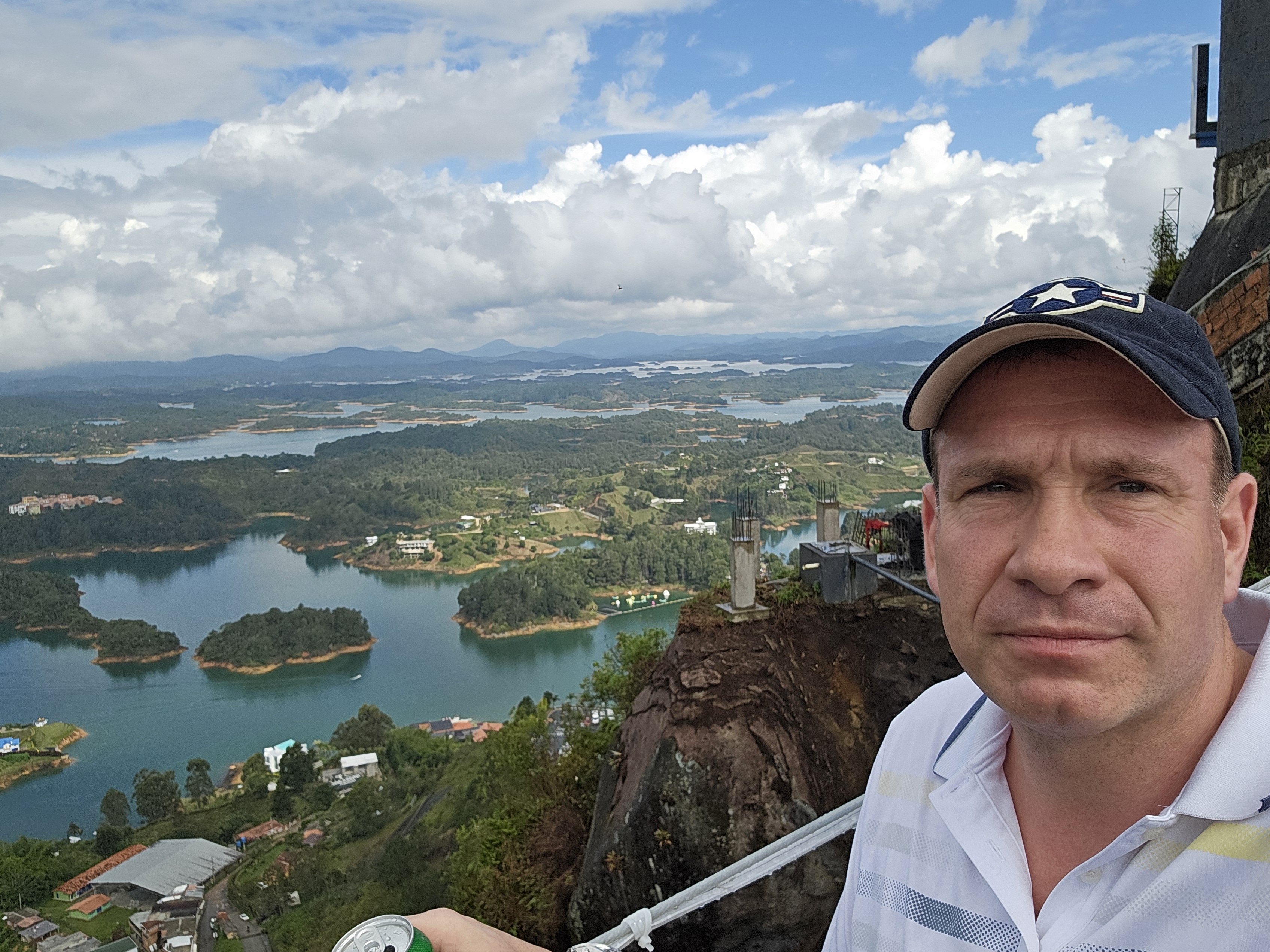
Timothy Lubniewski grew up on Staten Island, New York, where baseball taught him early lessons in competition, discipline, and persistence. He later studied economics at SUNY Albany, but much of his professional education came from building businesses from the ground up.
At 23, Lubniewski started his first construction company. He went on to own and operate Stream-N-Stone Inc., Paving Arts Corp., and Paving Associates, building a career in commercial paving and maintenance. Over the years, he learned the business from the ground up. His work required him to understand customers, crews, scheduling, operations, and the small details that can make or break a project.
His career eventually led to the sale of his company to private-equity-backed Rose Paving. Lubniewski remained with the organization as a general manager, giving him experience on both sides of a major business transition.
Life later presented a challenge that could not be approached like a construction project. Lubniewski stepped away from his executive career after his wife, Kathryn “KC” Lubniewski, developed ALS. He became her primary caregiver while raising their two young sons, Andrew and Robert.
The experience has changed how Lubniewski thinks about leadership, time, and responsibility. The competitive drive that helped him build companies remains, but his definition of winning has become broader.
Today, Lubniewski is focused on his family while considering what his next professional chapter may look like. He still values faith, hard work, service, and persistence, while recognizing that strength can mean adapting when life refuses to follow the plan.
What is your typical day, and how do you make it productive?
My days are very different from when I was running a paving business. Right now, my first responsibilities are caring for my wife, KC, and raising our sons, who are six and five. Appointments, school schedules, meals, household responsibilities, and whatever else comes up. I stay productive by deciding what actually needs to happen that day instead of trying to finish everything. Some days, getting the important things handled is enough.
How do you bring ideas to life?
I start by asking whether an idea solves a real problem. In construction, an idea eventually has to work with actual crews, customers, equipment, schedules, and budgets. I learned to get out of the theoretical stage quickly. Start small, see what happens, listen to the people doing the work, and adjust.
What’s one trend that excites you?
I am interested in the renewed appreciation for skilled trades and practical careers. There are great opportunities for people who can build, repair, maintain, and operate things. College can be valuable, but it is not the only route to a successful career.
What is one habit that helps you be productive?
I write things down. I used to think I could keep everything in my head. Between running companies in the past and managing family responsibilities now, I have learned that your brain should not be your filing cabinet.
What advice would you give your younger self?
Be more careful about who you partner with. I once partnered with someone whose views and approach were very different from mine. I learned that a partnership can look good financially and still be wrong. Character and shared values matter.
Tell us something you believe almost nobody agrees with you on?
I think persistence is usually more valuable than having the perfect strategy. People can spend so much time looking for the smartest answer that they stop moving. I would rather make a reasonable decision, learn from what happens, and keep going.
What is the one thing you repeatedly do and recommend everyone else do?
Ask another question. Whether I am talking to a contractor, employee, doctor, or anyone else, I do not like leaving a conversation pretending I understood something that I did not. Ask until the answer makes sense.
When you feel overwhelmed or unfocused, what do you do?
I need quiet. With two young boys and caregiving responsibilities, I occasionally reach a point where I am simply burned out. A few hours without having to solve something can make a major difference. I also enjoy gardening because it gives me something physical and straightforward to focus on.
What is one strategy that has helped you grow your business or advance in your career?
I paid attention to the people closest to the work. You cannot run a construction company effectively from a desk alone. The people on a crew often see a problem before management does. Listening to them helped me make better operational decisions and build stronger relationships.
What is one failure in your career, how did you overcome it, and what lessons did you take away from it?
Choosing the wrong business partner was one of my biggest mistakes. I initially focused too much on what the partnership could accomplish and not enough on whether our values and ways of operating were compatible. I moved forward, but I became much more careful about evaluating people, not just opportunities.
What is one business idea you’re willing to give away to our readers?
I think there is room for a simple service that helps small contractors organize recurring property-maintenance needs for commercial clients. Instead of waiting for a parking lot, walkway, or exterior area to become a major problem, the service would help owners track inspections and maintenance year-round.
What is one piece of software that helps you be productive? How do you use it?
The calendar on my phone is probably the simplest answer. I use it for appointments, family schedules, reminders, and anything I can’t afford to rely on memory for. Simple tools are often the ones I use most consistently.
Do you have a favorite book or podcast you’ve gotten a ton of value from and why?
The Book of Job has stayed with me because it explores faith when life doesn’t make sense. I have experienced enough to know that faith is much easier to discuss when everything is going well. The harder question is what you believe when circumstances are outside your control.
What’s a movie or series you recently enjoyed and why?
I tend to enjoy sports documentaries. Baseball has been part of my life since I was young, and I like hearing what happened behind the statistics. The most interesting parts are usually the setbacks, personalities, clubhouse relationships, and decisions people never saw during the game.
Key learnings
- Separate what needs attention today from what can safely wait. Not every open question deserves immediate energy.
- Evaluate potential partners by their character and values, not only by what the partnership might accomplish.
- Listen to the people closest to the work. They often notice operational problems before leadership does.
- Keep asking questions when something is unclear rather than pretending to understand.
- Build routines that protect time for family, recovery, and interests outside work.