
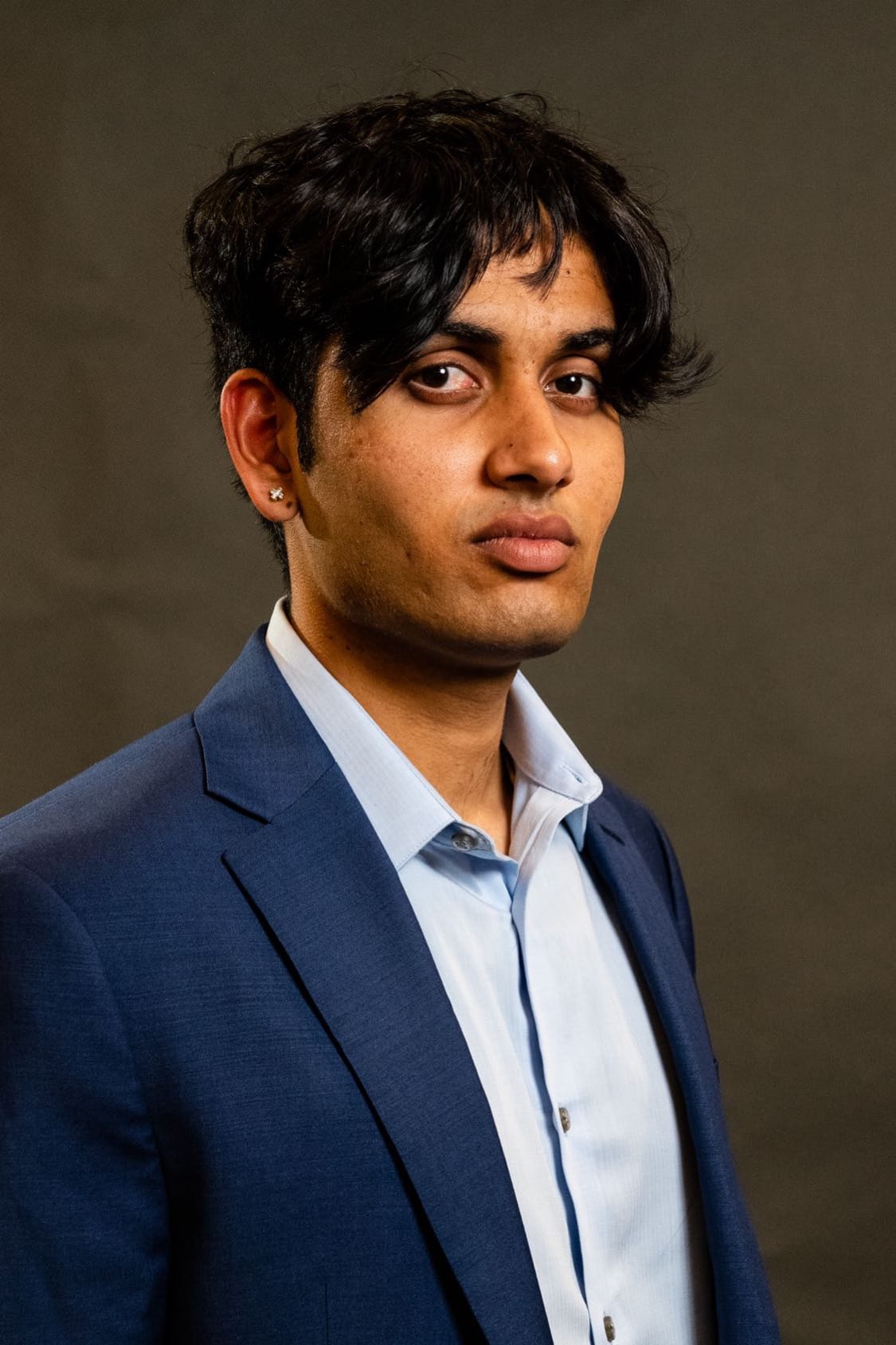
Aadeesh Shastry grew up in Fremont, California, where his days were filled with chess boards, hurdles on the track, and long afternoons at the basketball court. He was always drawn to structure and challenge—whether it was planning a strategy ten moves ahead in chess or pushing himself through another lap on the track.
One of his proudest early accomplishments was earning the rank of Eagle Scout. That journey taught him how to lead quietly, how to build goals that actually mean something, and how to work with people—not just around them.
After high school, he attended the University of Chicago, graduating in 2022. He followed that with a graduate degree from NYU in 2023. At both schools, he focused on data, decision-making, and systems thinking—how things work, why they fail, and how to improve them.
Today, Aadeesh is based in New York City. He’s known for his calm presence, sharp mind, and love of big questions. He draws inspiration from philosophy—especially thinkers like Rousseau and Hobbes—and enjoys applying those ideas to both personal and professional life.
In his downtime, he still plays chess and basketball. He’s a believer in routines, deliberate practice, and doing hard things even when they’re not urgent. Through it all, Aadeesh shows how curiosity, consistency, and clear thinking can take you far—even if you don’t always know where the next move will lead.
What is your typical day, and how do you make it productive?
Aadeesh’s day starts early. Mornings are quiet and reserved for routines: coffee, light reading (often philosophy or behavioral science), and 15–20 minutes of tactical chess puzzles. It’s not about winning—it’s about pattern recognition and focus.
“I try not to start with screens. If I’m calm and centered, I’m better at making decisions later in the day,” he says.
He blocks off mornings for deep work and afternoons for meetings, feedback loops, or collaborative problem-solving. He avoids multitasking. “If I can solve one hard thing in the first few hours of the day, the rest usually flows better.”
How do you bring ideas to life?
He breaks them down—literally. Whether it’s a project or a decision, he maps it out on paper first: the inputs, the possible outcomes, the risks, and the variables. “If I can see the skeleton, I can build on it.”
What’s one trend that excites you?
Non-linear career paths. He’s fascinated by people who move from athletics to data science, or music to operations. “When someone brings a different lens to a familiar problem, that’s when new things happen.”
What is one habit that helps you be productive?
Doing something hard, first. For Aadeesh, that’s often a short sprint workout or a timed chess drill. “If I can push through a little discomfort early, it resets my brain for the rest of the day.”
What advice would you give your younger self?
“Don’t rush to specialize. Learn how to think, how to lead, how to handle losing—and then the rest will come.”
Tell us something you believe almost nobody agrees with you on?
That people can learn how to be more strategic. “It’s not just a gift. It’s a skill—like any other—that comes from pressure, feedback, and time.”
What is the one thing you repeatedly do and recommend everyone else do?
Journaling right after something goes wrong. “That’s where the learning is. What did I assume? What did I miss? I don’t want to waste those mistakes.”
When you feel overwhelmed or unfocused, what do you do?
He switches contexts—often physically. A short walk, a basketball shootaround, or even changing desks. “If I can shift my body, my mind usually follows.”
What is one strategy that has helped you grow your business or advance in your career?
Understanding people’s decision styles. “Some people care about data, others about speed or trust. Knowing how people decide helps you influence outcomes without pushing too hard.”
What is one failure in your career, how did you overcome it, and what lessons did you take away from it?
In college, he joined a research project he wasn’t passionate about and didn’t speak up until too late. “I thought grit meant pushing through. But real grit sometimes means quitting early so you can focus on the right challenge.”
What is one business idea you’re willing to give away to our readers?
A mobile app for tracking personal decision outcomes. “People track workouts, meals, sleep—why not decisions? That’s where real compound growth happens.”
What is one piece of software that helps you be productive? How do you use it?
Figma. Not just for design, but for mapping workflows and systems. “It’s visual, flexible, and perfect for breaking complex things into clean layers.”
Do you have a favorite book or podcast you’ve gotten a ton of value from and why?
The Social Contract by Rousseau. “It changed how I think about leadership. It’s about shared responsibility, not control.”
What’s a movie or series you recently enjoyed and why?
The Queen’s Gambit. “It captures the tension and obsession of chess—how beautiful it is, and also how lonely it can feel when you’re deep in it.”
Key learnings
- Early exposure to structured challenges like sports and chess helps build long-term resilience and focus.
- Journaling after failure is a powerful tool for learning and pattern recognition.
- Strategic thinking can be taught, not just inherited—especially through repeated exposure to complex decisions.
- Routines that start with discomfort (like workouts or brain drills) can reset mental clarity for the day.
- Understanding how others make decisions is key to influencing outcomes effectively.