
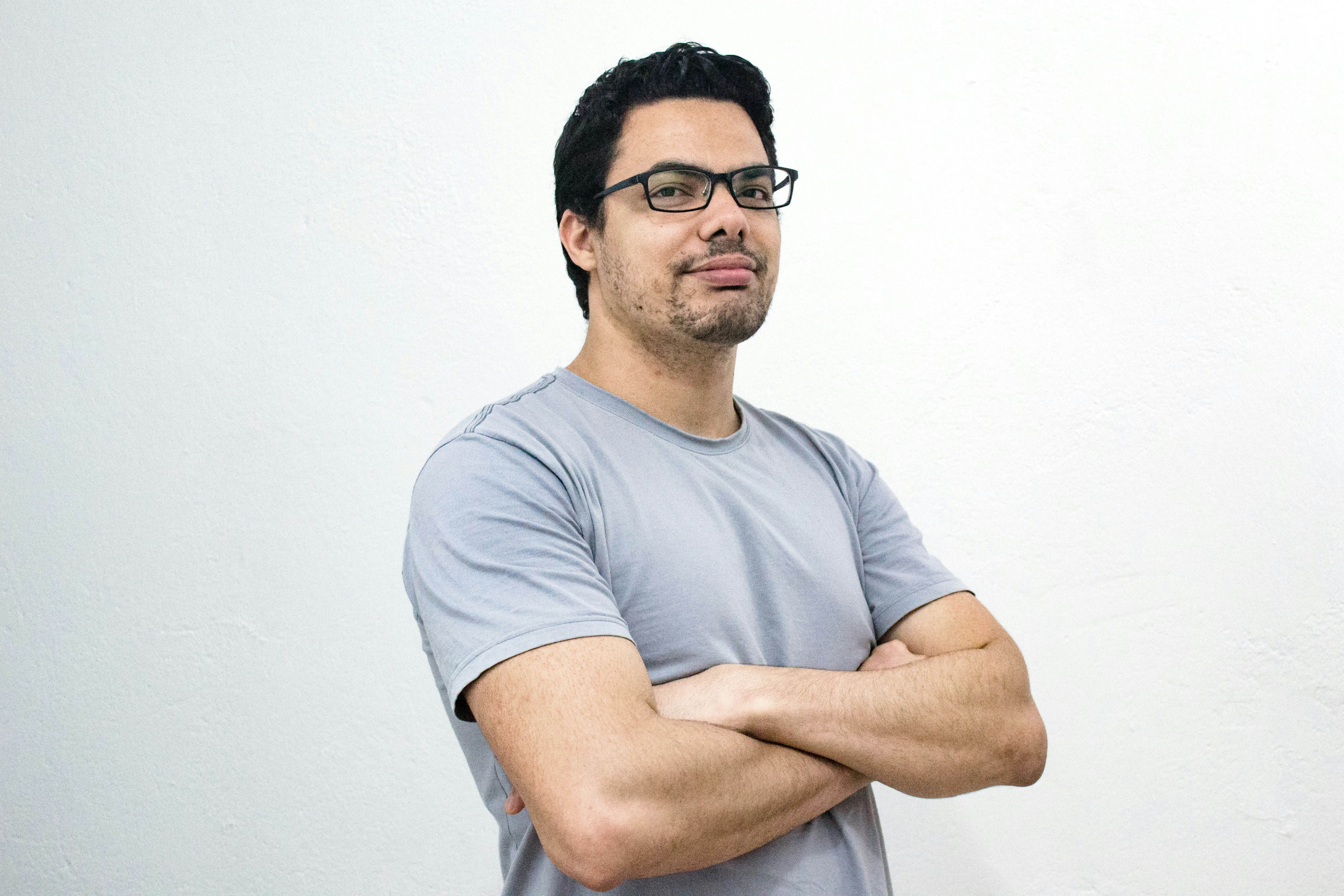
Adrian Tiafierro Keys grew up surrounded by Florida’s wild beauty — the mangroves, dunes, and waterways of Sarasota. His father was a landscape contractor, and his mother an art teacher. From them, he learned how to build with precision and see with creativity. As a teenager, he spent weekends on job sites and evenings sketching garden layouts at the kitchen table. Those early experiences planted the seeds for a career built on balance — between people and nature.
After graduating from Booker High School’s Visual and Performing Arts Program, Adrian studied landscape architecture at the University of Florida and earned a master’s in environmental design from Florida International University. His focus was coastal resilience — how design can protect what’s most fragile.
In 2014, he founded Keys Ecological Design, a Sarasota-based studio that creates sustainable, climate-adaptive landscapes. His projects, like the Bayfront Park Redevelopment and the Ringling College Courtyard, blend beauty with purpose. “Design should solve problems and tell stories,” he says.
Adrian also teaches at the University of South Florida and serves on the Florida ASLA board, helping shape how future designers think about ecology and community. Beyond work, he co-founded GulfGrow, a program that helps residents and schools replace lawns with native gardens.
What is your typical day, and how do you make it productive?
Living in Sarasota, I like to walk through my neighborhood in Laurel Park when the streets are quiet. It gives me time to observe light, shadows, and plants waking up — small details that often show up later in my work. After that, I help get my kids ready for school, and then I head to the studio. I structure my mornings around design work because that’s when I’m sharpest. Afternoons are for client meetings, site visits, or teaching at USF. Productivity for me comes from respecting my natural rhythm — creative work early, collaborative work later.
How do you bring ideas to life?
Most ideas start with field notes. I sketch constantly — in the margins of notebooks, on my iPad, even on the backs of meeting agendas. When I’m designing coastal or ecological projects, I physically walk the site and study how water moves through it. The land usually tells you what it needs if you’re patient enough to listen. I also collaborate with ecologists, architects, and artists because new ideas often come from the spaces between disciplines.
What’s one trend that excites you?
I’m excited about the rise of “micro-habitat design” in residential landscapes — small but intentional pockets of native vegetation that act as ecological stepping-stones. Even a 10×10 space can support pollinators, capture stormwater, and cool a yard. It’s a trend driven by homeowners, not institutions, which makes it powerful.
What is one habit that helps you be productive?
I end every day by reviewing tomorrow’s priorities. I write down the three tasks that actually matter. Not thirty — three. If everything is important, nothing is.
What advice would you give your younger self?
I’d tell my younger self to slow down and trust the process. When I was working on my father’s job sites as a teen, I wanted to get everything done quickly. Over time I learned that landscapes grow on their own schedules. Good design requires patience — and humility.
Tell us something you believe almost nobody agrees with you on?
I believe lawns should be taxed. Not heavily — just enough to encourage people to convert part of their yards to native plants. Lawns don’t support wildlife, they demand too much water, and they give very little back. Most people think I’m joking when I say this. I’m not.
What is the one thing you repeatedly do and recommend everyone else do?
Walk the places you design — often. I return to old project sites years later, sometimes unannounced, just to see how the landscape has “spoken back.” It teaches me more than any conference or textbook.
When you feel overwhelmed or unfocused, what do you do?
I go paddleboarding on the Myakka River or through mangrove tunnels. The combination of rhythm and silence resets my brain. Nature has a way of removing noise without asking for anything from you.
What is one strategy that has helped you grow your business or advance in your career?
Saying no. Early in my career, I took every project, even when it didn’t fit my strengths. When I finally learned to decline work that didn’t align with ecological design or long-term resilience, I created space for projects that did.
What is one failure in your career, how did you overcome it, and what lessons did you take away from it?
My first year running Keys Ecological Design, I underestimated the budget on a mid-size courtyard project. I absorbed the cost and spent weeks fixing mistakes I could have prevented. The lesson was clear: precision matters as much in business as it does in design. I built better estimating systems after that.
What is one business idea you’re willing to give away to our readers?
Create a seed-swap subscription box featuring hyperlocal native plants. Every month, members could exchange seeds adapted to their ZIP code. It’s affordable, community-driven, and promotes biodiversity.
What is one piece of software that helps you be productive? How do you use it?
I use ArcGIS regularly. It helps me analyze water flow, soil conditions, and habitat patterns before I draw the first line of a design. It’s like seeing the land’s biography before meeting it in person.
Do you have a favorite book or podcast you’ve gotten a ton of value from and why?
I return often to Braiding Sweetgrass by Robin Wall Kimmerer. It reminds me that design is a relationship, not an imposition. For podcasts, I like “In Defense of Plants.” It’s niche, curious, and grounded in science.
What’s a movie or series you recently enjoyed and why?
I recently watched The Swamp — a documentary about Florida’s Everglades. It captures the tension between development and ecology in a way that feels personal to anyone working in coastal design.
Key learnings
- Strong design emerges from observing natural systems directly and revisiting projects long after completion.
- Focusing on a few meaningful priorities each day supports better long-term outcomes.
- Declining misaligned opportunities creates room for better-fitting, purpose-driven work.