
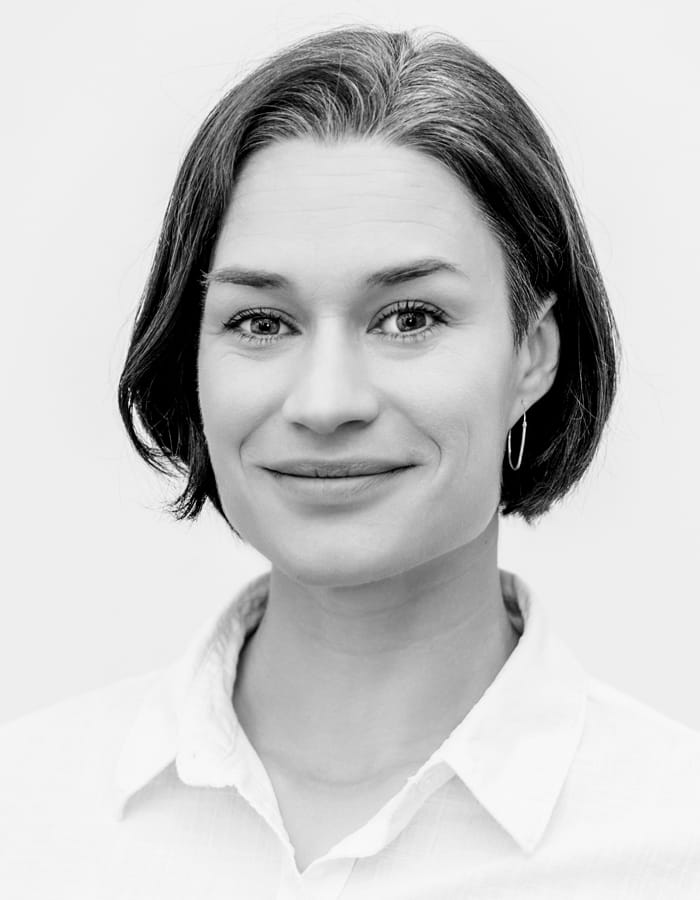
Dr. Aleksandra Zuraw is a renowned digital pathology expert, board-certified toxicologic pathologist at Charles River Laboratories, and author of “Digital Pathology 101: Everything you need to know to start and continue your digital pathology journey.” Graduating from Wroclaw, Poland, and completing her training in Berlin, Germany, Dr. Zuraw’s passion for digital pathology led her to establish the influential Digital Pathology Place website.
With extensive experience in digital pathology, image analysis, and training professionals, Dr. Zuraw drives innovation in the field. She creates high-quality educational content, emphasizing the relationship between digital pathology and AI, and collaborates with industry partners to bridge the gap between cutting-edge innovations and professionals.
As a leading figure in toxicologic pathology and author of a comprehensive guide to digital pathology, Dr. Zuraw shapes the future of the field through her engaging multimedia content and global career spanning six countries.
What is your typical day, and how do you make it productive?
My day typically starts early – I wake up at five in the morning to work on digital pathology place projects. This early start gives me quiet time to organize content, finish videos, and prepare educational materials for my digital pathology Trailblazers – that’s what I call my followers and subscribers and everyone who is interested in digital pathology.
Around seven o’clock, my kids wake up, so it’s time to switch gears. I prepare them for daycare and make sure everyone has breakfast. After that, my duties as a toxicological pathologist begin. I spend my work hours evaluating microscopic slides for pharmacological safety studies, and looking at hundreds of tissue images a day. I feel lucky because digital pathology technology powers this work – I don’t need to use a microscope anymore. Instead, I use my computer and leverage digital capabilities to be a better pathologist.
I try to make the most of my lunch break by taking meetings with digital pathology partners and companies interested in collaborations. It’s a great way to explore new opportunities and discuss how we can work together.
After five o’clock, the kids come back, and it’s family time. We play and go outside until bedtime. Once the kids are asleep, usually between eight and nine, I often do some more work. This might involve reading articles, preparing for my Friday morning live streams, or spreading the word about the power of digital pathology in increasing access to patient care in form of social media posts.
To stay productive throughout this packed schedule, I’ve developed several strategies. First, while I start my day early, I make sure I get enough sleep to have the energy I need. I leverage every possible AI tool I can to create quality educational digital pathology content quickly. Music is a big help – I use special focus music to stay on task.
If I’m working on tasks that aren’t too cognitively demanding, like editing video content, I sometimes multitask by listening to something educational or inspirational at the same time. I’m always looking for ways to maximize my productivity, whether it’s during those early morning hours or after the kids are in bed.
Balancing my roles as an entrepreneur, educator, pathologist, and parent isn’t always easy, but I find that this approach allows me to stay productive and make the most of each day. My goal is to continually create and share valuable content about digital pathology, collaborate with others in the field, and ultimately contribute to improving patient care through this technology.
How do you bring ideas to life?
I often get new ideas while doing various activities – listening to audiobooks, hearing others read articles, or even when I’m out running. To make sure these ideas don’t slip away, I immediately capture them using voice recordings. This allows me to preserve the initial spark of inspiration.
Once I have these recordings, I don’t rush into action right away. Instead, I let the ideas sit for some time. This incubation period allows the concept to fully mature in my mind and gives me the opportunity to critically evaluate whether it’s truly worth pursuing.
If I decide an idea has potential, I break it down into smaller components. I analyze each part and identify the smallest, most manageable step I can take right away to start bringing the idea to life. This approach helps me avoid feeling overwhelmed by the entire project.
I also consider who else can help me realize this vision. I look at my team and external resources to determine who might be best suited to assist with various aspects of the project. This collaborative approach allows me to leverage different skills and perspectives, making the idea’s implementation more efficient and effective.
By following this process – capturing ideas, allowing them time to develop, breaking them into manageable steps, and involving others – I’m able to systematically transform abstract concepts into tangible realities. This method helps me balance creativity with practicality, ensuring that the ideas I pursue have the best chance of success.
What’s one trend that excites you?
There are two technologies or opportunities or trends – however we want to call them – that excite me right now. First one is social media platforms, but let me focus on the other trend that really gets me fired up: generative AI.
For text, these large language models are an amazing tool that can be leveraged for many different areas of life and healthcare, including digital pathology. This is something that excites me very much, especially in the time of doctors needing to spend significant portions of their time on administrative tasks. This tool is basically efficiency supercharged.
In digital pathology, we’re dealing with massive amounts of data and images. These AI models could help us process information faster, generate reports, and even assist in initial screenings. It’s like having a super-smart assistant that never gets tired.
And it’s not just about saving time. It’s about improving patient care. By handling the routine stuff, these AI tools could free us up to focus more on the complex cases, on research, on pushing the boundaries of what’s possible in digital pathology.
Plus, as someone who’s all about educating and communicating about digital pathology,
I see huge potential in using these models to create better, more engaging content. We could develop adaptive learning materials, answer complex questions more efficiently, and make digital pathology more accessible to a wider audience.
It’s an exciting time. We’re at this point where technology is really starting to transform how we work in healthcare. And in digital pathology, we’re right at the forefront of that change.
What is one habit that helps you be productive?
Sleeping enough. 7-8h is mandatory for me to be able to do any meaningful work efficiently.
What advice would you give your younger self?
Focus on the long term goals while living the most interesting fun live possible while on the way to achieving them. No doing boring stuff if you don’t have to, pick the exciting journey and be brave.
Tell us something you believe almost nobody agrees with you.
People disagree with me when I say that you can be as good of a pathologist when you work remotely, or even better than when you work on-site. In the digital age, you can ask questions, get opinions, and share pathology images with a lot more people, getting access immediately to a wider range of expertise.
For example, if you work in a multi-timezone organization, you can reach people at different times. This wasn’t possible in the on-site age, where everyone was glorifying this thing of, “Oh, you could take a talk to your colleagues during coffee break.” But that approach had limitations.
When I was working on-site early in my career, I didn’t feel comfortable to interrupt my colleagues’ work, thinking my questions might be stupid or naive. It took a lot more effort for me to go in person and show a slide that maybe just had an artifact. And it was very disruptive to the other person’s wok day.
Now, with digital tools, I can just send a screenshot or a video of my digital slide or just share the slide. I’m not interrupting anybody’s day if they don’t decide to look at their message right away. And I’m not interrupting my own workflow because I can move on with my work while waiting for a response.
If further discussion is needed, I can always schedule a call. The digital tools give us a lot more access to people and are a lot less disruptive to people’s workflow than just marching into their offices with a slide.
I believe this remote, digital approach leads to better collaboration, more efficient work, and ultimately better patient care. But many in the field still cling to the idea that in-person work is superior, which is why this belief of mine often meets with disagreement.
What is the one thing you repeatedly do and recommend everyone else do?
I engineer reality to get things done. I manufacture accountability by signing up for programs with guidance, scheduling meeting with people where I can’t show up unless I have done what I promised I will get done. People are weak creatures, will power only takes you so far. Engineering reality and manufacturing accountability is far more effective. For example I recently started going live weekly at 6 am to review digital pathology scientific paper abstracts. I announce this at the beginning of the week to my email list, across social media, and there is no choice for me but to show up with the abstracts prepared. My digital pathology trailblazers are waiting for me in the virtual classroom. If I didn’t organize it that way, not only would I not read those abstracts, those of my followers who are interested wouldn’t to it either and I would miss out on an opportunity to gain further acceptance of digital pathology and inmprove access to patient care.
When you feel overwhelmed or unfocused, what do you do?
I run, and go to sleep early.
What is one strategy that has helped you grow your business or advance in your career?
Make your plan and keep going. Don’t listen to advice from anyone who has not already achieved what you want to achieve and is actually speaking from experience.
What is one failure in your career, how did you overcome it, and what lessons did you take away from it?
I failed my veterinary pathology board certification exam the first time I took it. I did pass it the second time I took it, but I needed to be 100% focused on working towards it. I was working full time at the time of preparation so I had no special dedicated learning time. I did a few things: 1) I spent every free moment studying – every weekend was studying – no hanging out with friends, no travel, no nothing – studying. 2) I arranged at work to join a group of already board certified pathologists. My official justification was, that they will help me study, because they already passed this exam, the real justification was, that this group was located in the US and I was working in Europe, so by joining this group in the US before my exam, the European team would not schedule any meeting after lunch, because they would already go home, so I was a lot more flexible with my time and could dedicate more to studying. It paid off. Lessons learned: focus + arrange your reality to support this focus.
What is one business idea you’re willing to give away to our readers?
If you have educational content out there – on social media, YouTube, Facebook – wherever it may live, you can take this very content and package it as an online course and sell it. You may ask why would anyone buy it if it is already available for free on those platforms? It is extremely difficult to search and curate content on social media. The algorithms are serving you what you are currently interested in, and often we are consuming one – off content. So curating what is already out there, putting it into a logical curriculum and hosting it on a distraction free platform will make a fantastic educational product. And if someone does not want to pay, they can go and get it for free wherever it was originally published. You will be surprised how many people value their time enough to pay for the curated content.
What is one piece of software that helps you be productive? How do you use it?
Claude. ai + otter. ai combo. I dictate to otter, then I screenshot it and ask claude to edit/ rephrase/ repurpose. This dictation app + Ai large language combo is saving my tons of time!
I also use others – chatGPT, opus.pro, descript and many others – I like to stay on top of what is out there and test what is the next tool that will help me be faster and better at what I do.
What is the best $100 you recently spent?
It’s always the last 100$ I spend on books (and the monthly subscription for AI tools). Books give me ideas (I binge-listen to them on Audible) that I can later implement in my life and business so much faster with AI. Now when I go to a conference, whenever someone mentions a book title and that the information from this book helped them I need help with as well, I don’t even make a list of those books, I go directly to the Audible app and buy them. I bought 10 at the last conference I attended.
Do you have a favorite book or podcast from which you’ve received much value?
“Awakening: Conversations with the Masters” by Anthony de Mello. I rarely read books more than once, but I read this one 3 times and will read it again. It makes you realized how programmed we are, and how much we are influenced by what society expects from us, what others want from us and how it prevents us from waking up and living our real life.
What’s a movie or series you recently enjoyed and why?
I only watch shows when I need to reset or when I am going through something difficult and need a distraction. I liked “True Detective” season one. So unpredictable and captivating, showing the different aspects of human nature. It reminds me that black and white when it comes character does not exist. Everything is a shade of gray. This is the reality.
Key learnings:
- Digital pathology coupled with AI are have the potential to increase access to patient care more than any other digital healthcare technology
- If you want to share your message, science, knowledge you acquired – you can do it now on social media platforms.
- Life is super busy so use tools that give you leverage – at this point of time for professionals, scientists, doctors – the generative AI based language models give the highest leverage, use them.
- You will fail, when you do – reevaluate what went wrong, see what you need to change and engineer reality to set yourself up for success.
- When you have a plan to do something, take advice from people who have already been there.