
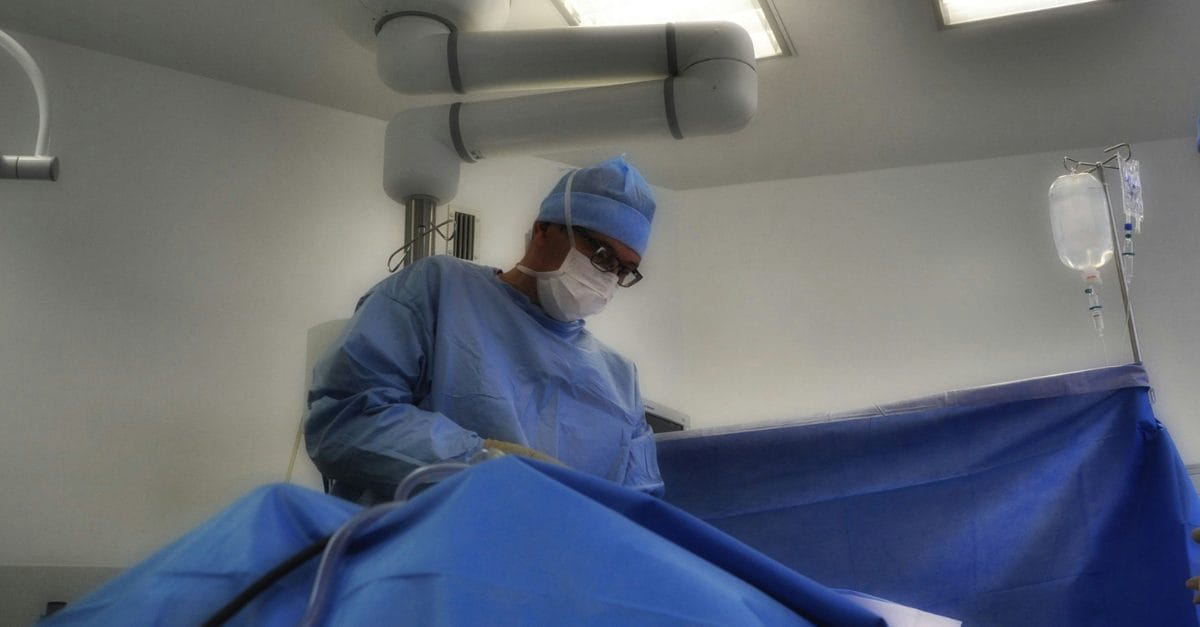
Andrej Grajn is a skilled surgeon working in transplant and organ procurement s whose work bridges the technical rigor of transplant surgery with a deeply humanistic approach to care. Raised in the once-unified Yugoslavia, he grew up in a richly diverse cultural landscape that sparked his lifelong interest in science, geography, and the inner workings of the world. This intellectual curiosity eventually led him to pursue medicine in Slovenia, where he completed his medical degree in 2005 after years of demanding surgical training.
Andrej’s career spans borders, with his expertise in organ procurement earning him the trust of colleagues and the gratitude of patients in healthcare systems across multiple countries. His defining moment came when he entered the field of transplant surgery—a path that has not only sharpened his clinical skills but deepened his commitment to mentoring emerging surgeons and improving global transplant practices.
Off the operating table, Andrej immerses himself in classical literature, studies geopolitics, and dedicates time to revisiting complex mathematical concepts. He is also passionate about preserving the industrial heritage of his homeland and has volunteered extensively with medical NGOs in underserved regions. With an eye for both precision and purpose, Andrej exemplifies a rare blend of surgical excellence and cross-cultural awareness.
What is your typical day, and how do you make it productive?
My days vary depending on whether I’m on call or involved in training sessions, but there’s a common thread: structure. I rise early—habit from my surgical rotations—and spend the first 30 minutes reading something unrelated to medicine: classical literature, geopolitical commentary, or mathematics. It centers my mind. During procurement work, precision and efficiency are critical, so I prepare meticulously. Productivity, to me, is not how much I do, but how attentively I do it.
How do you bring ideas to life?
Ideas are useless if they remain abstract. I tend to sketch things out—literally. Whether it’s a new training module for surgical fellows or a workflow improvement in procurement logistics, I first put it on paper. Then I look for patterns, weaknesses, and leverage points. I test ideas in constrained environments, like field hospitals or during simulations. If it survives pressure, it’s worth sharing.
What’s one trend that excites you?
The integration of AI into real-time surgical decision-making. Not as a replacement, but as an enhancement to the human surgeon’s judgment. Especially in organ transplantation, where minutes matter and donor-recipient compatibility is complex, AI can revolutionize how quickly and accurately we act.
What is one habit that helps you be productive?
Limiting noise—both digital and mental. I turn off all unnecessary notifications. I keep a small notebook with me at all times and jot down thoughts before they spiral into distraction. This simple act helps me remain present during high-stakes procedures and during moments of rest.
What advice would you give your younger self?
Don’t be afraid to be different. Don’t rush to fit in—either culturally, professionally, or personally. Your path will be unconventional, and that’s a strength, not a flaw. Also, learn patience. You’ll see that some of your most meaningful victories will come quietly and over time.
Tell us something you believe almost nobody agrees with you on?
That efficiency in medicine doesn’t mean speed—it means clarity. In procurement, people often mistake fast movement for competence. I disagree. A slow, decisive hand saves more lives than a rushed one. Precision, not pace, should be the north star.
What is the one thing you repeatedly do and recommend everyone else do?
Revisit your foundational knowledge. I return to anatomy textbooks, surgical literature, even basic geometry and physics. Understanding deteriorates with time and overconfidence. Reinforcement makes you sharper. This applies whether you’re a surgeon, an engineer, or a carpenter.
When you feel overwhelmed or unfocused, what do you do?
I step away. Ideally, I walk—no music, no phone. Just movement and breath. I also revisit old maps I used to collect as a child. It grounds me. The physical layout of the world reminds me of both my smallness and potential.
What is one strategy that has helped you grow your business or advance in your career?
Say yes to the difficult placements—the rural hospitals, the unfamiliar systems, the late-night emergencies. They teach you how to adapt, how to lead under pressure, and how to become indispensable. Visibility in difficult environments often leads to long-term trust and growth.
What is one failure in your career, how did you overcome it, and what lessons did you take away from it?
Early on, I took a position in a system that did not value ethics as much as efficiency. It led to disillusionment and professional conflict. I left, but not quietly. I reflected, retooled my values, and chose roles where integrity was non-negotiable. The lesson? Never compromise your core—short-term gains aren’t worth long-term corrosion.
What is one business idea you’re willing to give away to our readers?
A digital archive of medical equipment and brand histories from the former Yugoslavia. It could blend healthcare history, industrial design, and regional identity. There’s a niche market for this—academics, collectors, even museums would engage.
What is one piece of software that helps you be productive? How do you use it?
Notion. I use it as a hybrid between a journal, research tracker, and teaching planner. It houses everything from surgical notes to geopolitical analysis and math problem sets I work through. The flexibility and structure allow me to switch cognitive modes quickly.
Do you have a favorite book or podcast you’ve gotten a ton of value from and why?
The Brothers Karamazov by Dostoevsky. It’s not a book—it’s a psychological and spiritual MRI of the human soul. As a surgeon, it taught me more about moral consequence than any medical ethics manual ever could.
What’s a movie or series you recently enjoyed and why?
Occupied—the Norwegian series. It’s speculative fiction grounded in geopolitical realism. It made me think about sovereignty, occupation, and national identity—all things I wrestled with growing up in the post-Yugoslav era. It’s fiction, but uncomfortably close to the truth.
Key learnings
- Purpose-Driven Precision
- Global and Intellectual Curiosity
- Resilience Through Reflection