
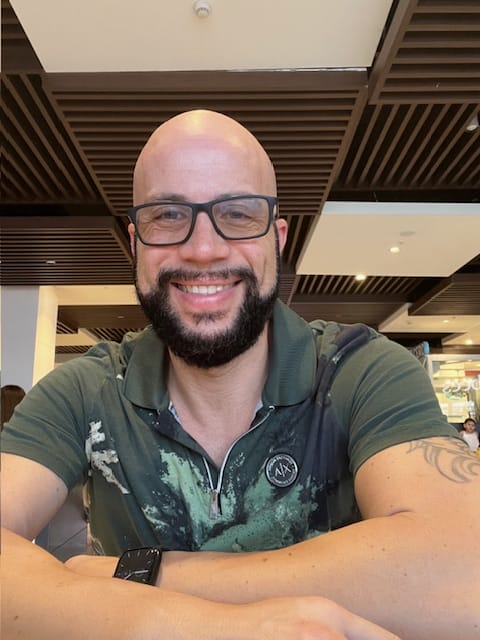
Andres Ruocco was born in Caracas, Venezuela. His father, a civil engineer, inspired him to love fitness early on. By age 12, Andres was climbing hills and practicing karate. He spent his teen years playing soccer and staying active. After high school, he moved to the United States looking for more.
He struggled at first to find direction. Then, he made a bold choice—he joined the U.S. Army. Andres served as a Supply Specialist, stationed in South Korea and later deployed to Iraq. His time in the military taught him discipline, teamwork, and how to push through tough moments.
After leaving the Army, Andres worked in sales and veteran support. Helping fellow veterans apply for benefits gave him a sense of purpose. But something was still missing. During the pandemic, he reconnected with his first passion—fitness.
Andres became a NASM-certified personal trainer and nutrition coach. He went back to school and is earning his bachelor’s degree in Sports and Health Sciences. He now helps others improve their health, both physically and mentally.
Andres trains clients, supports veterans, and continues to learn every day. He speaks English, Spanish, and Italian, and he brings empathy into every interaction. His path hasn’t been easy, but he’s stayed true to himself.
He believes in consistency, service, and always moving forward. Whether it’s guiding someone through a workout or supporting a fellow vet, Andres shows that strength comes from the inside out. His life is proof that every chapter can lead to a better one.
What is your typical day, and how do you make it productive?
I usually start my day early with a workout—sometimes a strength session, sometimes a long walk. It helps me wake up mentally and physically. After that, I check my schedule, review client notes, and make any needed adjustments to their plans. I like having blocks of time for client sessions, coursework, and reading. I’m currently finishing my degree in Sports and Health Sciences, so I often use afternoons to study or catch up on new research from NASM. I keep things productive with a mix of Google Calendar reminders and old-school sticky notes. It’s structured but not so rigid that I burn out.
How do you bring ideas to life?
I always start with the end goal. For example, if a client wants to lose weight or build strength, I break it down into smaller, clear steps—meal planning, weekly goals, daily routines. Then I adapt as needed. One of my clients had trouble sticking to morning workouts, so we shifted to evening sessions and made them home-based. That made all the difference. I test, learn, and adjust.
What’s one trend that excites you?
I’m really interested in wearable fitness tech—especially how it helps veterans manage PTSD and physical recovery. Tools that track sleep, heart rate variability, and stress give us real-time feedback. It opens the door for more personalized training plans and better mental health outcomes.
What is one habit that helps you be productive?
I set three daily goals—one for the body, one for the mind, and one for relationships. That might mean a workout, reading a chapter on nutrition, and texting a client to check in. It keeps me balanced and on track.
What advice would you give your younger self?
Don’t wait around hoping for clarity. After high school, I wasn’t sure what I wanted. I joined the Army, and it gave me structure, but I wish I’d started asking deeper questions earlier—like what kind of life I wanted to build, not just what job I should take.
Tell us something you believe almost nobody agrees with you on?
Motivation is overrated. I’ve learned that discipline beats motivation almost every time. In the Army, you didn’t get the option to wait until you “felt like it.” You acted first—motivation followed.
What is the one thing you repeatedly do and recommend everyone else do?
Go for a walk every day. Just 15 minutes can reset your whole mindset. I leaned on that habit a lot during the pandemic, and it helped keep me sane.
When you feel overwhelmed or unfocused, what do you do?
I train. Even if it’s just a short bodyweight circuit, it grounds me. Physical movement clears my head more than anything else. I also like to remind myself of times I’ve pushed through before—like basic training or deployment. If I got through those, I can get through anything.
What is one strategy that has helped you grow your business or advance in your career?
Listening—really listening. When I worked at Trajector Medical, I found that most veterans just wanted to be heard. I brought that into my fitness coaching. Understanding someone’s real “why” helps you coach them better.
What is one failure in your career, how did you overcome it, and what lessons did you take away from it?
I dropped out of college the first time I tried. I didn’t have the focus or the drive back then. Years later, I went back with a purpose—and I stuck with it. I learned that sometimes, you’re not ready until you’re ready. And that’s okay.
What is one business idea you’re willing to give away to our readers?
I’d love to see an app that combines fitness tracking with veteran resources—workouts, peer coaching, and VA navigation tools all in one. There’s a real need for that kind of integrated support.
What is one piece of software that helps you be productive? How do you use it?
Google Keep. I use it for quick notes, client updates, and daily checklists. It’s simple and it syncs everywhere, which is perfect for how I work.
Do you have a favorite book or podcast you’ve gotten a ton of value from and why?
Atomic Habits by James Clear. That book changed the way I think about routines. It helped me structure both my personal habits and my coaching methods in a way that sticks.
What’s a movie or series you recently enjoyed and why?
The Terminal List with Chris Pratt. It really resonated with me as a veteran. The emotional tone, the loyalty, the action—it all felt close to home.
Key learnings
- Creating small daily goals across different areas of life can build momentum.
- Deep listening—not advice-giving—is often the key to effective coaching.
- Movement is medicine—walks, workouts, or anything that helps clear the mind.
- Failing early isn’t permanent; purpose and timing matter more.
- Consistency and structure are more powerful than bursts of motivation.