
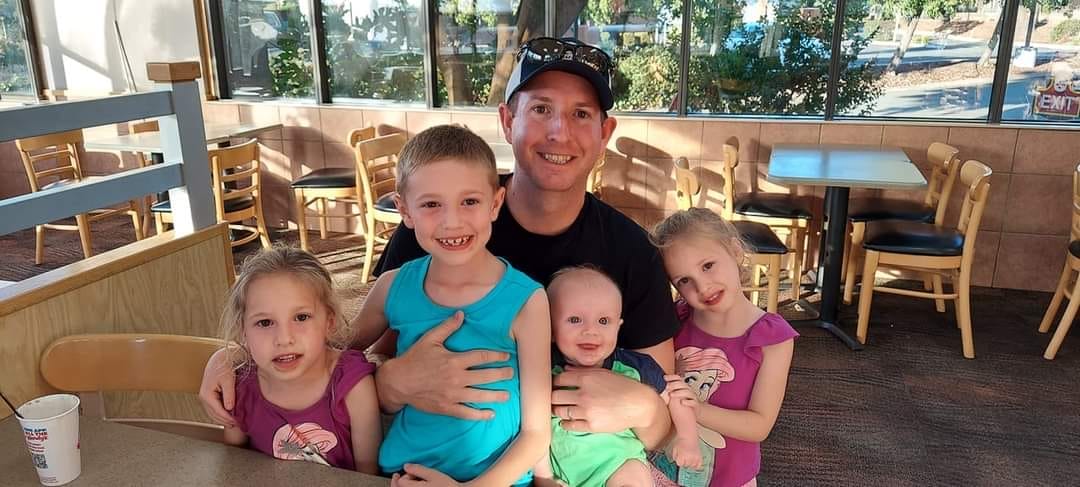
Andrew Jordan grew up in Stockton, Illinois, where football games, small-town values, and family shaped the core of who he became. In 2004, he led his high school team as quarterback in the state championship—early proof of his leadership instincts.
After high school, Andrew started his college path at Highland Community College, graduating in 2007. From there, he earned a bachelor’s degree at Northern Illinois University and later two master’s degrees from Western Illinois University. He went on to deepen his focus on educational leadership at the University of Illinois at Springfield in 2020.
Andrew’s career began as an assistant principal. Over the years, he took on roles that shaped entire school communities—from principal to his current role as superintendent at Donovan CUSD #3. He’s secured major grants, redesigned learning spaces, and served on state committees. He believes leadership is about listening more than talking.
Outside of education, Andrew’s love for sports continues. He co-ran J3 Timing and the Wine Run 5K with his brother, and he led the Stockton 3-on-3 Basketball Tournament for 15 years—raising over $50,000 for local causes.
Today, Andrew balances work, family, hiking, and giving back through the Masonic Lodge and the Illinois Masonic Student Assistance Program. His approach is simple: show up, work hard, and keep learning.
What is your typical day, and how do you make it productive?
I start early. Mornings are quiet and perfect for reviewing reports, checking emails, or prepping for meetings. By 7:30 AM, I’m usually at a school site or my office. I spend time walking hallways and checking in with staff. I try to keep meetings short and focused. Productivity for me is less about checking off a list and more about creating space for others to do great work. I try to block time for decision-making and give myself room to think—without distractions.
How do you bring ideas to life?
I write everything down. If I get an idea in a meeting, I jot it on a notepad or whiteboard. Then I walk it around—literally. I go for a walk or talk it through with someone on my team. If it still holds up after that, I start outlining steps. Some of my best ideas came while walking, or sitting at a school event with community members.
What’s one trend that excites you?
I’m really drawn to the shift toward purpose-built learning spaces. We redesigned our school library into a media center. That process made me realize how environments shape learning. It’s not about flashy tech; it’s about space that invites collaboration and focus. It’s also the focal point of the school and a great learning environment.
What is one habit that helps you be productive?
I do a check in with my administrators to see how they are doing and how I can support them. Checking in allows me to better support them and to stay in tune with what is occurring within the district.
What advice would you give your younger self?
Don’t rush to climb the ladder. Watch more. Ask better questions. And it’s okay if the answer is, “I don’t know yet.”
Tell us something you believe almost nobody agrees with you on?
I think email is the least effective form of communication in schools. So much is lost in tone, timing, and intention. I try to walk over or call instead as an email can be read two different ways.
What is the one thing you repeatedly do and recommend everyone else do?
Write personal thank-you notes. It makes you pause. It makes others feel seen. And it costs almost nothing.
When you feel overwhelmed or unfocused, what do you do?
I go running. Or hiking. If I’m near a trail, that’s even better. Something about movement outdoors resets everything.
What is one strategy that has helped you grow your business or advance in your career?
Say yes to the tough tasks. I’ve taken roles others avoided. That’s how I ended up in leadership earlier than expected. People remember when you take on hard things without complaining. I’ve always wanted to have a bigger impact on student achievement and I learned that getting into administration allowed me to impact a school on a larger scale compared to just my classroom.
What is one failure in your career, how did you overcome it, and what lessons did you take away from it?
In my early leadership years, I tried to fix things alone. I didn’t delegate or ask for help. That backfire. It taught me to trust the team and communicate earlier.
What is one business idea you’re willing to give away to our readers?
A subscription box for school administrators: tools, books, calming items, and maybe a monthly challenge or insight. Something small that makes you feel supported.
What is one piece of software that helps you be productive? How do you use it?
Google Keep. I use it to pin notes from staff meetings, track grant deadlines, and even save articles I want to revisit.
Do you have a favorite book or podcast you’ve gotten a ton of value from and why?
7 Habits of Highly Effective People by Stephen Covey. It changed how I think about motivation and cycles in educaiton—not just for students, but for adults I work with every day.
What’s a movie or series you recently enjoyed and why?
Hoosiers with Gene Hackman. Still relevant. Still real. And it reminds me why leadership and heart always go hand-in-hand.
Key learnings
- Good leadership often begins with deep listening and small, repeated actions.
- A strong daily routine with built-in reflection time is essential for staying grounded.
- Physical activity, like hiking or running, can be a powerful tool for mental clarity.
- Failure can teach the importance of delegation, humility, and team trust.
- Writing things down—ideas, tasks, or thank-you notes—helps bring structure and intention to busy lives.