
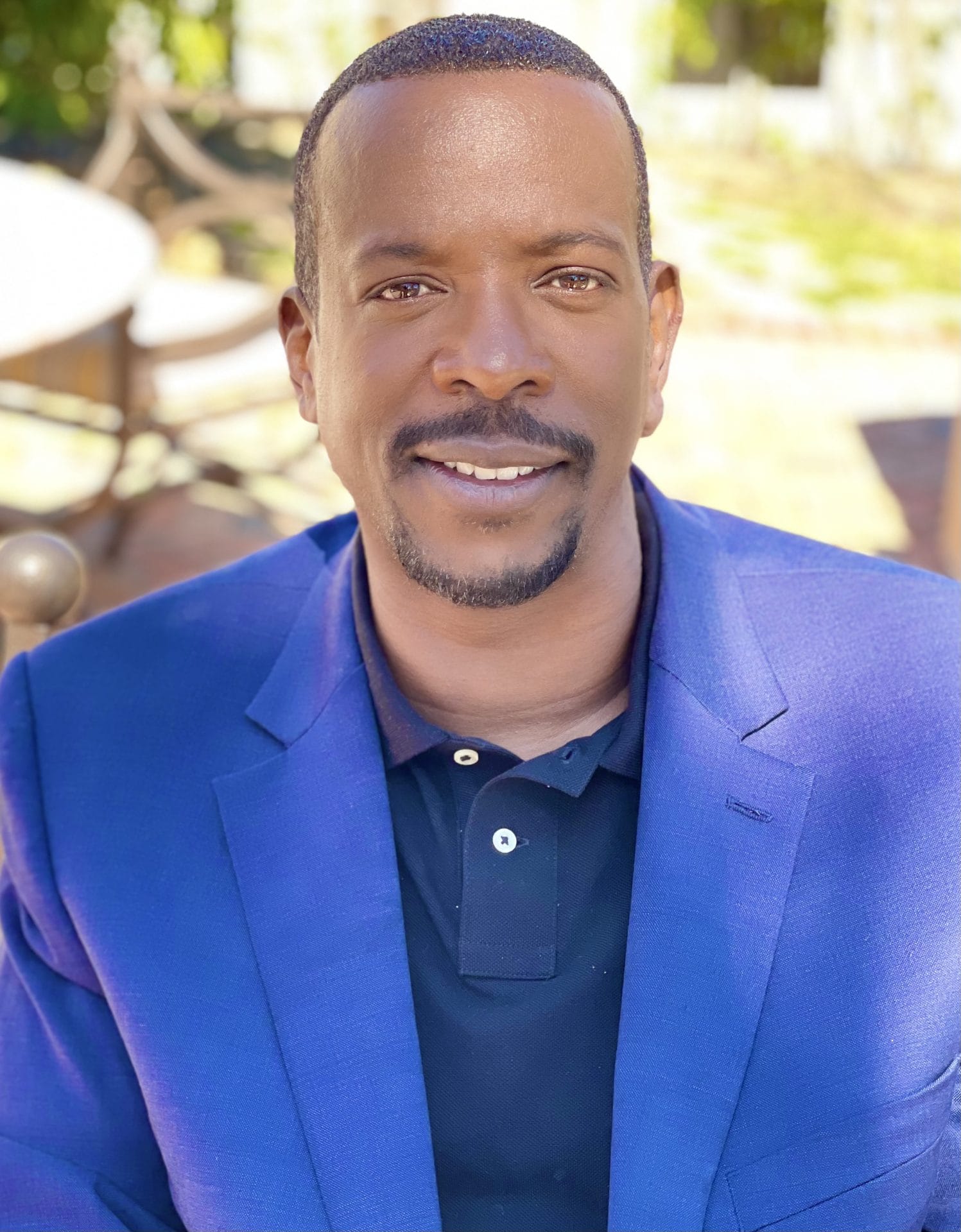
Bentley Kyle Evans grew up in Los Angeles with Hollywood just around the corner. He was born in Oakland but raised in LA, where the entertainment world always felt close. After graduating from Westchester High, he knew he wanted to make stories—not just act in them.
His first break came in House Party (1990), where he had a small acting role. But what really caught his attention was behind the camera. He paid attention to scripts, direction, and production. That’s where his real passion lived.
In the early ‘90s, he joined the writing team for Martin, the hit sitcom starring Martin Lawrence. He soon became showrunner and helped shape one of the most iconic shows in Black TV history. Bentley didn’t stop there. He co-created The Jamie Foxx Show, which helped launch Jamie Foxx’s TV career.
After finding success in the studio world, Bentley decided to build his own. He launched Harvest Studios and started making shows like Love That Girl!, Family Time, In the Cut, and Millennials. These series gave voice to everyday stories that often go unseen.
In 2021, he partnered with MC Lyte to create Partners in Rhyme and later returned to work with Jamie Foxx on Dad Stop Embarrassing Me! for Netflix. He also helped create Martin: The Reunion on BET+ in 2022.
Today, Bentley keeps a low profile, spending time with his wife and kids. But his work lives on, showing what’s possible when you lead with vision, heart, and humor.
What is your typical day, and how do you make it productive?
Most days start early. I wake up around 6:30 a.m., check in with my team, and do a short walk or light stretching to clear my head. I spend the morning writing or editing scripts—early hours are when I’m most focused. Meetings and table reads usually take up my afternoons. I keep the day structured but flexible because creativity doesn’t always follow a schedule. I make it productive by giving each task my full attention, then letting it go when it’s time to move on.
How do you bring ideas to life?
Ideas usually start with something small—like a joke I hear or a moment from real life. I build around it. I ask myself: “Is this something people will relate to? Does it feel honest?” Then I workshop it with actors or other writers. For example, with Martin, the energy came from watching Martin Lawrence in action and knowing when to shape that energy or just let it roll. I’m hands-on during casting and rehearsals because that’s when the idea starts to breathe.
What’s one trend that excites you?
I’m interested in the rise of niche streaming platforms. I got to create Partners in Rhyme for ALLBLK, and it showed me how smaller platforms can still have a big cultural impact. They’re making space for stories that don’t have to appeal to everyone—just the right audience.
What is one habit that helps you be productive?
I write something every single day, even if it’s not for a show. Could be a scene, a monologue, or just an idea. Keeping the muscle warm means I never lose momentum. Even five lines a day keep me sharp.
What advice would you give your younger self?
Stop trying to impress everyone in the room. Focus on the work, not the noise. I used to think I had to prove myself to the studio, to the cast, to the audience—at all times. But the work speaks loudest when you stop shouting.
Tell us something you believe almost nobody agrees with you on?
I don’t think the pilot episode has to be perfect. Most people chase perfection in episode one, but I’ve always believed characters need room to grow. The Martin pilot wasn’t the strongest, but we trusted the direction. By episode three or four, we had something iconic.
What is the one thing you repeatedly do and recommend everyone else do?
Watch your own work with a critical eye—but not alone. I always screen rough cuts with a few people I trust. Not just executives or other writers, but everyday viewers. The feedback isn’t always technical, but it tells me what’s working emotionally.
When you feel overwhelmed or unfocused, what do you do?
I play golf or pickleball. No phones, no scripts. Just movement and competition. It’s physical, but also resets the brain. If I can’t get outside, I watch old sitcoms. Something about returning to the basics clears the clutter.
What is one strategy that has helped you grow your business or advance in your career?
Creating my own production company—Harvest Studios—was a turning point. I stopped waiting for someone to greenlight my vision and started building my own platform. That’s how I created Love That Girl! and Family Time. Owning the space gave me creative control and long-term leverage.
What is one failure in your career, how did you overcome it, and what lessons did you take away from it?
After The Jamie Foxx Show ended, I thought doors would fly open. But they didn’t. I had a few projects stall out, and for a while, nothing stuck. I realized I was waiting on the same system I wanted to escape. That’s when I went independent. The lesson? Don’t confuse success with security.
What is one business idea you’re willing to give away to our readers?
Create a platform that streams only sitcom pilots that never aired. There are hundreds of unaired pilots sitting in vaults. Some are gold. Give them a second life. People love underdog stories—even in TV.
What is one piece of software that helps you be productive? How do you use it?
Final Draft. Simple answer, but I live in it. I use the beat board to map character arcs before I even start dialogue. It helps me write faster and cleaner drafts.
Do you have a favorite book or podcast you’ve gotten a ton of value from and why?
The War of Art by Steven Pressfield. It’s about resistance and how we often get in our own way. I’ve read it more than once. It reminds me that finishing is more important than perfecting.
What’s a movie or series you recently enjoyed and why?
I rewatched Boogie Nights recently. It’s a masterclass in character and tone. Every person in that film is flawed but human. That’s the kind of layered storytelling I aim for in sitcoms—even when people are laughing.
Key learnings
- Daily creative practice, even in small doses, builds long-term momentum.
- Independent platforms and ownership allow for greater creative control.
- Not every great show starts with a perfect pilot—character development takes time.
- Failure often reveals when you’ve grown too reliant on external systems.
- Physical breaks from work can lead to better focus and renewed creative energy.