
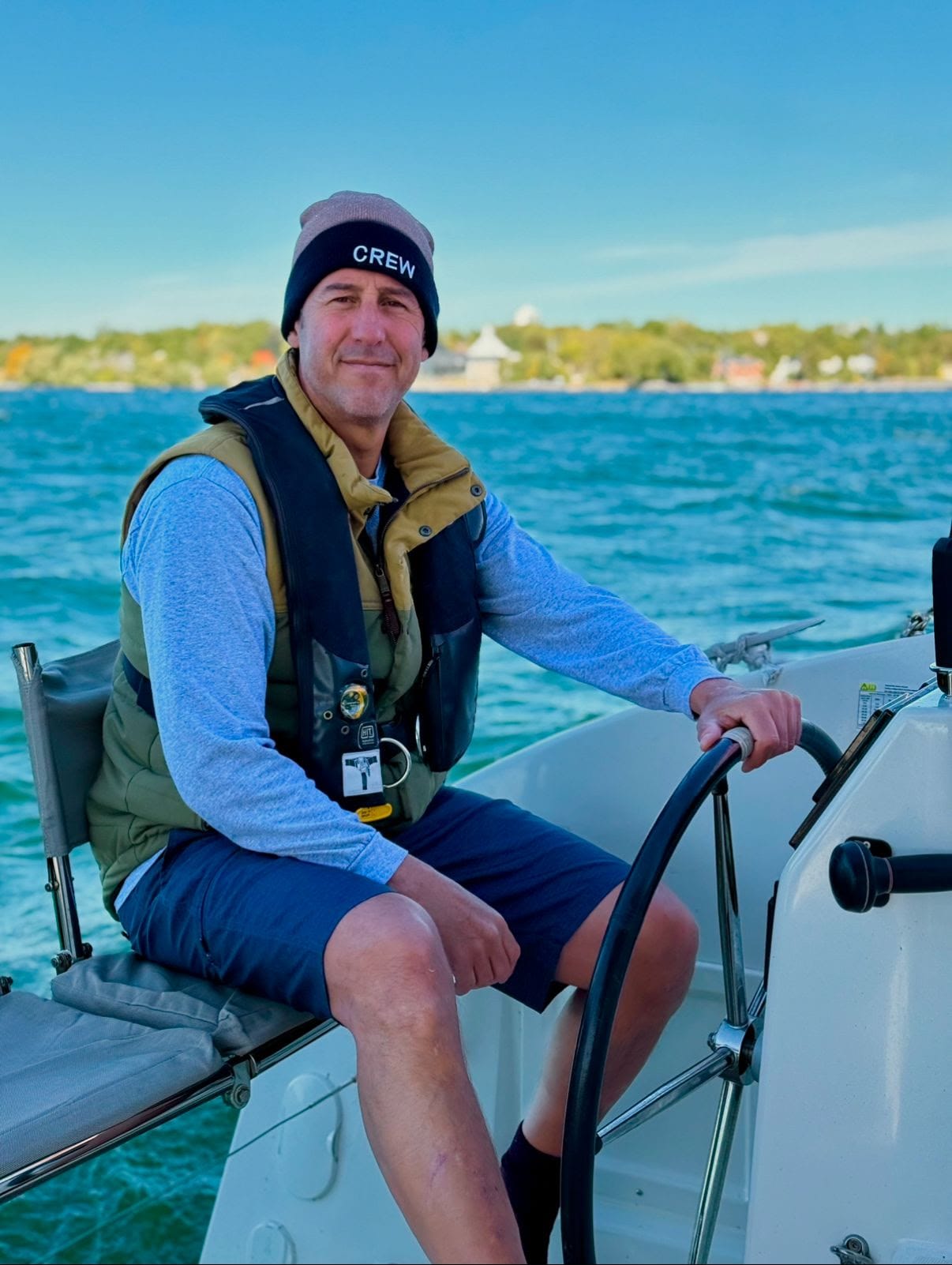
Bernardo Arsuaga Cardenas is a Mexican filmmaker and former lawyer whose career has been shaped by curiosity, discipline, and follow-through. Born and raised in Monterrey, Mexico, he grew up spending his days riding BMX and mountain bikes. That early rhythm of movement and focus would later influence how he approached work and creativity.
Bernardo studied law at Universidad Regiomontana and went on to build a successful legal career. From 2008 to 2022, he worked as a partner in a law firm. The profession taught him structure, patience, and how to manage pressure. Over time, he felt drawn to storytelling and the creative process.
In 2013, Bernardo began directing and producing documentaries. His first major film, The Weekend Sailor, tells the story of the Mexican yacht Sayula II and its unexpected victory in the 1974 Whitbread Round the World Yacht Race, now known as The Ocean Race. The film premiered internationally, including a notable screening at Forum Marinum, and went on to win awards at festivals such as the Newport Beach Film Festival. The project also led to collaborations with Simon Le Bon of Duran Duran and appearances at high-profile events in Europe.
Bernardo continued his work on The Michoacan File, collaborating with actor Danny Trejo and renowned chefs associated with the James Beard Awards. Today, he is a partner in a post-production studio and remains active as a director and producer. Outside of work, Bernardo is a husband, father of three, and an avid mountain biker, sailor, and cook. His life reflects steady effort, openness to change, and a deep respect for the power of stories.
What is your typical day, and how do you make it productive?
My day starts early. I like quiet mornings. I usually wake up, make coffee, and review one simple list I wrote the night before. Not a long list. Three things max. I try to move my body every day, usually mountain biking or a short workout. Physical movement clears my head. Workdays are split between creative work and practical work. Writing, editing, and reviewing cuts happen when my mind is fresh. Calls and logistics come later. I make my day productive by not overloading it.
How do you bring ideas to life?
I don’t wait for ideas to feel perfect. I write them down and break them into steps. That’s how I approached The Weekend Sailor. It started as curiosity about a forgotten sailing story. Then research. Then interviews. Then structure. Ideas die when they stay abstract. Plans keep them alive.
What’s one trend that excites you?
I’m excited by long-form documentary finding new audiences on streaming platforms. People still want deep stories. They just want access. The reach is wider now than when I started in 2013.
What is one habit that helps you be productive?
Writing things down by hand. I still use a notebook. It slows me down and helps me think clearly.
What advice would you give your younger self?
Don’t rush. Time is not the enemy. Fear makes you hurry. Consistency wins.
Tell us something you believe almost nobody agrees with you on?
I believe quitting can be a smart move. Leaving law after many years wasn’t a failure. It was alignment. Not everything has to last forever.
What is the one thing you repeatedly do and recommend everyone else do?
Finish what you start. Even if it’s imperfect. Especially if it’s imperfect.
When you feel overwhelmed or unfocused, what do you do?
I go outside. Usually on my bike. Physical effort resets my thinking better than any screen break.
What is one strategy that has helped you grow your business or advance in your career?
Cross-industry collaboration. Working with sailors, musicians like Simon Le Bon, chefs, and actors like Danny Trejo expanded my perspective and my network. Each project opened unexpected doors.
What is one failure in your career, how did you overcome it, and what lessons did you take away from it?
Early on, I tried to control every part of a film. It slowed everything down. I learned to trust collaborators, especially in post-production. Letting go improved the final work.
What is one business idea you’re willing to give away to our readers?
Create a small post-production collective focused solely on documentaries. Shared resources. Shared talent. Low ego. High craft.
What is one piece of software that helps you be productive? How do you use it?
DaVinci Resolve. I use it not just for editing, but for reviewing structure and pacing. Seeing the story visually changes decisions.
Do you have a favorite book or podcast you’ve gotten a ton of value from and why?
The War of Art by Steven Pressfield. It’s short and honest. It reminds me that resistance never goes away. You just learn to work anyway.
What’s a movie or series you recently enjoyed and why?
Chef’s Table. It respects process. It shows discipline behind creativity. I relate to that.
Key learnings
- Physical movement can be a powerful tool for clarity and focus.
- Big career shifts can be strategic, not reactive.
- Ideas become real through structure, not perfection.
- Finishing projects builds momentum more than endless planning.
- Cross-industry collaboration creates long-term opportunity.