
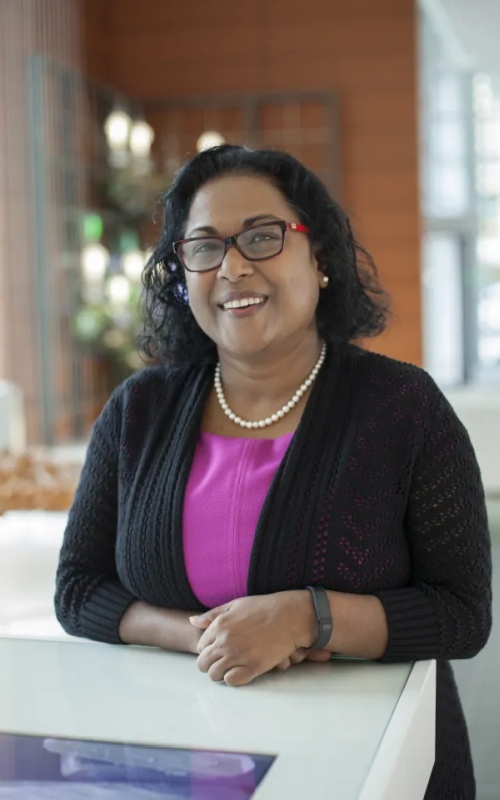
Dr. Bina Keshavan is an accomplished biopharmaceutical leader with more than two decades of drug development experience, including over a decade of managing the development of rare disease products. Her career achievements include establishing and leading the program leadership and management across several large and small biopharmaceutical companies focused on rare and large indications, biologics, small molecules, cell and gene therapies for early and late-stage product development. Most recently, Dr. Bina Keshavan established the program and portfolio management at Ovid Therapeutics, thereby improving strategic decision-making. Additionally, Dr. Bina Keshavan has excelled in biologics license applications, product launches, and drug life-cycle management.
Since 2022, Dr. Bina Keshavan has served as a principal consultant to a diverse set of biopharmaceutical industry clients. She assists these organizations with program leadership and product strategy, with an emphasis on mid- and late-stage neurological, genetic, and metabolic disorder programs. She drove operations at Ovid Therapeutics as the vice president and head of program and portfolio management, preceded by senior director roles at Shire Pharmaceuticals and Biogen, Inc.
Dr. Bina Keshavan holds a doctor of philosophy in neuroscience from Dalhousie University. When she is not supporting clients with biopharmaceutical program development, she enjoys international travel.
What is your typical day, and how do you make it productive?
My days are built around structure, focus, and maintaining balance between professional responsibilities and personal priorities. I start each morning with breakfast and coffee before heading into my home office, where I organize my schedule and identify the most important objectives for the day. Beginning with clarity allows me to approach my work with intention and stay focused on what matters most.
Much of my day is dedicated to working with my pharmaceutical clients through meetings, planning sessions, and ongoing collaboration. These interactions require both attention to detail and the ability to think strategically as I help navigate challenges, uncover opportunities, and drive meaningful results. I enjoy working in a fast-moving environment where thoughtful decision-making and strong relationships are essential.
In addition to client work, I intentionally reserve time for deeper thinking and strategy development. Whether I am evaluating new ideas, planning future initiatives, or refining current approaches, I believe creating space for strategic focus is just as important as managing day-to-day responsibilities.
Throughout the day, I also make time for short resets, including walking the dog. Stepping away from my desk helps me recharge, clear my head, and return with renewed energy and perspective.
At 5:00 pm, I transition into exercise, which is an important part of my daily routine. I often listen to music while working out, which helps me unwind, stay motivated, and mentally shift out of work mode. Afterward, I enjoy making dinner and spending quality time with my family, which is one of the most meaningful parts of my day.
For me, productivity is not simply about staying busy—it is about managing my time with purpose, doing impactful work, and creating space for health, family, and the things that matter most.
How do you bring ideas to life?
Most of my ideas come to me in the quiet moments, often in sleep, when my mind is free from the structure and noise of the day. I keep a notebook next to my bed so I can capture them immediately before they fade, without trying to overanalyze them in the moment.
Once I’ve written them down, I don’t rush to develop them. I let them sit and evolve over time, revisiting them with a clearer perspective. This distance helps me see which ideas have real depth and which ones were just passing thoughts.
From there, I begin shaping them more intentionally—building out different scenarios, testing possibilities in my mind, and refining the direction. I often bring these ideas into conversation with trusted experts, colleagues, or collaborators, using their perspective to challenge and strengthen my thinking.
For me, the process is very iterative. An idea starts as something abstract, almost instinctive, and gradually becomes more structured through reflection, dialogue, and refinement. The goal is always to move from inspiration to clarity—and eventually into something real and meaningful that can be acted on and shared.
What’s one trend that excites you?
One trend that really stands out to me is the shift toward personalized medicine and gene therapies, because it represents a move away from “one-size-fits-all” healthcare toward treatments designed around the individual.
Instead of treating patients based on broad population averages, personalized medicine uses data like genetics, biomarkers, lifestyle, and environment to tailor prevention and treatment strategies. That alone is a major step forward in precision and effectiveness—but gene therapies take it even further by targeting the root cause of disease at the DNA level.
With advances in tools like CRISPR-based editing and other gene-modifying technologies, we’re moving into an era where certain conditions may no longer just be managed but potentially corrected at their source. That fundamentally changes what “treatment” means in healthcare.
What makes this especially exciting is the potential impact on diseases that have historically been difficult or impossible to treat effectively—rare genetic disorders, certain cancers, and inherited conditions. In areas like pancreatic cancer, for example, recent advances in targeted therapies, immunotherapy combinations, and early-stage personalized vaccine approaches are beginning to show encouraging progress in a disease that has long had very limited treatment options.
Increasingly, AI is also accelerating this entire shift—helping researchers identify drug targets faster, analyze complex genomic data, and design more precise, personalized treatment strategies that would be difficult to uncover through traditional methods alone. It also opens the door to earlier intervention, more predictive care, and therapies that are designed around a patient’s unique biology rather than generalized protocols.
From an innovation perspective, it’s also reshaping how pharmaceutical companies think about development—moving from mass-market drugs to highly targeted, high-impact therapies that require deeper collaboration between science, data, and clinical practice.
Overall, it feels like a shift from reactive medicine to truly proactive and precision-based care, which has the potential to redefine healthcare outcomes over the next decade.
What is one habit that helps you be productive?
One habit that helps me stay most productive is starting my day with intentional planning and time blocking. Before getting pulled into emails, meetings, or reactive tasks, I take a few moments to map out my priorities and assign focused blocks of time to them. This creates structure around my day and ensures I’m spending energy on the work that actually moves things forward, rather than just responding to whatever comes in.
It also helps me stay mentally clear. When my day is already organized, I don’t waste time deciding what to do next—I just execute. That clarity reduces friction and allows me to stay in a deeper state of focus for longer periods.
Just as importantly, this habit makes it easier to balance competing demands. With client meetings, strategic work, and personal commitments all in the mix, having a clear plan gives me flexibility without losing direction. Even when the day shifts, I can adjust within a structure instead of starting from scratch.
Ultimately, this simple discipline of planning and time blocking sets the tone for everything else. It helps me stay focused, intentional, and consistently productive on the work that matters most.
What advice would you give your younger self?
One piece of advice I would give my younger self is to see the bumps in the road not as setbacks, but as signals—an invitation to grow, to dream bigger, reach further, and challenge what feels “normal” rather than retreating into comfort or seeking validation from others.
I would tell her what I now understand more clearly: we don’t need to pretend we have everything figured out, because we don’t—and we never will. And that uncertainty is not a weakness; it’s part of being human.
I would remind her that worth is not something to be earned or proven. It is intrinsic, steady, and unchangeable, even when thoughts or external pressures try to suggest otherwise. That truth is the foundation to come back to when everything else feels uncertain.
I would also emphasize the importance of tuning out external noise and learning to trust her own instincts. Intuition is often quieter than doubt, but it is far more reliable when we give it space to be heard.
And finally, I would say this: don’t place your future in anyone else’s hands. Show up for yourself first, consistently and unapologetically—even if it feels uncomfortable or looks selfish from the outside. That commitment to self is not abandonment of others; it is the only way to build a life that is truly your own
Tell us something you believe that almost nobody agrees with you on.
One belief I hold that I don’t think most people fully agree with is that comfort is often more limiting than failure. We’re taught to avoid mistakes and instability, but I’ve found that staying comfortable for too long can quietly become the bigger risk. It slows curiosity, reduces ambition, and keeps people from testing what they’re truly capable of. Failure, on the other hand, tends to force clarity—it exposes what works, what doesn’t, and what actually matters much faster than comfort ever will.
I also believe that intuition is significantly undervalued in decision-making, especially in professional environments. Data and logic are essential, but there are moments where your internal signal notices patterns before you can fully explain them. Many people dismiss that, but I’ve learned it’s often worth listening to.
Finally, I believe that external validation is a very unstable foundation for identity or direction. It can be useful feedback, but it becomes problematic when it starts guiding decisions. The more sustainable path is building decisions from internal alignment first and letting external validation come second—not the other way around.
These aren’t universally accepted ideas, but they’ve consistently shaped how I think about growth, risk, and decision-making.
What is the one thing you repeatedly do and recommend everyone else do?
One thing I consistently do—and strongly recommend others do as well—is write things down immediately instead of relying on memory.
Whether it’s an idea, a decision point, a concern, or something I need to follow up on, I capture it right away in notes. That small habit does a few important things: it clears mental clutter, reduces anxiety about “forgetting something,” and frees up cognitive space for deeper thinking instead of constant mental tracking.
Over time, it also becomes a kind of external thinking system. When I revisit those notes later, I’m not just recalling ideas—I’m refining them, connecting patterns, and making better decisions with more context and distance.
It sounds simple, but it’s one of the highest-leverage habits I know. The mind is better at thinking than storing and offloading that storage creates a surprising amount of clarity and focus.
When you feel overwhelmed or unfocused, what do you do?
When I feel overwhelmed or unfocused, I don’t try to push through it in the same way. The first thing I do is pause and get everything out of my head—usually by writing it down. Just externalizing the noise helps create immediate clarity and reduces the mental pressure of trying to hold everything at once.
From there, I quickly sort what’s actually urgent versus what can wait. Most of the time, overwhelm comes from treating everything like it needs attention right now. Once I separate signal from noise, I pick just one priority to restart with—something small and concrete that I can actually complete.
If I’m still stuck, I step away briefly. A walk, a change of environment, or even a short reset away from screens usually helps reset my focus. I’ve learned that forcing focus rarely works when the system is overloaded.
What I come back to is simple: clarity first, then action. I don’t try to solve everything at once—I just restart with the next right step.
What is one strategy that has helped you grow your business or advance in your career?
One strategy that has consistently helped me grow my business and advance my career is focusing on high-value relationships and deepening them over time, rather than trying to expand everything at once.
Early on, it’s easy to equate growth with volume—more clients, more projects, more activity. But I’ve found that real momentum comes from going deeper with the right clients and partners. When you invest in understanding their challenges at a strategic level, you move from being a service provider to becoming a trusted advisor. That shift changes the quality of work, the level of trust, and the long-term opportunities that follow.
Practically, this means I prioritize time for meaningful client conversations, consistent follow-ups, and proactive thinking about how to add value beyond what is immediately asked. Instead of waiting for requests, I look for gaps, anticipate needs, and bring forward ideas that help clients think differently about their own strategy.
Over time, this approach compounds. Strong relationships lead to more complex work, longer-term engagements, referrals, and access to higher-impact opportunities. It also creates more stability because growth is rooted in trust rather than constant acquisition.
Ultimately, this strategy has taught me that sustainable career growth is less about doing more—and more about doing the right things with the right people, consistently and intentionally.
What is one failure in your career, how did you overcome it, and what lessons did you take away from it?
One failure in my career was my first foray into developing a drug for ALS. The program carried a great deal of promise and scientific conviction, and I was deeply invested in its potential to make a meaningful difference for patients facing a devastating disease. However, despite the early optimism, the drug ultimately failed to meet its endpoint in the pivotal study.
The experience was deeply personal and professionally humbling. It forced me to confront the reality that strong rationale and high hopes are not always enough in the face of complex biology and clinical uncertainty. There is no way around how difficult that moment was, but it also became a defining inflection point in my thinking.
Rather than stepping away from the space, it redoubled my focus and commitment. I became even more intentional about pursuing therapies in rare diseases with high unmet need, including ALS, while also sharpening how I evaluate scientific risk earlier in development. It reinforced the importance of rigorous validation, deeper early signals, and a more disciplined approach to translating ideas into clinical reality.
The key lesson I took away is that failure in drug development is not an endpoint—it is data. And if approached with honesty and reflection, it can sharpen judgment, refine strategy, and ultimately strengthen the work that follows.
What is one business idea you’re willing to give away to our readers?
One business idea I would give away is a “clinical-trial readiness + patient-matching intelligence platform for rare diseases.”
The core problem is that in rare diseases—especially conditions like ALS, certain cancers, and ultra-rare genetic disorders—clinical trials fail not only because of biology, but because of operational friction: slow patient identification, fragmented data, and late-stage recruitment.
The idea is to build a platform that sits between pharma companies, academic centers, and patient advocacy groups, and does three things:
First, it aggregates deidentified real-world data (EHRs, genomics, claims, and specialty clinic data) to create a continuously updated “trial-ready patient map” for specific rare disease populations.
Second, it uses AI-driven matching to identify potential trial candidates before enrollment begins, based on disease progression signals, biomarkers, and eligibility criteria—so recruitment becomes proactive instead of reactive.
Third, it integrates directly with clinical trial design teams to simulate feasibility early—showing which protocols are realistically recruitable, in what timelines, and where bottlenecks will occur before a study ever launches.
The real value is not just faster recruitment, but better trial design from the start, reducing the risk of late-stage failure due to avoidable enrollment or stratification issues. In a space like ALS or other rare diseases where every patient and every month matters, even small efficiency gains in matching and enrollment can meaningfully improve the probability of success—and ultimately accelerate access to therapies that are desperately needed.
It’s essentially a “navigation layer” for rare disease drug development—connecting data, patients, and trials in a much more intelligent and real-time way than the current system allows.
What is one piece of software that helps you be productive? How do you use it?
One piece of software that helps me stay productive is Microsoft OneNote.
I use it as a central capture system for everything that comes up throughout the day—ideas, meeting notes, strategy thoughts, and quick reminders. Because ideas often come at unpredictable moments, especially during client conversations or even outside of work, OneNote allows me to immediately write things down without interrupting my flow.
Over time, it becomes more than just a notebook. I use it to organize notes by client, project, or theme, which makes it easy to revisit and refine thinking later. This is especially helpful when developing strategies because I can go back through raw notes, connect patterns, and turn initial thoughts into more structured plans.
It also supports my habit of thinking in layers: capturing quickly first, then refining over time. That separation between “capture” and “structure” helps me stay focused in the moment while still building toward more thoughtful, strategic outputs.
Ultimately, OneNote helps me reduce mental clutter and stay present. I don’t have to hold everything in my head—I can externalize it, organize it, and return to it when I’m ready to think more deeply.
What is the best $100 you recently spent? What and why?
Best $100 I spent was on an office chair with proper lumbar support.
It sounds simple, but it completely changed how I work. Having real lower back support—not just a basic seat—makes a huge difference in how long I can stay focused without discomfort or fatigue building up. Ergonomic support like that is specifically designed to maintain the natural curve of the spine and reduce strain during long sitting sessions.
What I didn’t fully appreciate at first is how much posture affects productivity. When your body is supported correctly, you’re not constantly shifting, adjusting, or getting distracted by discomfort. That alone improves focus during long stretches of deep work, meetings, and strategy sessions.
For me, it was one of those small, practical upgrades that delivered outsized returns—not because it was expensive or fancy, but because it quietly removed friction from my day.
Do you have a favorite book or podcast you’ve gotten a ton of value from and why?
One of the most impactful books for me has been “Flowers for Algernon” by Daniel Keyes. What stays with me most is how powerfully it explores intelligence, self-awareness, and the human need for connection and dignity. It’s a reminder that growth and capability don’t automatically lead to fulfillment—and that empathy, humility, and how we treat others matter just as much as achievement. It also makes you reflect on change itself: how quickly circumstances can shift and how important it is to stay grounded through all of it.
On a very different note, I also get a lot of value from comedy podcasts. They might seem purely entertaining on the surface, but for me, they serve an important role in balance. They help reset my mind, reduce mental fatigue, and create space where I’m not constantly problem-solving or thinking strategically. That kind of lightness actually improves my productivity because it allows me to come back to work with a clearer, more relaxed mindset.
Together, they reflect two sides of how I think and recharge—deep reflection through meaningful storytelling, and mental release through humor and levity.
What’s a movie or series you recently enjoyed and why?
A movie I recently enjoyed is “Oppenheimer.”
What stood out to me was how it explored the complexity of high-stakes decision-making—especially the tension between scientific progress, ethical responsibility, and unintended consequences. It’s not just a historical story; it’s really about what happens when innovation moves faster than our ability to fully process its impact.
I was also drawn to the psychological layer of it—the internal pressure, isolation, and burden of being at the center of something that can fundamentally change the world. It highlights how breakthroughs often come with trade-offs and how leadership in those moments is rarely straightforward or comfortable.
It also made me reflect on today’s world, especially around emerging technologies like AI. The parallels are hard to ignore: we’re once again in a moment where innovation is accelerating rapidly and the responsibility to think carefully about safety, ethics, and long-term consequences is just as important as the breakthroughs themselves.
Overall, I appreciated how it blended intellect, emotion, and consequence. It’s the kind of story that stays with you because it doesn’t offer easy answers—it makes you sit with the complexity.
Key learnings
- Structured habits such as intentional planning, time blocking, and capturing ideas immediately can significantly improve focus and reduce mental clutter, especially in high-demand, fast-paced roles.
- Progress in complex fields often comes from rapid experimentation and early validation combined with a disciplined approach; building quickly, testing assumptions, and iterating based on real-world feedback helps reduce wasted effort and improve outcomes.
- Deep expertise is strengthened through collaboration—engaging with colleagues, clients, and subject-matter experts can sharpen ideas, reveal blind spots, and lead to more robust strategic thinking.
- Sustained performance depends on balance and recovery, including deliberate breaks, physical activity, and clear boundaries between work and personal life to maintain clarity and long-term effectiveness.
- In innovation-heavy fields such as healthcare and technology, advancements like personalized medicine, gene therapies, and AI-driven insights highlight the importance of aligning scientific progress with ethical responsibility and patient-centered outcomes.