
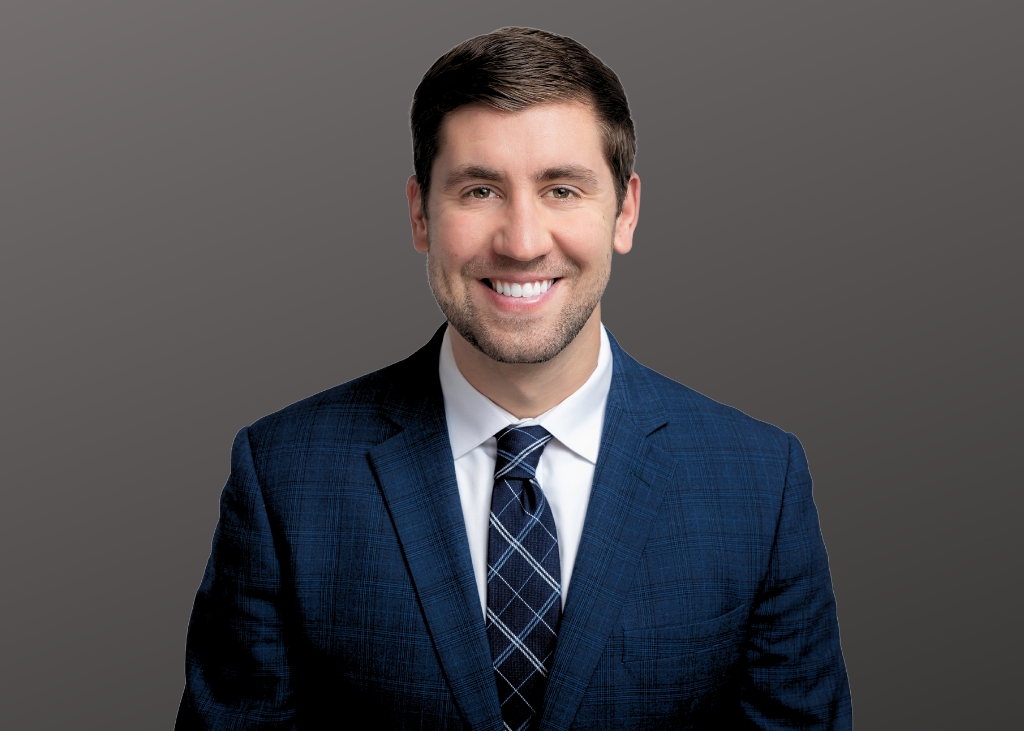
Blake Bars is a commercial real estate attorney who works with developers, investors, lenders, and family offices to navigate high-value transactions with clarity. As an attorney who operates at the intersection of real estate, finance, and complex capital structures, Blake Bars is known for delivering practical, deal-ready counsel when decisions carry eight- and nine-figure consequences.
Mr. Bars’ practice is rooted in real estate finance, where he has represented national and regional lenders in the origination and restructuring of more than $2 billion in commercial loans. He also routinely advises sponsors and institutional equity providers on the formation of joint ventures, preferred equity structures, and sponsor-capital partner relationships. He is a partner in the real estate practice group at Thompson Burton PLLC in Nashville, Tennessee, where he represents national real estate investors, regional and local developers, institutional capital partners, and lenders in high-value commercial real estate transactions.
Before joining Thompson Burton, Blake Bars served in the real estate practice group as an attorney at a large national law firm. There, he represented developers, owners, investors, borrowers, and managers in acquisitions, dispositions, developments, financings, and leasing matters across diverse asset classes.
What is your typical day, and how do you make it productive?
A typical day for me is a careful balance between high-intensity work, client demands, and making sure I’m present for my wife and kids. No two days are exactly the same, but mornings are usually reserved for deep-focus work: drafting purchase agreements, joint venture agreements, loan docs, reviewing title/survey, negotiating LOIs, or preparing for closings. Mid-morning to early afternoon is heavy on calls, internal team meetings, client updates, counsel coordination, and occasional deal discussions. Late afternoon often involves responding to new issues that popped up during the day, revising documents based on comments, or prepping for the next day’s deadlines.
I also try to eat lunch at my desk while knocking out smaller tasks. I aim to be out of the office by 7:00 pm on most nights so I can be home for dinner with the family around 7:00-7:30 pm. After dinner and bedtime routine with the kids, I’ll usually log back on for a second shift, cleaning up emails, finalizing documents, or handling time-sensitive items that came in late.
How do you bring ideas to life?
It starts with a deep understanding of the client’s idea, whether it’s a developer dreaming up a mixed-use project, a tenant wanting favorable expansion rights, or an investor eyeing a value-add opportunity. I ask targeted questions to clarify goals, risk tolerance, timelines, and constraints, then translate that business vision into legal and practical terms.
Commercial real estate deals involve many moving parts, including brokers, title companies, engineers, local authorities, to name a few. I coordinate with the deal team early, identify key risks, and create a clear roadmap with milestones and deliverables. This prevents surprises later. I’m also fortunate to have a good team of associates and paralegals to divide responsibilities. This keeps the momentum through small, consistent steps.
What’s one trend that excites you?
One trend we’re seeing is that lawyers, lenders, borrowers, and investors are starting to think more entrepreneurially. In the real estate world, borrowers and sponsors have become much more sophisticated about layering capital stacks creatively and efficiently. We’re seeing debt funds step in quickly where banks pull back, preferred equity providers offer flexible solutions for value-add and opportunistic deals, and institutional investors are increasingly comfortable coinvesting directly with experienced operating partners. As a result, deals are getting done faster, with more tailored economics, and often with better alignment of interests than a one-size-fits-all approach. It keeps the work challenging and rewarding, and it’s allowing good sponsors to keep acquiring and developing, even in a higher-rate environment.
What is one habit that helps you be productive?
One habit that has made the biggest difference in my productivity is strict time-blocking. Deep-work blocks in the early morning for the most cognitively demanding tasks, specific slots for emails and calls so they don’t bleed into everything else, and, most importantly, non-negotiable family blocks.
What advice would you give your younger self?
If I could go back and talk to my younger self (the ambitious associate grinding 80-hour weeks in big law), I’d keep it simple and say “Don’t wait to build the life you want outside of work.” I used to think “Once I make partner” or “Once the kids are older” or “Once we close this portfolio” then I’ll have time for health, hobbies, travel, community. The truth is there’s never a perfect season. Start the traditions, take the trips, coach the team, go to the school play, do it now, even in smaller doses.
Tell us something you believe that almost nobody agrees with you on.
I believe the shift to remote work has improved the legal practice overall. There are fewer distractions, better focus, and higher output. The one caveat is that associates and younger attorneys often benefit more from an office setting, where they can learn and grow from watching more senior partners. But for our mid-level team members, a hybrid approach often serves our clients well.
What is the one thing you repeatedly do and recommend everyone else do?
I recommend this to everyone: clients, counterparties, junior associates, and even opponents at the negotiating table. In commercial real estate (finance especially), where leverage amplifies both upside and downside, skipping or skimping on due diligence is the single-most avoidable mistake. Always allocate the time and resources; it’s the highest ROI habit in our field.
When you feel overwhelmed or unfocused, what do you do?
I open a blank page and write down every single thing that’s swirling in my head, no filtering. Then I mark the one to two items that, if completed, would create the most forward momentum or reduce the most stress. It is usually the thing I’m avoiding the hardest. I commit to working on only that item for the next 60 to 90 minutes. Everything else gets parked.
What is one strategy that has helped you grow your business or advance in your career?
The key is authenticity and patience; it’s about genuinely helping others succeed first, with the confidence that high-quality work and relationships will drive reciprocal opportunities over time.
What is one failure in your career, how did you overcome it, and what lessons did you take away from it?
Early in my career, I was tasked with leading due diligence on a multimillion-dollar acquisition of a mixed-use development in a rapidly gentrifying urban district. The deal involved complex layered financing, plus environmental and zoning hurdles tied to historic preservation overlays. Eager to prove myself, I dove in solo, skimping on cross-team coordination and relying too heavily on initial vendor reports. The lessons were profound. First, diligence isn’t a solo sport; it’s a symphony, and underestimating interdisciplinary input invites blind spots that can torpedo even the sturdiest structures. Second, vulnerability builds trust; admitting errors early preserved the relationship far better than any spin. Finally, every setback is a stress test for your processes. Mine evolved into a firm-wide template for layered financing reviews, which I’ve since adapted for dozens of similar deals. It’s a reminder that in this field, where one overlooked easement can unwind years of work, resilience isn’t optional; it’s the foundation of long-term success.
What is one business idea you’re willing to give away to our readers?
A proptech-enabled investment platform for fractional ownership in senior housing communities, targeting middle-market active adult and assisted living properties in Sun Belt and secondary markets. The rationale is straightforward: with the first baby boomers turning 80 in 2026, we’re at the inflection point of a massive demographic wave driving senior housing demand.
What is one piece of software that helps you be productive? How do you use it?
The core of my drafting workflow relies heavily on proven software and resources that prioritize precision, precedent control, and seamless integration with Microsoft Word and document management systems. In my practice, the most efficient process is often starting with a legal search engine, drafting and customizing in Word, and redlining counterparty versions using Litera or similar software.
What is the best $100 you recently spent? What and why?
It’s not flashy, but a family pass to our local zoo. It sounds crazy, but going there with my family has become our easy, low-friction escape: we can pop over for 45 minutes or stay for hours, walk the trails, let the kids run around the children’s area, and just breathe. No planning, no crowds, no cost barrier. It’s not flashy, but that small annual fee has bought us dozens of hours of calm, restorative moments together.
Do you have a favorite book or podcast you’ve gotten a ton of value from and why?
I’ve recently been enjoying The Promote Podcast, hosted by Hiten Samtani and Will Krasne. The show serves as an insider’s guide to commercial real estate, profiling major dealmakers and dissecting landmark transactions that shape markets. It delves deeply into compelling industry narratives, from bad-boy guarantees and CMBS tranche battles to syndicator controversies, while exploring the more intricate and nuanced aspects of CRE finance and development.
What’s a movie or series you recently enjoyed and why?
I recently really enjoyed the series Succession. I finally finished the whole thing a couple of months ago after being late to the party. I found it oddly satisfying since it’s essentially a Shakespearean family tragedy wrapped in ultra-high-stakes corporate maneuvering, boardroom battles, private equity deals, leveraged buyouts, and endless negotiations over control and valuation.
Key learnings
- Balancing a demanding career with family responsibilities requires setting clear boundaries and prioritizing time management.
- Understanding a client’s business, market trends and regulatory changes can help identify opportunities and mitigate transaction risks.
- Authenticity and patience help build strong professional networks and foster collaboration.