
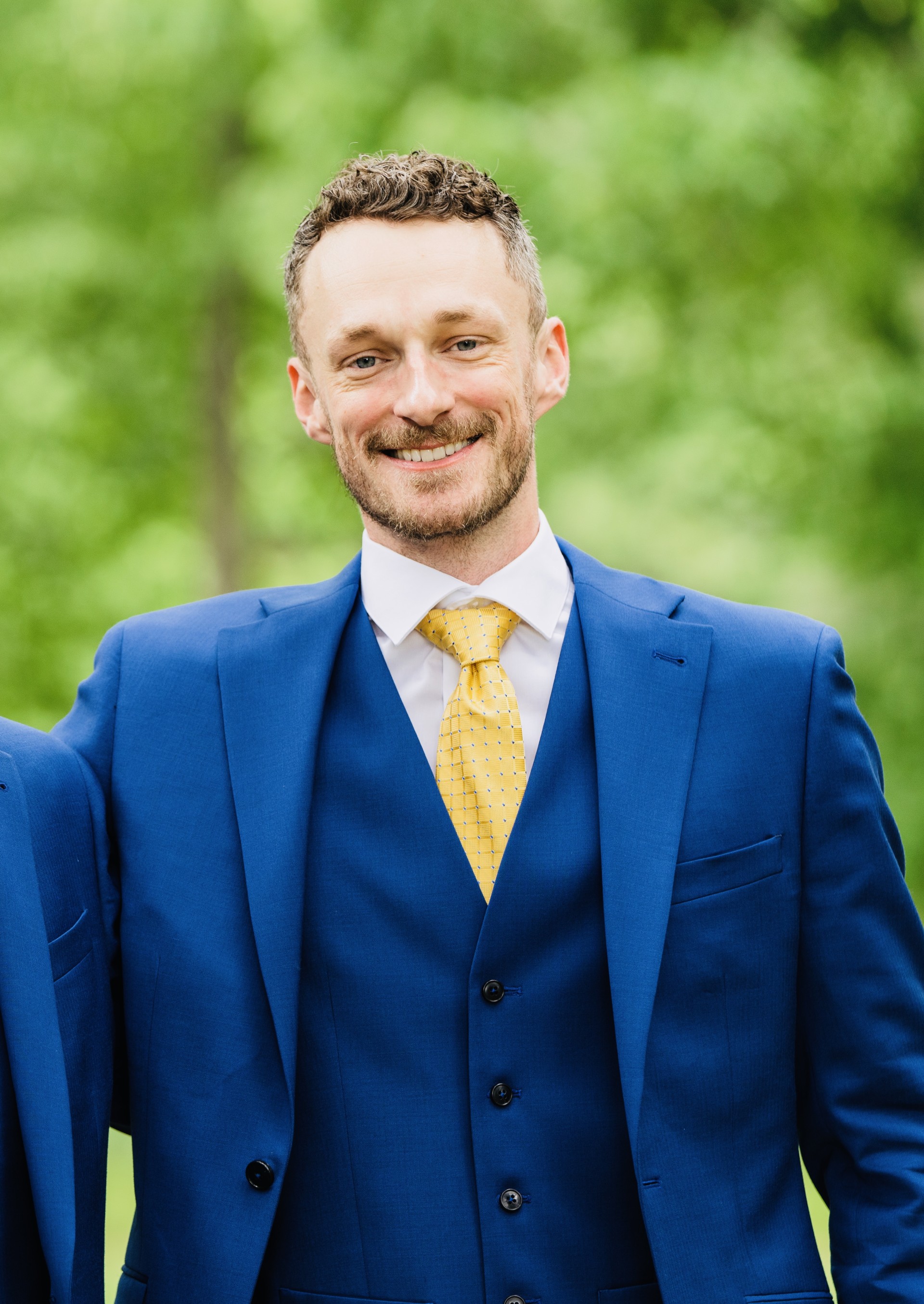
Bradley Cochrane, Cleveland, OH resident, has worked as a professional engineer for 11 years, including a role at HWH AEP, Inc. As a professional engineer with the firm, Bradley Cochrane designed structural systems and created construction drawings for industrial facilities. Designing and constructing these systems involved creating structural elements, foundations, utility bridges, rooftop unit supports, and concrete slabs.
Mr. Cochrane was also involved with the schematic design, design, and construction documents of multi-disciplinary projects. Some of his accomplishments include developing grading, utility, and site development plans for a 12-acre, multi-million-dollar expansion using Civil 3D.
Mr. Cochrane also has expertise in using Revit to model structural and architectural elements for new structures and additions. He has coordinated 3D model exchanges and performed clash detection in Navisworks between internal models, vendor models, and point clouds, and he has performed cost estimating and quality calculations for structural and site design projects.
Since 2022, Mr. Cochrane has worked in a similar role at Osborn. In this position, he designs new bulkheads and creates construction drawings for riverfront development in Cleveland, where he has worked with owner representatives, architects, and government permitting agencies to see projects through to completion. He has also created construction drawings to repurpose a building into a medical clinic and designed foundation systems in high-rise buildings in Florida.
In addition to being a licensed professional engineer with an emphasis on structural engineering, Mr. Cochrane has earned a bachelor’s degree from Purdue University. He is also a member of the American Society of Civil Engineers.
What is your typical day, and how do you make it productive?
I start my day the evening before, planning blocks of time aligned with my long-term goals. I wake up at 5:30 a.m. and begin by meditating on what I’m grateful to have in my life. My workdays vary between meetings, site visits, performing structural calculations, and drafting construction drawings, so it’s important for me to protect the time blocks that produce results for my firm and my goals.
How do you bring ideas to life?
Ideas seem to occur spontaneously, but I believe they are the product of a seed planted subconsciously by our values and perceptions of the world. When I have an idea, I like to go backwards first and explore where it came from, so that I can begin planning the path to making it a reality. A key strategy that I use is to try and make the idea fail early on in order to identify areas that need realignment or fortification. Sometimes we have a tendency to protect our ideas, and as a result, we spend valuable time cultivating something that will never make it beyond the piece of paper on which it was originally jotted down.
What’s one trend that excites you?
I’m captivated by the current renaissance of critical thinking. Businesses, technology, foreign policy, and even economics can be predictable, and the innovation of a new branch in any domain tends to decrease over time. The obvious example is the smartphone and how it has become less disruptive with each iteration. However, metasystems are the most interesting to me. The machine builds machines, so to speak. The human mind, and its productive application across a civilization, has boundless potential. I’ve noticed a resurgence in critical thinking, despite the ease with which we can acquire answers through the Internet, search engines, and now AI. The source of this resurgence is difficult to identify, but I am inspired to see the trend propagate and hopefully lead to positive changes throughout the world.
What is one habit that helps you be productive?
My nightly reflection habit drives my productivity. Before bed, I review my progress, acknowledge mistakes, identify improvements, and think of a few small things that occurred for which I’m grateful. Then, I plan the next day to align with my long-term goals. This helps to quiet the noise in my mind, empowering me to start each morning focused and energized.
What advice would you give your younger self?
I’d tell him, “You can’t lose if you don’t quit.” I would encourage him and emphasize the value of resilience. Give yourself grace, identify mistakes, and do your best to correct them along the way, but don’t ever stop.
Tell us something you believe that almost nobody agrees with you on.
Slow is smooth, and smooth is fast. I think most would agree with the sentiment upon further inspection. However, very few act in such a way where an observer could tell that they agree. Take time to breathe, set yourself up for success, and then execute.
What is the one thing you repeatedly do and recommend everyone else do?
Express the positive thoughts and feelings you have about the people in your life or the circumstances of your day. The thought alone isn’t enough. Tell your friends that you’re grateful for them. Let your team know that you appreciate their hard work. We don’t know the challenges other people are dealing with, and a genuine expression of gratitude or encouragement can help immensely.
When you feel overwhelmed or unfocused, what do you do?
I go for a walk or lift weights. Physical movement not only helps me to organize my thoughts, but it gives me the energy to execute tasks and make progress. I try to remind myself that incremental progress, over time, is powerful.
What is one strategy that has helped you grow your business or advance in your career?
A paradigm shift in my mindset that identifies challenges as opportunities, which I have the capacity to solve or improve, for my firm and client. Combine this mindset with a focus on incremental progress, and it’s an extraordinarily powerful recipe for success.
What is one failure in your career, how did you overcome it, and what lessons did you take away from it?
A challenge I’ve had in the past, particularly as a younger professional, was perfectionism and the negative affect it has on time management. Through a combination of exploring systems used by my mentors and gaining experience through a vast array of projects, I was able to devise my own system for achieving high-quality work within a reasonable timeframe. I learned that early and frequent communication mitigates most issues.
What is one piece of software that helps you be productive? How do you use it?
I use a task management software called Things. It helps me to see the big picture when planning my goals, while still empowering me to dig into the details to ensure that my strategy is actionable. I use it every night to plan my day ahead. It’s satisfying to check tasks off that have been completed.
What is the best $100 you recently spent? What and why?
I purchased a picnic blanket and a hammock to keep in my car for spontaneous excursions to the beach or lakefront park. Sometimes you need to slow down, unwind, and enjoy the sunset.
Do you have a favorite book or podcast you’ve gotten a ton of value from and why?
Recently, I’ve been reading Antifragile: Things That Gain from Disorder by Nicholas Nassim Taleb. He explores a very interesting concept in which certain things improve when exposed to challenges and stressors. It has made me become more aware of a framework that may help me become a better man and improve my life and career.
What’s a movie or series you recently enjoyed and why?
Interstellar is my favorite movie. Hans Zimmer’s score is inspiring, and the movie’s theme of time, interwoven with exploration, love, and sacrifice is universally applicable.
Key learnings
- Gratitude expressed aloud can change the world.
- Incremental progress is your most powerful tool. Slow is smooth, and smooth is fast.
- Believe in yourself, and keep going. You can’t lose if you don’t quit.