
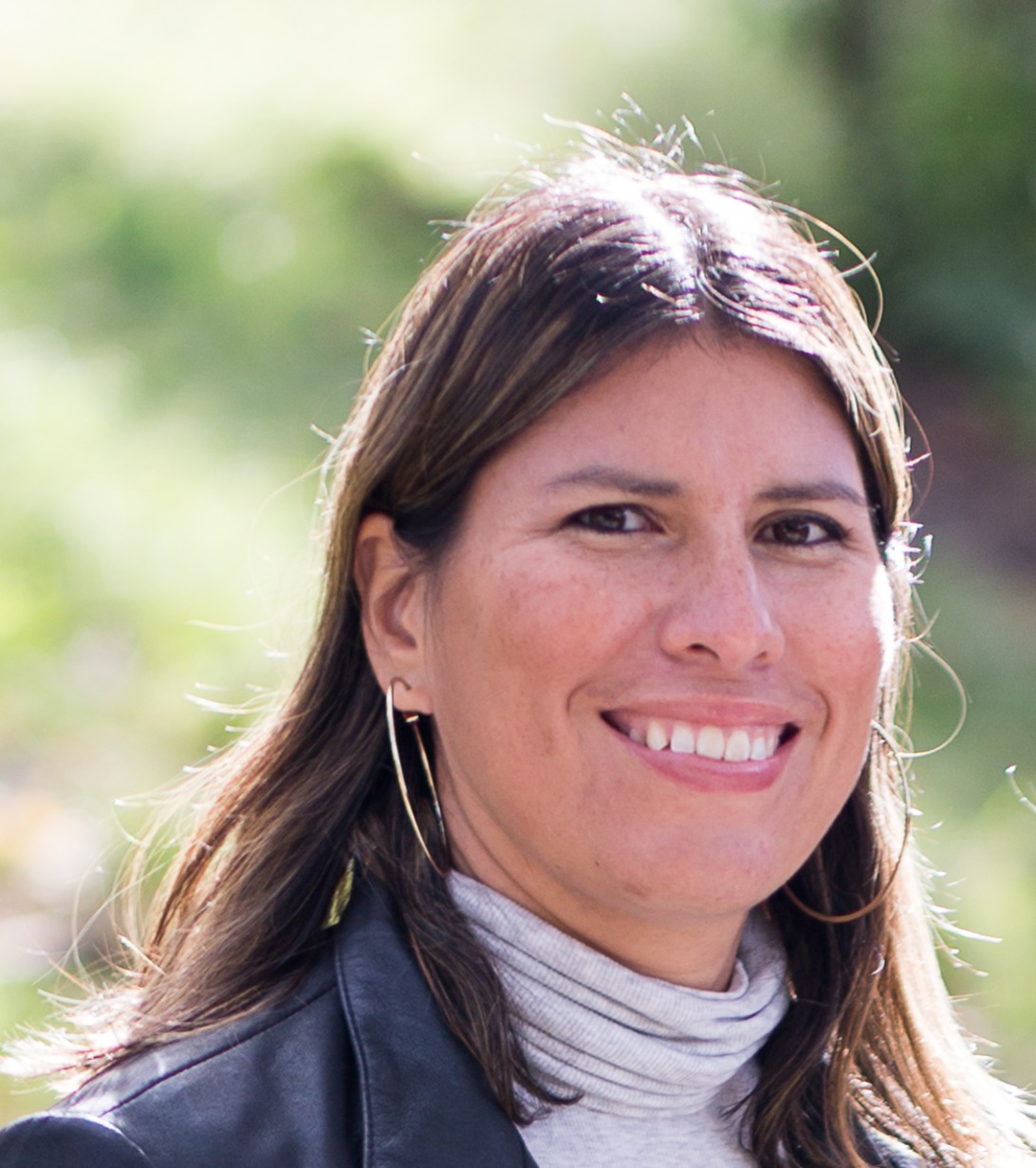
Christina Gould is an experienced program director in early childhood special education, recognized for her leadership in program administration, educator development, and policy compliance. As the program director for Keith Haring School, she oversees school operations, ensuring that students receive high-quality education and support. Additionally, in her role with the Association to Benefit Children, Christina Gould strengthens early intervention services, collaborating with educators and families to enhance developmental outcomes. With expertise in staff training and regulatory compliance, she has played a key role in advancing special education programs.
At Keith Haring School, Ms. Gould provides strategic oversight, guiding educators and therapists to foster an inclusive and supportive learning environment. She ensures compliance with Early Intervention and Department of Health regulations while mentoring staff to enhance teaching effectiveness. As director of home-based services with the Association to Benefit Children, she manages provider assignments, supervises intervention strategies, and upholds quality assurance standards for home-based education. Her leadership drives continuous improvements, optimizing student success and strengthening family partnerships.
With a strong commitment to early childhood education, Christina Gould continues to lead efforts in special education policy and program development. Her ability to implement strategic solutions benefits educators, families, and children, reinforcing impact in the field.
What is your typical day, and how do you make it productive?
I leave for work before 7 a.m. so that I am not rushing, and so that I arrive before my staff. I am on the train for 30 minutes during which time I check emails and review my calendar in order to be prepared for the day ahead. If I have extra time, I like to read a novel. I make a concerted effort to make my commute productive, but also enjoyable. Once at work, while I have quiet time, I attend to my many administrative tasks. Once my staff arrives, we begin to coordinate and prep for the day. The students arrive around 8:30 a.m., so I greet them and am available to their parents if they need me. I keep an ongoing to-do list that helps me stay organized and focused. Once the classrooms are settled in, I tackle my to-do list. Having everything written down helps me to not only remember, but to also prioritize my tasks. After school ends, I travel locally in the city to provide one-on-one teaching sessions to children with special needs. I optimize the commute time by mapping out what activities and strategies I am going to use. After work, I head home to Westchester and read my book. This time allows me to decompress from the day and helps the transition from work to home. Most days, I go to the gym after work. The community at my gym is strong and uplifting. It provides me with renewed energy and focus that I can take back to my home and family.
How do you bring ideas to life?
Collaboration is a key component in bringing ideas to life in our school. Whether it is an idea that I have or a staff member has, it is critical that the team meet to discuss ideas, weigh the benefits, and consider forms of execution.
What’s one trend that excites you?
The shift to play-based learning is exciting and vitally important to early childhood education. Moving away from strictly pre-academic tasks and moving toward learning through play helps to foster a sense of joy in children while they are learning. For example, instead of using flash cards to teach numbers, we can use toys and play schemes that children are interested and engaged in. If a child is playing with trains or cars, we can count the trains, make groups of them, and sort and match the trains. Very young children are better able to focus when they choose the materials they are working with and when they are not confined to sitting for long periods.
What is one habit that helps you be productive?
I am mindful of how frequently I pick up my phone to scroll social media. I leave my phone face down so that I do not see notifications. When I do pick it up at work or during quality family time, I think “stop” to myself and put it down. I find that this practice helps to free up time that I can spend more productively.
What advice would you give your younger self?
I would tell myself not to worry so much about what other people think of me, not to place so much weight on what is “cool,” and to think deeply about what makes me happy and fulfilled.
Tell us something you believe that almost nobody agrees with you on.
I believe strongly that we should make every effort to stop saying “no” to children. We need to tell them what to do instead of what not to do. This belief stems from my experience in working with children who have developmental delays. I must be concise and intentional with my words because, for these children, it can be hard to process verbal language. For example, if I tell a child “Don’t climb on the table,” they may only be able to process the words “climb” and “table.” This information is not helpful, and could, in fact, lead the child to think they should climb on the table. On the other hand, if I say “Feet on the floor,” the child has only to hear the words “feet” and “floor” to understand what I am asking, therefore promoting the intended meaning of my words. It can be a hard habit to break, but if we take a moment to be intentional with our words, it has a positive impact. Finally, telling children what to do instead of what not to do will help them to understand clearly what your expectations are.
What is the one thing you repeatedly do and recommend everyone else do?
I am a strong believer in practicing yoga. It has had a hugely positive impact on my life. Yoga teaches the mindset of staying in the present and not wasting energy worrying about what is in the past and what may or may not happen in the future. Yoga is both physically and mentally challenging, which teaches you grit and perseverance. On the other hand, it is introspective and creates opportunities for you to check in, and it is restorative for your body and mind.
When you feel overwhelmed or unfocused, what do you do?
When I am feeling overwhelmed at work or at home, I take a moment to bring my mind into the present and check-in. I am reminded of how fortunate I am to be healthy, safe, and stable. When I am feeling unfocused, I find it helpful to get up and move. For example, I may get up and check in on my teachers and classrooms. Then I return to the task at hand with renewed attention.
What is one strategy that has helped you grow your business or advance in your career?
When first starting out as a teacher, I made frequent use of my best resource, my supervisor. Her experience exceeded mine by more than a decade. I went to her frequently with questions. I asked her to observe my classroom so I could get tips for improvement. I think she appreciated how open I was to constructive criticism. Being open and receptive to her advice helped me to grow as a teacher. By engaging with her in my growth process, she became increasingly invested in my success. She helped me to strengthen my confidence and ultimately promoted me to the position of director.
What is one failure in your career, how did you overcome it, and what lessons did you take away from it?
I began my professional life working in the editorial department at fashion and lifestyle magazines. I spent about eight years there and was struggling to advance at work. I had a colleague who suggested that I think “outside the box.” I racked my brain to figure out what else I would do. It dawned on me that I had been happiest when I had been volunteering at the Association to Benefit Children. I had done this in high school and college. I loved playing with children and meeting families. I called the Association to Benefit Children and had some informational meetings. I figured out that I needed to go back to school for my master’s degree in special education. I gave my magazine job notice and started graduate school in January 2010. I have been with the Association to Benefit Children since I graduated in the summer of 2012. From this experience, I learned that we don’t need to stay stuck. I learned that sometimes you have to take a leap and that living with some uncertainty is ok.
What is one piece of software that helps you be productive? How do you use it?
Our school uses ClassDojo, a web-based and mobile app. This technology helps create a connection between the school and families. Teachers are able to post photos of the children in real time as they engage in activities and learning for the families to see. Teachers can message the whole school and individual classrooms, as well as send private messages to families. The school can post flyers and provide updates on holidays and school closures. ClassDojo has proven to be an excellent tool to create strong bonds between school and home.
What is the best $100 you recently spent? What and why?
We recently invested in weighted blankets for our program. Several of our children struggle with sensory regulation, and the weighted blankets provide deep pressure that helps our children. When used at the appropriate weight and length of time, the weighted blankets can increase their ability to focus, as well as to relax. These benefits help to create a stronger learning mindset.
Do you have a favorite book or podcast you’ve gotten a ton of value from and why?
I recently read Happier Hour: How to Beat Distraction, Expand Your Time, and Focus on What Matters Most by Cassie Mogilner Holmes. In her book, she describes ways to identify what makes you happy and to build a framework for your days to maximize happiness and cut down on activities that aren’t meaningful, such as scrolling endlessly on our phones. The strategies help me create blocks of time dedicated to specific personal and professional tasks. This has helped to increase my focus and productivity. By getting more done during my workday, I have greater free time in my personal life to enjoy spending time with my family and engaging in other activities, such as the gym, that I enjoy.
What’s a movie or series you recently enjoyed and why?
My daughter and I have been watching old seasons of The Amazing Race. We have been having the best time piling onto the couch and watching it. The series dates back to 2001, so it opens up frequent conversations about how much life and technology have changed. She is getting to see what life was like before smartphones and Wi-Fi. Watching the show together has created a space for me to share and answer questions about both her dad’s life and mine from the 2000s. The other wonderful aspect of the show is that she is getting to see so many different places around the world. She is young, and her travels outside of the US have been limited, but from this show she has seen so many places that are very different from what she has experienced. She is seeing diverse people, landscapes, and customs. And, for better (not worse, I hope), she is watching how the different teams interact and treat each other. We have discussions on what behaviors are acceptable and what are not, ways to treat people with respect, and how to manage strong feelings like frustration and anger. I never would have imagined how many teachable moments and opportunities to bond there would be from watching The Amazing Race!
Key learnings
- Be intentional in both your personal and professional life.
- Take strategic risks.
- Make time for both work and your personal life.