
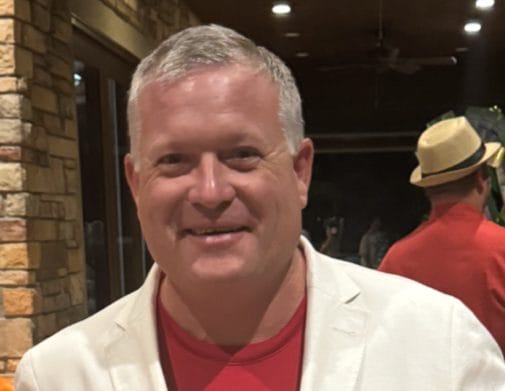
Cody Lovins has owned and managed numerous Sport Clips franchises in and around Houston, Texas, since 2005. He has grown his franchise portfolio to include 15 hair care stores. Cody Lovins has achieved strong, consistent sales at his stores, resulting in his place among the company’s President’s Club and Chairman’s Club for business expansion and sales growth.
Cody Lovins is also a franchise owner with Dogtopia, one of the nation’s leading canine day care and grooming service providers. He oversees all business operations at his Dogtopia locations, including marketing, payroll, and invoicing. He has consistently grown year-over-year sales at his locations.
Mr. Lovins studied geological engineering at the Missouri University of Science and Technology in Rolla, graduating with a master of science. When he is not managing operations at his many franchise locations, he spends time supporting philanthropic organizations such as the Cystic Fibrosis Foundation and AeroAngel. He stays active through swimming, boating, and other outdoor interests.
What is your typical day, and how do you make it productive?
A productive day starts with prioritization. The key is focusing on high-impact tasks first, minimizing distractions (e.g., turning off notifications), and scheduling deep work blocks. Time-blocking and regular breaks (e.g., Pomodoro Technique) help maintain efficiency.
How do you bring ideas to life?
By breaking them into actionable steps: validate the idea quickly by researching and/or prototyping; set small, measurable goals; and iterate based on feedback rather than waiting for perfection.
What’s one trend that excites you?
AI-augmented creativity—tools that enhance human potential (e.g., generative AI for brainstorming, coding, or design) while keeping ethical considerations in focus.
What is one habit that helps you be productive?
Single-tasking. Switching between tasks kills efficiency. Focusing on one thing at a time improves quality and reduces mental fatigue.
What advice would you give your younger self?
“Done is better than perfect. Take more risks, learn faster from failures, and invest in relationships—they compound over time.”
Tell us something you believe almost nobody agrees with you on?
“Most meetings could be replaced with a well-written email or async update, saving countless hours without sacrificing clarity.”
What is the one thing you repeatedly do and recommend everyone else do?
Morning reflection. Spending 5–10 minutes planning the day and setting intentions improves focus and reduces reactive decision-making.
When you feel overwhelmed or unfocused, what do you do?
I step away to refocus by walking, meditating, or napping. I also write down everything that is causing me stress in order to reorganize and declutter my mind. I can then prioritize the top 1–2 tasks and ignore the rest until those are done.
What is one strategy that has helped you grow your business or advance in your career?
Building in public. Sharing learnings, failures, and processes transparently attracts opportunities, feedback, and trust. For example, documenting a project’s journey can lead to collaborations or client interest.
What is one failure in your career, how did you overcome it, and what lessons did you take away from it?
We once launched a product without validating demand first. We ended up pivoting to solve narrower, more urgent problem for a specific audience. The lesson we came away with was that we need to build for a need, not for a novelty. It is imperative to talk to users before building.
What is one business idea you’re willing to give away to our readers?
“Skill-Swap Marketplace”: A platform where professionals trade expertise (e.g., a designer exchanges a logo for a lawyer’s contract review). Barter systems reduce costs and build community.
What is one piece of software that helps you be productive? How do you use it?
Notion. It’s a hub for tasks, notes, and databases. For example, you can track goals with OKRs, organize research in wikis, and manage projects with Kanban boards.
Do you have a favorite book or podcast you’ve gotten a ton of value from and why?
Atomic Habits by James Clear, which is about science-backed strategies for building habits that stick. For podcasts, I enjoy Shane Parrish’s The Knowledge Project, which are deep dives into mental models and decision-making.
What’s a movie or series you recently enjoyed and why?
Severance (Apple TV+). A thought-provoking exploration of work-life balance and identity, with brilliant storytelling.
Key learnings
- Prioritize deep work by minimizing distractions and single-tasking to boost productivity.
- Validate ideas early through small experiments rather than over-planning.
- Transparency builds trust—sharing processes and failures accelerates growth.
- Sleep and mental clarity are foundational to sustained performance.
- Bartering skills can unlock opportunities without financial investment.