
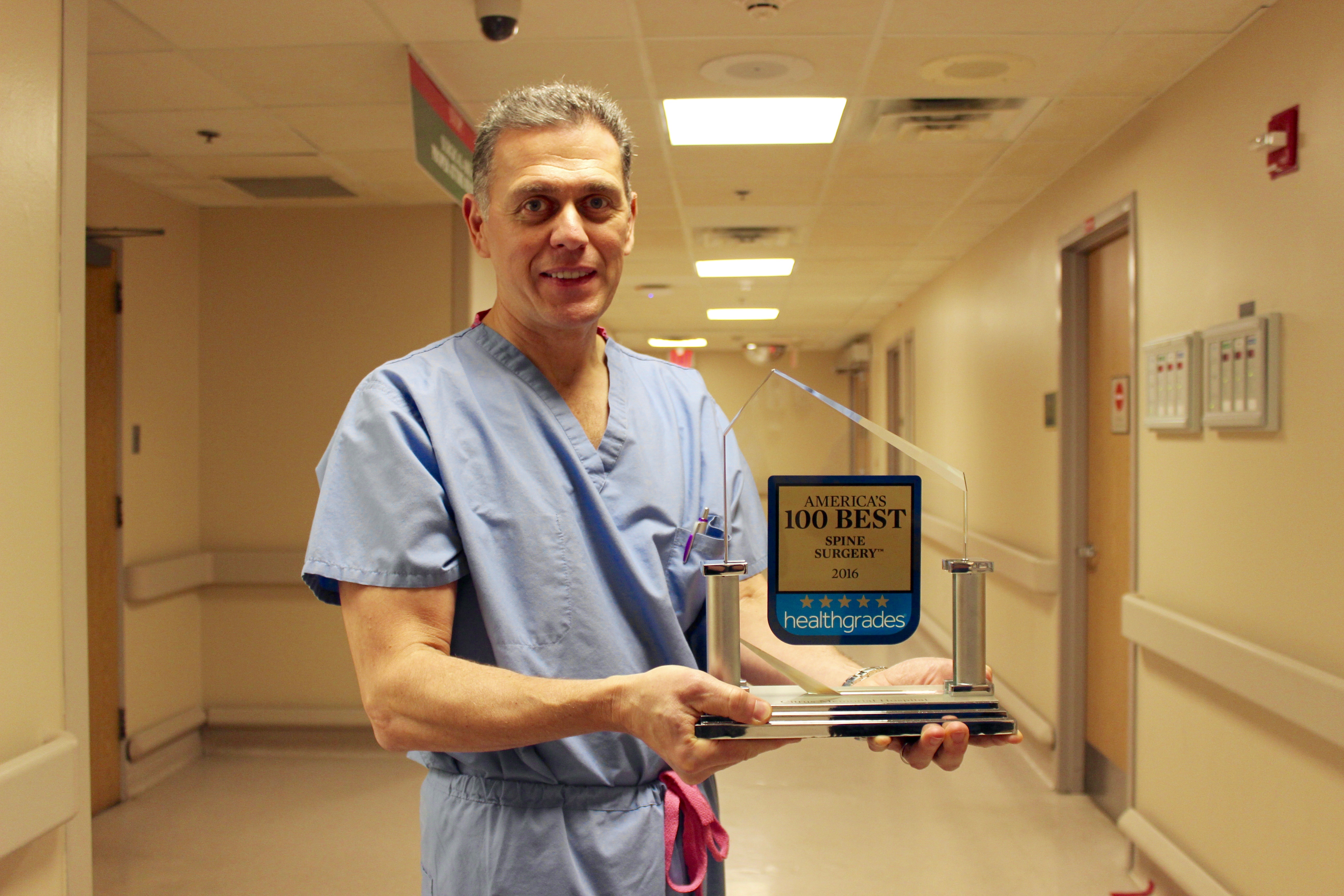
Based in Crystal River, Florida, Constantine Toumbis, MD, serves the needs of Tampa/St. Petersburg area patients as the owner of the Citrus Spine Institute. At Citrus Spine, he emphasizes a minimally invasive approach to surgery and performs advanced procedures such as kyphoplasty and lumbar laminectomy. Constantine Toumbis, MD, is also conversant in posterior cervical decompression and fusion procedures, as well as sacroiliac fusion. He regularly removes tumors and performs artificial disc replacements.
A graduate of New York University, Dr. Toumbis earned his BS in biology. He then went on to pursue graduate studies in natural sciences and experimental pathology at the State University of New York at Buffalo. Finally, he earned his doctor of medicine from Wayne State University, earning distinction in biomedical research. Dr. Toumbis next undertook internship and residency training at the University of Florida Shands Hospital and completed a fellowship at the spine institute at Cleveland Clinic.
Dr. Constantine Toumbis is an avid cyclist who also enjoys taking motorcycles and vintage cars out on excursions. He and his wife have a strong community focus, contributing to church activities and many charitable institutions in the Florida area.
What is your typical day, and how do you make it productive?
My day starts early with a review of surgical cases and imaging studies. Mornings are often spent in the operating room, and afternoons are a mix of clinic, patient follow-ups, and research. I stay productive by structuring my schedule tightly, prioritizing what requires the highest focus first, and minimizing distractions during patient care hours.
How do you bring ideas to life?
I combine clinical observation with data. If I notice a recurring challenge in patients, I research solutions, collaborate with colleagues, and test approaches in small, safe ways before adopting them more broadly. Implementation always involves patient safety and evidence-based practice.
What’s one trend that excites you?
The advancement of minimally invasive spine surgery. Smaller incisions, quicker recovery, and better long-term outcomes are changing how we think about spine health.
What is one habit that helps you be productive?
Getting up every morning and working out has been a game-changer for my productivity. It sets the tone for the day, clears my head, and gives me the physical energy and mental focus I need for long hours in the operating room and clinic. The discipline of maintaining that routine also carries over into my professional life—it reminds me that consistency in small habits leads to big results over time.
What advice would you give your younger self?
I would tell my younger self to keep moving forward, no matter the challenges. Training in medicine—and especially in surgery—can feel overwhelming at times, and setbacks are inevitable. But progress is rarely about giant leaps; it’s about steady steps, learning from each experience, and not letting obstacles define you. Even when the path isn’t perfectly clear, forward motion builds resilience, confidence, and ultimately leads you to where you’re meant to be.
Tell us something you believe that almost nobody agrees with you on.
I believe that in many cases, spine surgery should be a last resort, not the first option. Nonsurgical management is often underrated, and I advocate for it strongly before recommending the operating room.
What is the one thing you repeatedly do and recommend everyone else do?
Daily physical activity, even if it’s just stretching or a short walk. Movement is medicine for both the body and the mind.
When you feel overwhelmed or unfocused, what do you do?
I step away, even briefly. A 5- to 10-minute walk, breathing exercise, or quiet time resets my focus far more effectively than forcing myself to push through.
What is one strategy that has helped you grow your business or advance in your career?
Building strong relationships—with patients, colleagues, and staff. Trust is the foundation of medicine, and when you treat people with respect and honesty, referrals, opportunities, and growth naturally follow.
What is one failure in your career, how did you overcome it, and what lessons did you take away from it?
Early in my career, I faced a setback that at the time felt like a major failure—it challenged my confidence and made me question whether I had chosen the right path. What helped me overcome it was persistence and perseverance, but just as importantly, the encouragement of mentors, colleagues, and friends who believed in me even when I doubted myself. Their support reminded me that setbacks don’t define your future; how you respond to them does. That experience taught me the value of resilience, humility, and surrounding yourself with people who will push you forward when you need it most.
What is one business idea you’re willing to give away to our readers?
A patient-centered mobile app that integrates pre-op education, post-op instructions, exercise videos, and secure messaging with providers. It would improve compliance and outcomes while reducing unnecessary calls and visits.
What is one piece of software that helps you be productive? How do you use it?
I rely on DICOM imaging software. Having advanced imaging tools at my fingertips allows me to evaluate spine conditions quickly, plan surgeries precisely, and explain findings clearly to patients.
What is the best $100 you recently spent? What and why?
The best $100 I recently spent was on a pair of high-quality running shoes. On the surface, it may seem simple, but for me, it’s an investment in my health and consistency. Working out helps me clear my mind, manage stress, and maintain the physical stamina needed for long days in the operating room. It also serves as a daily reminder that caring for myself allows me to better care for my patients.
Do you have a favorite book or podcast you’ve gotten a ton of value from and why?
When Breath Becomes Air by Paul Kalanithi. It’s a profound reminder of the humanity behind medicine, the fragility of life, and why empathy should never be lost in clinical practice.
What’s a movie or series you recently enjoyed and why?
I enjoyed The Surgeon’s Cut on Netflix. It showcases the artistry and human stories behind surgery, which resonates deeply with my own journey in spine care.
Key learnings
- Resilience and steady progress are crucial in high-stress careers.
- Conventional wisdom should be challenged thoughtfully.
- Daily movement is foundational to well-being.
- Strategic pausing enhances focus and performance.
- Relationships and support networks drive career growth.