
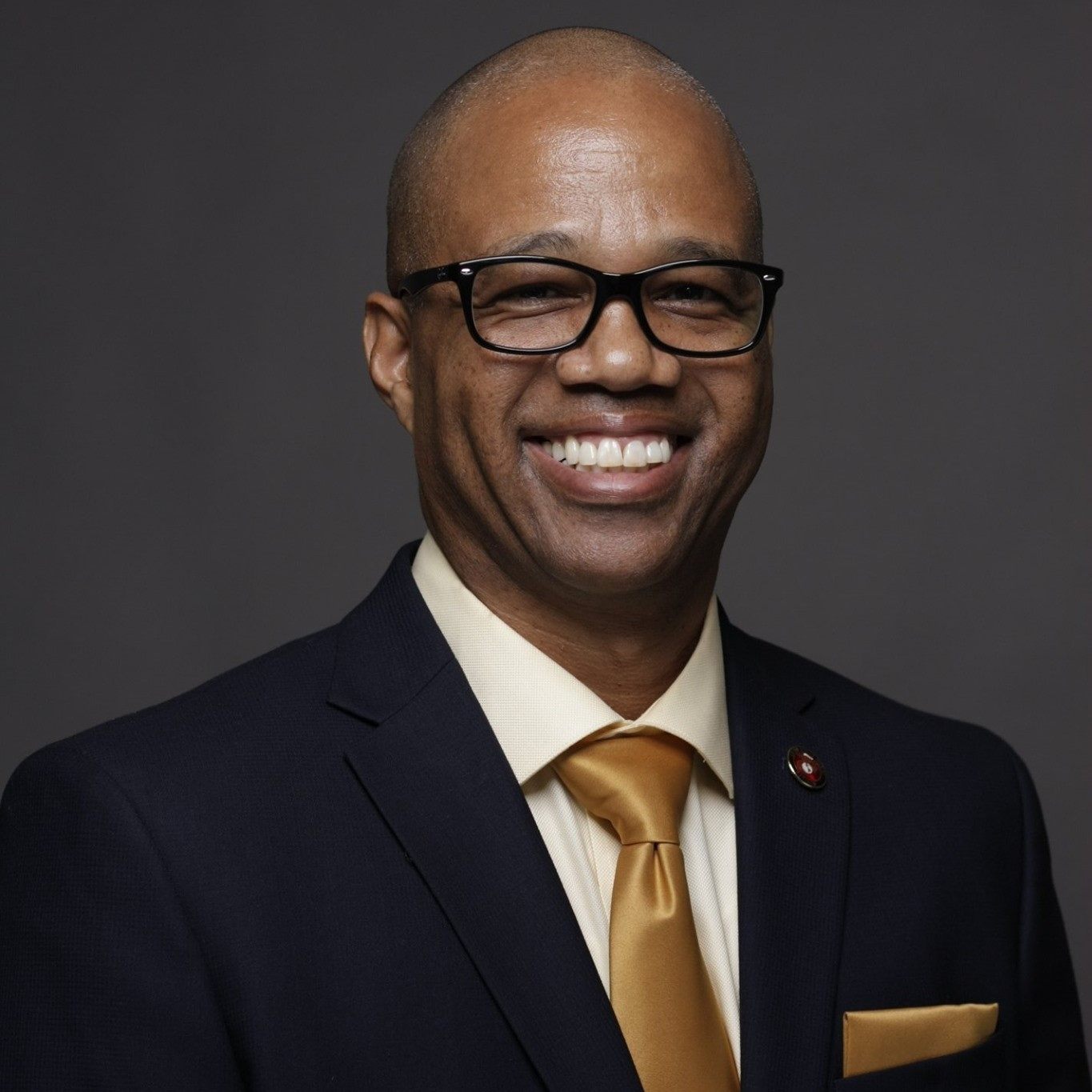
Curtis Bigelow was born and raised in Mebane, North Carolina, where discipline and effort shaped his early years. At Eastern Alamance High School, he stood out in track and cross country, earning All-Conference honours three years in a row. Running taught him patience, focus, and how to keep moving forward when things get hard.
After high school, Curtis chose a path of service. He joined the United States Marine Corps Reserves and served for 20 years, retiring as a First Sergeant. In 2003, he deployed to Iraq, where he earned the Combat Action Ribbon and the Presidential Unit Citation. Those experiences strengthened his belief in leadership, teamwork, and accountability.
Alongside his military service, Curtis spent 16 years in law enforcement. He worked his way up the ranks and was later promoted to Chief of Police and Associate Vice Chancellor at North Carolina A&T. After 30 years of combined service, he retired from the state of North Carolina with a deep respect for public trust and responsibility.
Education became his next chapter. Curtis spent 14 years as a JROTC instructor with Guilford County Schools, helping students build structure and confidence. He continued his own studies, earning multiple degrees, including a doctorate in educational leadership. He also authored the book Bathsheba, David’s Goliath and is working on a new book focused on early reading skills.
Today, Curtis remains active as a substitute teacher. He enjoys running marathons with his wife, ballroom dancing, and spending time with family. His life reflects a steady commitment to service, learning, and purpose.
What is your typical day, and how do you make it productive?
My day starts early. That habit came from the Marine Corps and never left. I begin with prayer and quiet time before anything else. That grounds me. I usually follow that with a run or physical training. Running has always helped me think clearly. It did when I was competing in high school, and it still does now. For productivity, I keep my goals simple. I write down three priorities for the day. If those three get done, the day counts.
How do you bring ideas to life?
I break ideas down into small actions. Big ideas fail when people wait for perfect timing. My book Bathsheba, David’s Goliath started as handwritten notes late at night. I didn’t sit down to “write a book.” I sat down to write one page. That same approach applies to my current work on early literacy. Progress comes from starting before you feel ready.
What’s one trend that excites you?
I’m encouraged by adults returning to education later in life. I see people in their forties, fifties, and beyond realising they still have something to contribute. Education is no longer just for the young. That shift matters for schools, leadership, and families.
What is one habit that helps you be productive?
Daily self-evaluation. At the end of the day, I ask myself one question: “Did I give 100 percent for an honest day’s work?” That question has followed me from the Marines to law enforcement to education.
What advice would you give your younger self?
I would tell myself not to confuse effort with direction. Working hard is important, but working toward the right thing matters just as much. I wasted energy early on trying to force outcomes instead of building skills.
Tell us something you believe almost nobody agrees with you on?
I believe failure is often more useful than success. Losing jobs and relationships forced me to grow in ways comfort never would have. Failure shows you what needs fixing.
What is the one thing you repeatedly do and recommend everyone else do?
Reflect daily. Not casually. Honestly. Ask what worked, what didn’t, and why. Reflection turns experience into wisdom.
When you feel overwhelmed or unfocused, what do you do?
I return to basics. Prayer. Running. Silence. When you hit rock bottom, you’re already looking up. That perspective resets me every time.
What is one strategy that has helped you grow your business or advance in your career?
Leaning into education during setbacks. When I lost positions in law enforcement, I didn’t chase titles. I pursued degrees. That decision opened doors in teaching and leadership that I never planned for originally.
What is one failure in your career, how did you overcome it, and what lessons did you take away from it?
I once believed loyalty alone would protect my career. It doesn’t. Performance and adaptability matter. I overcame that by investing in education and staying flexible. The lesson was simple: build skills, not just tenure.
What is one business idea you’re willing to give away to our readers?
A community-based literacy program for parents. Short sessions. Practical tools. Focused on preparing children for third-grade reading benchmarks. Early reading changes everything.
What is one piece of software that helps you be productive? How do you use it?
Google Docs. I write daily. Notes turn into chapters. Simplicity keeps me consistent.
Do you have a favorite book or podcast you’ve gotten a ton of value from and why?
The Bible. Not for quotes, but for perspective. It reminds me that grace exists even when I fail.
What’s a movie or series you recently enjoyed and why?
A military documentary series. Not for action, but for leadership lessons under pressure.
Key learnings
- Discipline and reflection create consistency across careers and life stages.
- Education can be a tool for reinvention after setbacks.
- Small, repeatable actions turn ideas into outcomes.
- Failure often provides clearer direction than success.
- Personal well-being directly impacts professional effectiveness.