
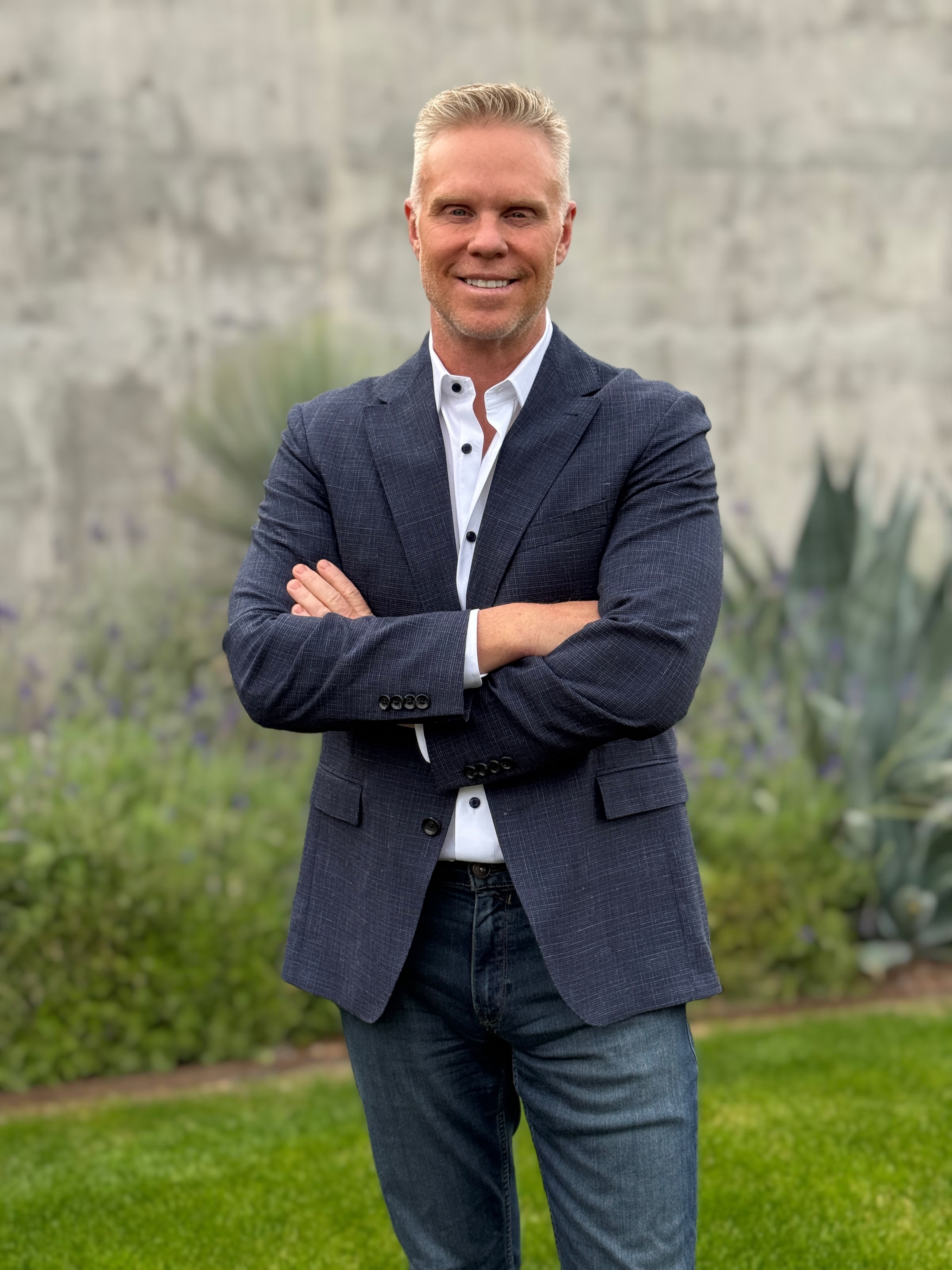
Damian Creamer is a visionary education entrepreneur, founder, and CEO dedicated to transforming how students learn in a rapidly changing world. With a deep belief that education should serve the whole child—not just academic outcomes—Damian has spent his career building innovative, student-centered learning ecosystems that prioritize flexibility, mental well-being, and real-world readiness.
As the Founder and CEO of StrongMind, Damian leads the development of a next-generation learning platform designed to support K–12 online schools and homeschool families. Under his leadership, StrongMind has evolved beyond a traditional curriculum provider into a comprehensive learning ecosystem—integrating proprietary technology, AI-powered tools, and human-centered design to bridge the gap between students, educators, and families. His work is grounded in the belief that autonomy, competence, and connection are essential psychological nutrients for learning, and that technology—when designed ethically and intentionally—can amplify, not replace, human impact.
Damian is widely recognized for his forward-thinking perspective on the future of education, particularly at the intersection of artificial intelligence, learning science, and instructional design. He is a frequent speaker and panelist on topics including AI in education, digital learning transformation, and building scalable, mission-driven organizations. Known for his ability to translate complex ideas into clear, compelling narratives, Damian brings a systems-level mindset to both product innovation and leadership.
Beyond strategy and technology, Damian is deeply committed to building strong cultures. He believes that great organizations are built on trust, curiosity, and shared purpose, and he prioritizes empowering teams to think boldly, act responsibly, and stay anchored to the mission. His leadership style blends visionary thinking with grounded execution, encouraging experimentation while maintaining a strong ethical compass.
Damian lives in Arizona with his wife, Noelle, and their family. Outside of work, he values lifelong learning and creating space for reflection—principles that continue to shape both his leadership and his approach to education.
What is your typical day, and how do you make it productive?
Every day looks a little different, but the rhythm stays pretty consistent.
Mornings start with coffee and a quick scan of emails and messages—just enough to understand what’s moving and what actually needs my attention. Then I block focus time early. That’s when the real thinking happens: strategy, product direction, hard decisions. I protect that time pretty aggressively.
The gym is non-negotiable. It’s as much about mental clarity as it is physical health—it sharpens my thinking and resets my energy for the rest of the day.
By late morning, I’m in the office and in meetings with different members of our team—product, engineering, learning, leadership. Those conversations are where alignment happens and where ideas get better. I try to be present, decisive, and forward-moving.
I aim to make all important decisions by 2pm. That’s intentional. Decision fatigue is real, and I want my best thinking going into the choices that matter most. After that, the day is about execution, follow-ups, and clearing blockers.
I make my days productive by staying ruthless about priorities and intentional about focus. Less noise, more signal. Fewer meetings, better decisions. And no matter how busy things get, dinner is always at home—that’s a hard stop and a grounding reset.
How do you bring ideas to life?
Ideas are easy. Execution is everything. I bring ideas to life by pressure-testing them early and grounding them in purpose. If an idea doesn’t clearly improve learning, empower people, or move the mission forward, it doesn’t make the cut. Once the “why” is solid, I focus on the simplest possible version that can create real momentum. From there, it’s about getting the right people in the room—product, engineering, UI/UX, learning, marketing, operations—and creating shared ownership. The best ideas get better when they’re challenged.
I like to move quickly, but not recklessly. I believe in shipping, learning, and iterating. Progress beats perfection every time. We launch, we listen, we adjust and we keep moving.
When priorities are clear and the signal is strong, teams move fast and confidently. My role is to remove friction, make decisions, and create space for people to do their best work. Ideas don’t come to life because they’re brilliant. They come to life because they’re aligned, actionable, and owned.
What’s one trend that excites you?
One trend that genuinely excites me is independent AI agents.
We’re moving beyond AI as a passive tool and into a world where agents can think, plan, and act independently within clear guardrails. That shift is massive. It changes how work gets done, how teams scale, and how humans spend their time. What excites me most is the leverage. Independent AI agents can handle coordination, personalization, and repetitive decision-making at a speed and scale humans simply can’t—freeing people up to focus on creativity, judgment, and connection. In education especially, that’s a game changer. It means more personalized learning paths, faster feedback loops, and systems that adapt in real time to students and educators.
What is one habit that helps you be productive?
Knowing when I’m in flow and designing my environment to support it. I pay close attention to when my thinking is sharp, creative, and effortless. When I’m in that state, I protect it. I eliminate distractions, silence the noise, and stay there as long as I can. I’m also intentional about creating the conditions for flow: focused blocks on my calendar, fewer meetings, physical movement, and clear priorities.
What advice would you give your younger self?
I’d tell my younger self to listen to his intuition because it’s usually right. Invest in yourself before anything else: your health, your growth, and your mindset. None of it is optional, and all of it compounds over time. Take care of your body and your energy early; everything you want to build depends on it. Learn to say no more often. Not every opportunity is worth your time, and focus is a superpower. The faster you protect it, the faster you grow. And keep your circle small. Depth matters more than reach. The right people will sharpen you, ground you, and walk with you through the hard seasons. And finally, be easier on yourself. This is all temporary.
Tell us something you believe that almost nobody agrees with you on.
I believe it’s really hard to do truly great work on something you don’t actually care about. A lot of people would disagree with this. They’d say professionalism means delivering high-quality work regardless of interest or emotional connection and that discipline, process, and pressure should be enough. And to be fair, you can produce acceptable work that way.
But great work is different. It requires extreme ownership, curiosity, and an extra level of thought that’s hard to fake. When people care about the outcome, the quality goes up, the thinking gets sharper, and accountability shows up naturally.
I don’t see disengagement as a work ethic problem. I see it as an alignment problem. When there’s a real connection to the “why”, effort feels lighter and momentum follows. When there isn’t, even small tasks feel heavy, no matter how capable someone is.
What is the one thing you repeatedly do and recommend everyone else do?
Daily reflection. For me, that looks like a gratitude practice or time in the Bible. It doesn’t have to be rigid or long. What matters is creating space to slow down, reflect, and reset your perspective.
When you feel overwhelmed or unfocused, what do you do?
Movement resets my nervous system, clears mental noise, and usually brings instant perspective.
What is one strategy that has helped you grow your business or advance in your career?
Take risks and be direct about what you want. Not every risk works out, but every one creates learning, clarity, or opportunity. Asking for what you want also removes guesswork. It speeds up conversations, surfaces alignment quickly, and helps you focus energy where it actually belongs.
What is one failure in your career, how did you overcome it, and what lessons did you take away from it?
Early in my career, one of my biggest failures was not trusting myself to make decisions. I deferred too often to others, especially in moments where I already had the instincts but lacked the confidence to act on them. Letting others call the shots felt safer at the time, but it slowed momentum and diluted ownership.
I overcame it by doing a lot of internal work—building self-trust, strengthening boundaries, and getting honest about where I was giving my power away. Confidence didn’t come from external validation. It came from making decisions, owning the outcomes, and learning quickly when things didn’t go as planned.
The biggest lesson was that leadership requires conviction. You can listen deeply and stay open, but at the end of the day, someone has to decide.
What is one business idea you’re willing to give away to our readers?
Ideas are a dime a dozen. I would start with one painfully annoying problem… and let it run your life. Seriously. Find something that bothers people so much they complain about it, then become obsessed with fixing it. Businesses don’t fail because the idea is bad. They fail because the founder gets distracted, bored, or moves on too quickly. We’re a 25 year overnight success and that only happens when you stay obsessed long enough to earn it.
What is one piece of software that helps you be productive? How do you use it?
ChatGPT! I use it as a thinking partner. I use it to draft first passes of communication, memos, narratives, and frameworks. That way I can focus my energy on judgment, direction, and refinement instead of staring at a blank page.
I also set up different GPTs for different types of work. I have ones focused on strategic thinking, others for product, and others for communication, leadership etc.
On the personal side, I use it as a real-life problem solver and optimizer. I’ll use it to plan and optimize travel, build itineraries, compare flights, packing smarter, and reducing friction before a trip starts. I also use it to walk through everyday problems too, like figuring out how to fix something at home or deciding whether it’s a DIY or something better handed off to a professional.
What is the best $100 you recently spent? What and why?
Anything that supports my health and wellness is a good investment!
Do you have a favorite book or podcast you’ve gotten a ton of value from and why?
I’m a podcast junkie, and I definitely prefer long-form content over short-form. Long-form creates space for context and real thinking. Short-form content is great for headlines, but it rarely changes how you think. Long form content trains attention, improves critical thinking, and helps you build your own point of view instead of borrowing one. It also slows you down in a good way. Less reaction, more reflection. I like Diary of a CEO & Joe Rogan of course.
Key learnings
- People do their best work when they care about the problem and understand the purpose behind it.
- Long-form thinking builds better judgment and original insight than short-form consumption.
- AI is most powerful when used as a thinking partner to improve clarity and decisions, not just efficiency.
- Lasting success comes from obsessively solving real problems over time and “overnight” wins are usually years in the making.