
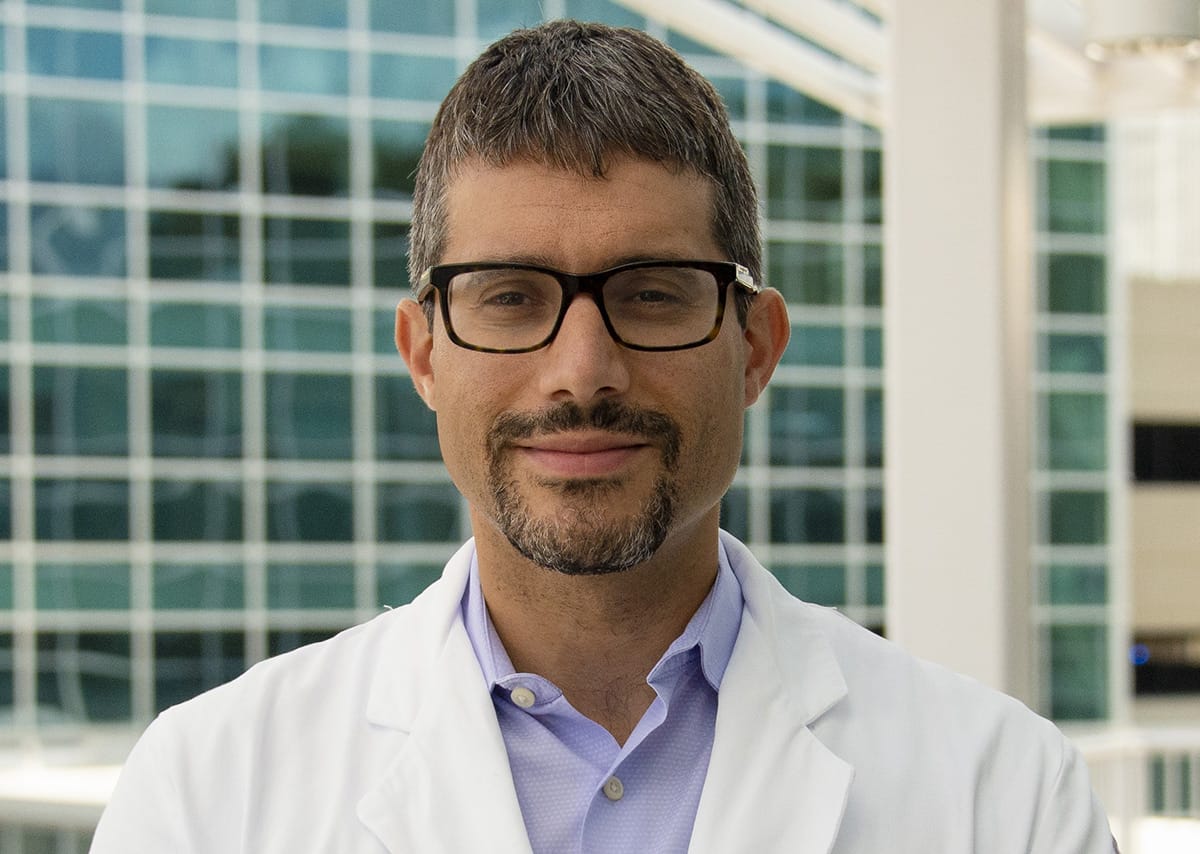
David Banach from Woodbridge, CT is a physician who’s spent his life helping others—both in the exam room and behind the scenes. He’s board-certified in Infectious Diseases and Internal Medicine, and he currently serves as a Professor of Medicine. But his path to leadership started long before titles.
David grew up with a strong interest in science and public health. That passion led him to medical school and eventually into a field that demands both precision and compassion. He didn’t just want to treat patients—he wanted to improve how care is delivered.
He is a healthcare epidemiologist, guiding the hospital’s response to infectious disease threats like COVID-19 and antibiotic resistance. He also teaches medical students and residents, helping shape the next generation of doctors. His work isn’t just local—he’s published over 60 peer-reviewed articles, served on state and national public health committees, and co-chaired Connecticut’s COVID-19 scientific advisory group.
David also gives back in quiet ways. He volunteers at a homeless shelter clinic in Hartford and serves on the board of a local religious organization. His days are long, but his impact runs deep.
Through it all, David stays grounded. He doesn’t just study disease—he listens to people. He finds balance by teaching, leading, and serving. His story shows that science and empathy can go hand in hand—and that even behind a white coat, there’s a heart that never stops working.
What is your typical day, and how do you make it productive?
My day can be quite variable depending on my clinical, teaching and research responsibilities. I find that preparation the prior evening can help make my day more productive. Before going to sleep I review my schedule for the next day and try to get a sense of what my day will look like and how to make myself more efficient, recognizing that interruptions may likely occur along the way.
How do you bring ideas to life?
I listen closely—to patients, colleagues, and students. I try to ask questions that often lead to new ideas and hypotheses. From there, I sketch a concept or draft a research question and think about how these can help answer clinical and public health questions.
What’s one trend that excites you?
The integration of epidemiology with real-time data systems. We’re finally seeing healthcare and public health catch up with technologies that allow for dynamic tracking of disease spread. This could transform how we respond to future outbreaks – dynamic data collection systems can provide comprehensive data quickly which can help guide a more rapid response.
What is one habit that helps you be productive?
I try to write every day. Even if it’s just notes or drafting thoughts from questions on rounds or writing a few lines for a manuscript, writing sharpens my thinking. It helps me reflect, plan, and communicate better across disciplines.
What advice would you give your younger self?
Be patient in stressful and pressure situations.
Tell us something you believe almost nobody agrees with you on?
That being patient will help you through stressful and pressure situations.
What is the one thing you repeatedly do and recommend everyone else do?
Stay curious. I try to ask at least one question every day that I don’t know the answer to. It keeps me learning, even after years in this field. This may pertain to looking up information about a patient’s illness or a research project or even answering a question raised by a student.
When you feel overwhelmed or unfocused, what do you do?
Exercise clears my mind. Sometimes while exercising, like running or cycling, I can develop clarity on a challenge related to work. But even if I don’t come up with a solution, the physical activity can help me refocus, re-energize and begin to explore new ideas.
What is one strategy that has helped you grow your business or advance in your career?
Saying yes to opportunities when they arise, particularly in early career stages. When asked to lead infection control at an academic medical center, I knew it would be difficult—but that role put me at the center of institutional decision-making. Opportunities to collaborate with colleagues on a committee or in a workgroup have led to some much larger and very fruitful academic endeavors.
What is one failure in your career, how did you overcome it, and what lessons did you take away from it?
Throughout my academic work, I’ve submitted grant proposals and manuscripts that I thought were airtight, and unfortunately many have been rejected. Initially this experience was difficult but over time I’ve come to appreciate that these lead to opportunities to improve the projects and papers, and eventually they are accepted.
What is one business idea you’re willing to give away to our readers?
In healthcare I am excited about the integration of large datasets into clinical decision making and public health practice. Although I don’t have a specific business idea, I think that identifying ways to incorporate large data and artificial intelligence into our infection prevention and antibiotic stewardship activities will be appealing to healthcare systems.
What is one piece of software that helps you be productive? How do you use it?
While imperfect, I find that our hospital electronic medical record system that I use on a daily basis does enhance my productivity. I’m consistently amazed by its capabilities – we now have data sharing and record interchangeability with most other hospitals in our region which makes reviewing my patient’s records much more efficient. Our hospital is now beginning to use artificial intelligence to scribe data from our clinical encounters, which is amazing and allows me to spend more time with my patients and less time sitting in front of a computer screen entering information. I anticipate that this technology will continue to grow and improve and I’m excited about that.
Do you have a favorite book or podcast you’ve gotten a ton of value from and why?
The book When Breath Becomes Air by Paul Kalanithi. It captures the challenges and vulnerabilities of facing terminal illness as well as the humanity of medicine, all from a physician’s lens. The author describes how, in the setting of a devastating illness, he was able to seek out beautiful moments in his life. This concept energizes me when I see patients who are facing challenging circumstances and battling illness.
What’s a movie or series you recently enjoyed and why?
I rewatched Contagion recently. It’s both unsettling and fascinating to see how the public’s understanding of pandemics has evolved since its release—and how much still rings true.
Key learnings
- Small, consistent habits like daily writing and questioning fuel long-term professional growth.
- Productivity isn’t about speed—it’s about clear boundaries and reflection.
- Saying yes to hard problems can lead to leadership opportunities and real influence.
- Feedback is a powerful growth tool, even when it stings.
- Purpose-driven service—like volunteering in a clinic—can re-centre focus during high-stress periods.