
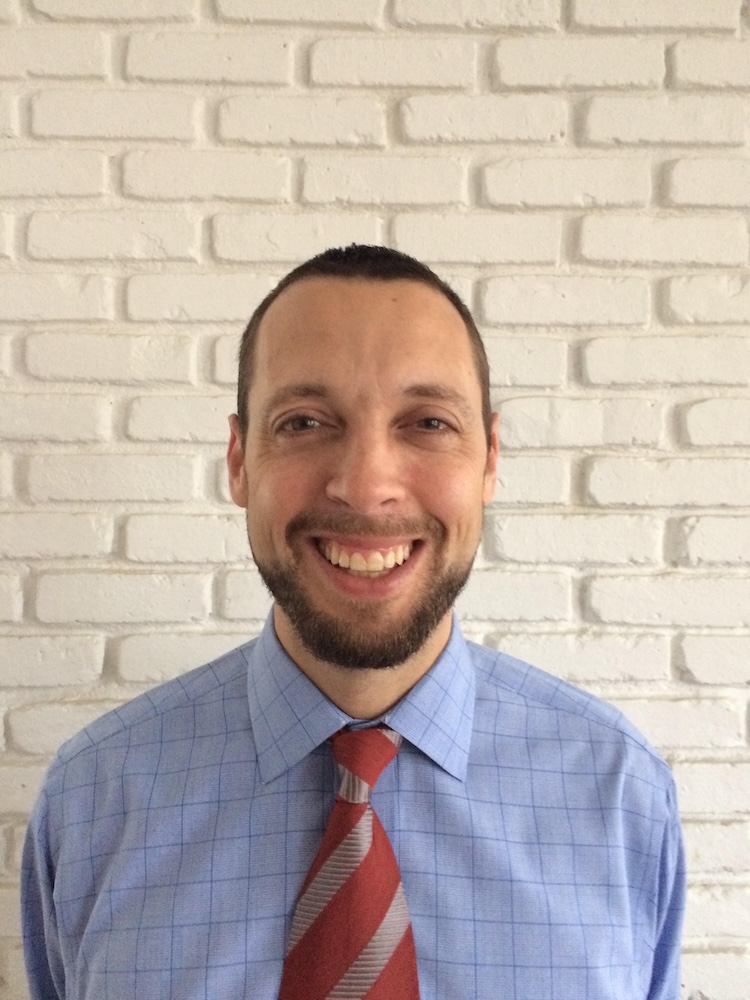
David Banthin, Ph.D. is a psychoanalyst and psychologist whose career bridges clinical practice, advanced academic training, and over 15 years of psychotherapy research. With specializiton in trauma, dissociation, personality disorders, and the complexities of the therapeutic relationship, he brings a deeply relational, contemporary psychoanalytic approach to his work with individuals and couples. David’s clinical insight is informed by decades of engagement with leading thinkers in psychoanalytic, psychodynamic and cognitive-behavioral treatments.
Dr. Banthin expanded his psychoanalytic skill set as a fellow at the Columbia University Center for Psychoanalytic Training and Research, where he worked closely with senior faculty. Over the course of a decade at the Center for Intensive Treatment of Personality Disorders (CITPD) at Mount Sinai West/Harlem Center, David became a senior clinician working with individuals at high risk for suicide with complex difficult-to-treat issues, supervisor for psychiatry and psychology trainees, sought-after lecturer, and seasoned group leader. He conducted intakes, developed treatment plans, and provided both transference-focused psychotherapy (TFP) and dialectical-behavioral therapy (DBT) to individuals with severe personality disorders.
In private practice, he is the founder of Banthin Psychological Services, where he provides psychoanalytic and psychological treatment to individuals and couples. His clinical focus includes trauma, dissociation, personality disorders, relationship issues, and complex emotional suffering.
What is your typical day, and how do you make it productive?
Each day provides a chance to encounter something new and helpful in the work with my patients. In the context of a safe and secure relationship, memories of the past and perspectives on the future are worked through in a way that also makes space for the present moment. The present moments is where new experiences occur, new insights are gained, and lesser known parts of ourself emerge more fully. Each day includes replenishing my connections with the community of mental health professionals, such as providing supervision to younger colleagues, meeting with others to discuss the latest developments in our field, or peer consultation. Consistency is an important ingredient not only in psychotherapy but in all aspects of my practice, working from the office five days a week provides an important container that facilities my own balance of work and life. Finally, each day contains reflection on the events of the day: what I learned and how this may shape the day ahead.
How do you bring ideas to life?
To bring ideas to life, for me, often requires balancing two important capacities: the ability to dream and the aptitude to ask questions. Dreams are a source of inspiration. They are a creative experience. Dreaming can take place at night or in moments during my day (i.e., daydreams). Once the seed of an idea is planted in my mind, the process of making it come to life requires that I ask questions. Questions help me see the idea from different perspectives. This, in turn, may lead to the idea becoming a reality. Recently, I developed a new course for the psychiatry department at Mount Sinai. Rather than just teach foundational psychoanalytic concepts, I added on the idea of asking modern questions based on the issues these authors’ struggled with in their time. This allowed the students to “open up” the topics they were learning about in their own way and apply it more readily to their current pactices.
What’s one trend that excites you?
One trend that intrigues me is the rise of artificial intelligence (AI)—and the next potential step, artificial general intelligence (AGI)—in the mental health world. The application of this technology has the potential to provide extra support and help for patients. For instance, being available at any time or reducing the cost of certain kinds of help. The other side of the coin is getting to know the limits and potential downsides of this technology. Recently, it has come to light that certain AI technology has a tendency to “agree” (even when it may be prudent to disagree), which can result in negative consequences for patients. Because AI is here to stay, the work of understanding the mix of human and nonhuman support for each patient is likely to become a regular part of treatment planning. A consistent finding in research is the increased vulnerability to anxiety and depression of too much internet/social media use, particularly for children and adolescents. These findings alert us to the careful consideration and sensitivity needed to balanced the basic need of human relatedness with the potential help offered by these technologies.
What is one habit that helps you be productive?
Consistency is key to productivity in my work. To understand this better, we must first step back to consider the different skills and capacities needed in the work I do. For example, psychotherapy calls for the whole person of the therapist to be engaged: the emotional, cognitive, somatic (individual embodied experiences), and social. Juxtapose this with teaching a course on foundational concepts in dialectical behavioral therapy. Teaching calls for the cognitive more so than other capacities. To be productive across these various kinds or work, I need to show up regularly, to be present each time, to understand and meet these different demands my varied work requires.
What advice would you give your younger self?
“Be kind to yourself.” This is what I would say to a younger version of me. Go ahead, try to achieve all that is in your mind and heart. Push your self to achieve. However, when you hit the inevitable bumps in the road, become dispirited, or face difficult choices, don’t employ self-criticism as a way to deal with these moments. Learn from them. See them as part of the process of living. Kindness is an important ingredient in learning about and living a good life.
Tell us something you believe that almost nobody agrees with you on.
Competition and competitiveness is an inate human capacity. For some, it becomes an important part of their conscious experience. For others, it is not important or, potentially, disavowed altogether. To be a well-rounded psychotherapist means understanding how and when one’s own competitive traits may be activated with patients. Further, to learn how to harness these moments in a therapeutic way to help patients move towards their goals is paramount.
What is the one thing you repeatedly do and recommend everyone else do?
I recommend that people move their bodies daily. The mind-body connection continues to be a focus of research across many different disciplines (e.g, neuroscience, neurology, psychology, psychiatry). Two things all the disciplines agree on is that the mind is embodied and that an appropriate amount of physical exercise is helpful for well-being. Moving one’s body—engaging in physical activity—is a form of medicine for the mind. People often have a complex relationship with terms like “exercise” or “workout” or “sport.” Some people have limitations on physical excercise. A way to reframe many of the difficulties and complexities to exercise is to simply recommend moving one’s body.
When you feel overwhelmed or unfocused, what do you do?
When feeling unfocused, I find curiosity to be vital part of the atitdote. Curiosity is something that I foster in myself and for my patients. When one becomes unfocused (or has any other experience), this can be seen as an important emotional communication to the conscious self. Once the feelings associated with these moments are sufficiently regulated, it can benefit us greatly to learn from them—to undstand their source or patterns in our lives. Curiosity is a vital part of learning.
What is one strategy that has helped you grow your business or advance in your career?
One strategy that has helped me advance my career is to view it as a life-time of learning. My capacity to practice psychotherapy has increased over time, in part because I am open to the idea of learning new things. For example, there is division in psychotherapists who practice cognitive behavioral treatments and those who practice psychodynamic treatments. This division is not only in theory and technique but in political and social realms (very few psychoanalysts go to cognitive behavior conferences). During my career, I have benefited from training on both sides of this division, as well as other “divides.” Each school of thought has something important to offer psychotherapists and patients.
What is one failure in your career, how did you overcome it, and what lessons did you take away from it?
One failure in my career was not completing a research project to determine if combat veterans’ dreams (nightmares) could be used as a way to treat post-traumatic stress. At the time I made this decision, I was entering psychoanalytic training. I believed I would not have enough time in my schedule for both training and research. What I learned from this is that in complex and large endeavors (like training and research), I have more latitude to negotiate and set the schedules and agendas. I learned that I am more in charge of how my life goes than I had understood previously.
What is one business idea you’re willing to give away to our readers?
Harness the current artifical intelligence (AI) technology to provide communications support and basic emergency response services during non-work hours for psychotherapists. Operating as a solo-pratitioner or in small group practices often means resources constraints for responding to patient inquiries or emergencies during non-work hours. AI technology may be developed such that it can perfom messaging support, provide basic risk assessment, and connect patients to emergency services (i.e., 911 or 988) for further assessment and potential emergency response. Given the scalablity of AI, this technology could be offered to pactioners at a low cost. This would support a group of psychotherapists—who comprise a significant portion of the mental health treatments in the United States—and give them, and their patients, an extra measure of support and risk management.
What is one piece of software that helps you be productive? How do you use it?
SimplePractice telehealth or Zoom conferencing software has helped me reach more people more efficiently. I have a preference for working with others in person; I often prioritize providing psychotherapy in person. However, incorporating these softwares into my practice has allowed me to expand my practice and reach more people in need. For example, I teach Ukrainian mental health professionals through a program at the William Alanson White Institute. Prior to the broad use and acceptance of these softwares, our ability to support and train these individuals did not exist.
What is the best $100 you recently spent? What and why?
I recently spent $100 dollars on snacks for a cohort of psychoanalytic candidates to celebrate the last day of my Trauma and Dissociation class. The readings and case materials were challenging. Topics such as shame, isolation, and moral injury are explored and grappled with in many of the classes. The snacks were well received and a reminder, even if just symbolically, that there is a way to experience a bit of pleasure even in the most difficult of situations.
Do you have a favorite book or podcast you’ve gotten a ton of value from and why?
I enjoy reading. It is one of my hobbies. It is hard to select a favorite book. I do find myself returning, again and again, to a few books as the years go by. One of these is “A Movable Feast” by Hemmingway (a posthumously published memoir about his years in Paris as a young man). His prose have a fresh and direct voice that I associate with vitality and experiencing things for the first time. I spent some time in my youth in Paris as well. Much had changed between Hemmingway’s time and my time there. The book manages to capture a sense of the city that remained the same; an essence of the city and its people that was special to me as well.
What’s a movie or series you recently enjoyed and why?
My favorite movie is “Jaws.” I was born and raised in Connecticut. In my childhood, I spent summers on the Cape in Massachusetts with my mother’s family. We visited Martha’s Vinyard regularly. Many of the people cast in the movie were not Hollywood actors but Martha’s Vineyard locals. When I watch the movie, these locals lend a sense of place and time that is personal to me. This provides a kind of fertile ground from which the story of Jaws grows. In my adult years, as a psychoanalyst and psychologist, I have grown to appreciate the metaphor of “things” lurking below the surface—and how the characters cope with this differently.
Key learnings
- The new and unknown encountered in the present moment is an important source of therapeutic change.
- Community is important; connections foster a life-long approach to learning.
- Consistency, the ability to ask questions, curiosity, and capacity to dream/create are all valuable aspects of mind.
- Daily physical activities are an important ingredient to well-being.
- It’s important to embrace and understand the appropriate place of AI and AGI in our lives and the practice of psychotherapy.