
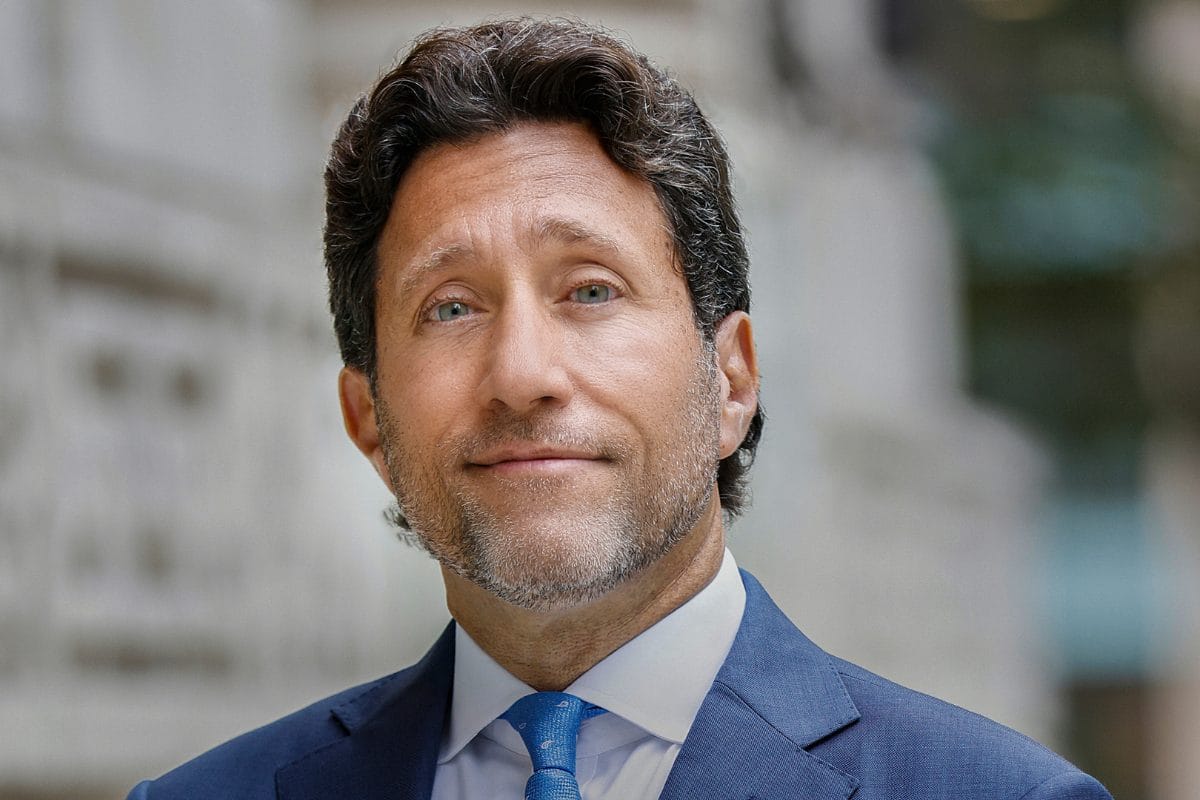
David M. Oddo is a leading trial attorney in New York City, with extensive experience in high-profile civil and criminal cases throughout New York State. His excellence in practice earned him a place on New York’s 2021 Metro Super Lawyers list, an honor bestowed on only 5% of attorneys in the New York Metro area. As a Fellow of the American Bar Foundation—a distinction given to less than 1% of licensed lawyers—Oddo has established himself among the legal elite.
According to TopVerdict.com, Oddo secured New York State’s highest medical malpractice settlement in 2020 ($15 million) and one of the largest medical malpractice verdicts in 2021. His accomplishments have been featured in numerous publications, including Top 100 Magazine, Top Lawyers Northeast, and Top Lawyers New York.
As Past President of the New York State Trial Lawyers Association (NYSTLA), Oddo was recognized on City and State Magazine’s 50 Over 50 list of distinguished New Yorkers (2018-2019) and their Law Power 50 List of New York’s most influential lawyers (2018).
Oddo authored “Medical Malpractice and Wrongful Death: Answers to Tough Questions” and hosts “The Trial Brief” podcast. He regularly lectures on trial practice, medical malpractice, and the U.S. Civil Justice System. Before private practice, he served as a state prosecutor in the Nassau County District Attorney’s Office (1989-1993).
Licensed in New York and Connecticut since 1990, Oddo is admitted to practice in the U.S. District Courts for the Southern and Eastern Districts of New York and, since 2016, the United States Supreme Court.
What is your typical day, and how do you make it productive?
My day starts early, around 5:30 am. I visualize how I want the day to go and set the priorities. This is followed by either a workout, some reading on current events, or preparation for court or deposition that day. I always have a detailed plan for when I arrive at the office or court. Typically, I address urgent emails or voice messages first. After that, I try not to look at emails until I have accomplished a number of my priorities. Then I set aside time in the early afternoon to return or address emails. It is important not to get distracted by low-priority emails. Sometimes, an entire day may be dedicated to one project, but emergency client calls, new client calls, or other urgent issues may arise on any given day. You have to accept the fact that you must be flexible and adapt to the ebbs and flows of a busy New York City law practice. Once you understand that, it makes it easier to deal with whatever is thrown at you.
The days I am in court on trial or in the office at a deposition are much more challenging, yet in some ways easier. You focus all of your energy and concentration on that one thing, without distraction. But when the day ends, you still have a day’s worth of calls and emails to return. That’s when I rely on my incredible partners and outstanding office staff to help lighten the load.
How do you bring ideas to life?
By surrounding myself with smart, committed people. Eric Babat and Darren Seilback are not only experienced and superior attorneys, but they are also extremely creative and skilled at thinking outside of the box. We collaborate daily on solving complex legal issues in cases, on questions of legal strategy, or just sharing ideas on how to improve the efficiency of our office.
What’s one trend that excites you?
The trend that excites me is also the trend that scares me. That would be the growing use of AI. There is a disturbing trend, in my opinion, in the use of AI in the legal profession. I have seen how advantageous it can be in retrieving and parsing data and information, which can have a tremendous positive impact on litigation. However, there are ethical considerations, potential for erroneous citations, and total reliance on this technology. The intuitiveness and flexibility of AI are a marvel to experience, but also frightening in what it can become.
What is one habit that helps you be productive?
I always focus on what’s in front of me. Multitasking is necessary sometimes, but in my line of work, total concentration on the task at hand is crucial. Put your phone away for hours at a time. I have accepted the fact that there are only so many hours in the day, so I have become good at prioritizing.
What advice would you give your younger self?
Slow down. You can’t gain 10 years of experience in 10 minutes. When you’re young, you don’t have the level of patience necessary to do the hard work that is required to be great at something. You learn with time that it’s all about repetition and discipline. I would also tell my younger self to listen more than I speak. Once you practice that, everything changes. You become a better lawyer, colleague, spouse, father, friend, etc.
Tell us something you believe almost nobody agrees with you on?
Eli Manning should be in the Pro Football Hall of Fame. I still don’t understand why that is so controversial.
What is the one thing you repeatedly do and recommend everyone else do?
Practice gratitude every day. Remember that today is all you have, so be the best you can be today. Also, at the end of each day, write down one thing you learned that day. Make sure you learn something meaningful every day.
When you feel overwhelmed or unfocused, what do you do?
I make a list of the items that are overwhelming or distracting me. Then I go through each one and determine whether or not I can control that item. If not, I mentally lay it aside. If I can control it, I immediately take action on it. My stress is caused by the things that are still left undone, not by the things I am doing.
What is one strategy that has helped you grow your business or advance in your career?
I never had a planned strategy to advance my career. My mindset was to work harder than everyone else, do things the right way, and good things would follow. My career and our business have grown by simply getting outstanding results for our clients. We have never engaged in long-term advertising campaigns or marketing. Our success comes from providing superior and unparalleled legal representation. Word travels, and prior clients recommend us to family, friends, and co-workers. Our stellar reputation in the courts and among our peers is the product of the exceptional results we consistently obtain for our clients and our exemplary professionalism. When you consistently receive referrals from colleagues, some of whom were your adversaries in court, you know you’re doing something right. I wish I could give you a secret recipe or blueprint for success, but the legal profession is unique in this way.
What is one failure in your career, how did you overcome it, and what lessons did you take away from it?
Business failures are usually the result of unreasonable risk. Thankfully, lawyers and law firms are risk-averse by nature. However, I have faced many challenges and setbacks over the years, and have taken lessons from each one. Twenty years ago, I accepted a case from an extended family member. It was a difficult case that didn’t have a significant upside. I originally told them I was unable to take the case, so they attempted to get another lawyer, but no one was willing to get involved. They then begged me to help them, as their time limit to bring the case was approaching. Because they were family, I did, and ended up litigating the case for years, spending an inordinate amount of time and money on a difficult case with a limited outcome that was expected. Needless to say, no one was happy. I learned that the cases you don’t take are just as important as the cases you do take. You have to be willing to say “no” when your gut tells you it’s a bad idea, even when you are trying to help a friend or family member.
What is one business idea you’re willing to give away to our readers?
I’d create a consumer advocacy firm that specializes in tracking product safety data and making it accessible to everyday people. Think of it as a subscription service that monitors recalls, safety issues, and litigation outcomes across industries – from automotive to pharmaceuticals to consumer goods.
What is one piece of software that helps you be productive? How do you use it?
I know this will sound antiquated and strange, but my productivity secret is the old-fashioned pen and paper. Yes, I still write in a notebook to organize my thoughts and plans. I have tried many apps over the years, but there is nothing more effective than taking the time to write out your thoughts. Plus, I don’t need to be plugged in to use it.
What is the best $100 you recently spent? What and why?
AirPod Pro 2 with noise reduction, for both personal and professional reasons. I love music, and these earbuds deliver an exceptional immersive listening experience. Professionally, I use my phone quite a bit. My clients have my cell number, and they can reach me at any time. I can talk while on the go and not worry about outside noise disrupting the phone call. I can be walking through Times Square, and it sounds like I’m sitting at my desk. Great investment.
Do you have a favorite book or podcast you’ve gotten a ton of value from and why?
Hands down, it is Meditations, the writings of Marcus Aurelius. It is a series of personal writings by Marcus Aurelius, Roman Emperor from 161 to 180 CE, wherein he sets forth his Stoic philosophy. They serve as reminders to make you humble, patient, empathetic, generous, and strong in the face of what you are currently dealing with. It also encourages you to welcome adversity. “No man is more unhappy than he who never faces adversity. For he is not permitted to prove himself,” is a quote I read frequently to remind myself that obstacles are opportunities, and hardships are personal tests.
What’s a movie or series you recently enjoyed and why?
I enjoyed the series The Bear. Watching Carmy battle through overwhelming adversity at the restaurant while dealing with his trauma and family dysfunction reminds me of how fragile the human condition is. But it is his personal growth and resilience through all of it that are compelling and inspirational. Not to mention that a law firm can feel like a chaotic restaurant kitchen at times.
Key learnings
- Clients must be confident that you truly care about them and that you are their warrior for justice. Take the time to get to know your clients and their families. If you don’t care about them, you shouldn’t be doing this kind of work.
- Open and frequent communication with your clients is crucial. Always remember that it is their case and their lives may depend on the outcome.
- Learn something every day. Have an insatiable thirst for knowledge. To learn, you have to listen more than you speak.
- Welcome challenges and hurdles. They test you and make you stronger, wiser, and more prepared for the future.